
Hamilton wins in Spain as Ferrari strategy beats Mercedes
Lewis Hamilton used a three-stop Ferrari plan to win at Barcelona-Catalunya and cut Kimi Antonelli’s championship lead, Ars Technica reported.
By Maya Lindqvist · Senior Technology Correspondent
3 min read
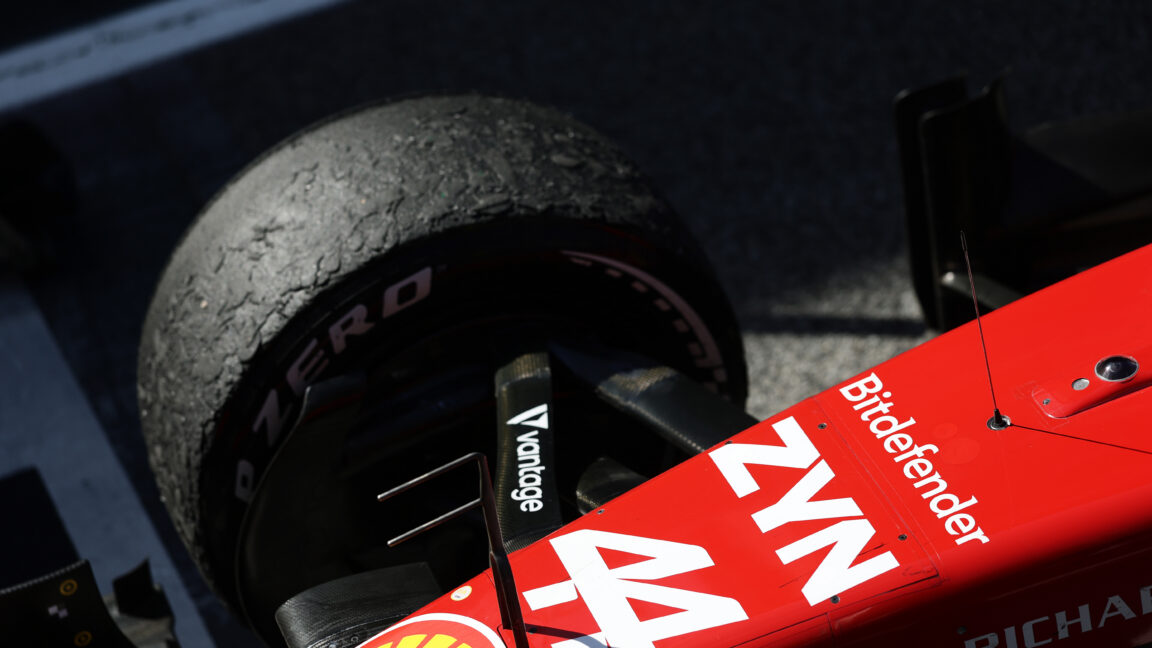
Lewis Hamilton won the Spanish Grand Prix for Ferrari after an aggressive three-stop strategy paid off at Barcelona-Catalunya, according to Ars Technica. The result matters for the title race because Kimi Antonelli retired late and saw his championship lead over Hamilton fall to 41 points.
Ars Technica reported that the Barcelona-Catalunya circuit put unusual stress on tires because of its fast corners and abrasive surface. The track rewards downforce, which helps cars carry speed through corners while reducing sliding and tire wear.
Tire degradation shaped the race plans, according to Ars Technica. The publication said this season’s earlier races had generally been one-stop events, but the 66-lap Spanish race required at least three sets of Pirelli tires, and possibly four.
As the tires aged, Ars Technica reported, lap times fell away by about 0.2 to 0.3 seconds per lap. That created room for undercut attempts, in which a driver pits earlier than rivals and uses fresher tires to gain time before others make their stops.
Most teams chose two stops, which Ars Technica described as the safer route. Ferrari took the bolder option with Hamilton, pairing the strategy with a heavily revised car that included changes to the front wing, floor and sidepods.
Hamilton arrived in Spain after second-place finishes in Canada and Monaco, according to Ars Technica. He missed the first Friday practice session while Ferrari junior Dino Beganovich used his car, and the publication said Hamilton looked less comfortable in the second session before improving on Saturday.
In qualifying, Hamilton was beaten to pole by former Mercedes teammate George Russell by less than one-tenth of a second, Ars Technica reported. Antonelli qualified third for Mercedes, while Charles Leclerc started 10th for Ferrari after a crash.
Ars Technica reported that Hamilton started the race on soft tires while nearby rivals used mediums. Ferrari committed early to the three-stop plan, bringing him in on lap 11.
Hamilton’s pace on newer tires forced others to respond, according to Ars Technica. Russell stopped on lap 12 and stayed ahead at first, while Hamilton made his second stop on lap 27.
Russell led until lap 36 while fighting Antonelli, Ars Technica reported. Antonelli then stopped from the lead on lap 37, after which Hamilton moved into first place and held it to the finish.
Hamilton’s final stop could have required him to pass Lando Norris and both Mercedes cars, according to Ars Technica. Instead, Fernando Alonso’s Aston Martin stopped on track, and a virtual safety car lasted long enough for Hamilton to pit without losing position.
Ars Technica reported that Hamilton did not ease off after that break and finished nearly 20 seconds ahead of Russell. The win ended Mercedes’ and Antonelli’s recent winning run.
Antonelli briefly passed Russell on lap 61 before his Mercedes stopped a lap later, according to Ars Technica. The publication said Russell had recently suffered reliability problems, but in Spain he benefited when Antonelli was the Mercedes driver hit by trouble.
Ferrari’s own weekend was not trouble-free, Ars Technica reported. The publication said Ferrari’s power unit has been more reliable, but hydraulic issues cost Leclerc a finish in Spain.
Ars Technica framed Hamilton’s victory as further evidence that the 2026 Ferrari suits him better than the ground-effect cars used in recent seasons. The publication reported that Hamilton had struggled after the 2022 rule changes, left Mercedes for Ferrari in 2025, and has looked more comfortable this year in a smaller, lighter car without ground-effect floors.
This story draws on original reporting from Ars Technica.