
Google tests live calibration method for quantum processors
A Nature paper says reinforcement learning can use error-correction data to adjust drifting quantum hardware during computations.
By Maya Lindqvist · Senior Technology Correspondent
3 min read
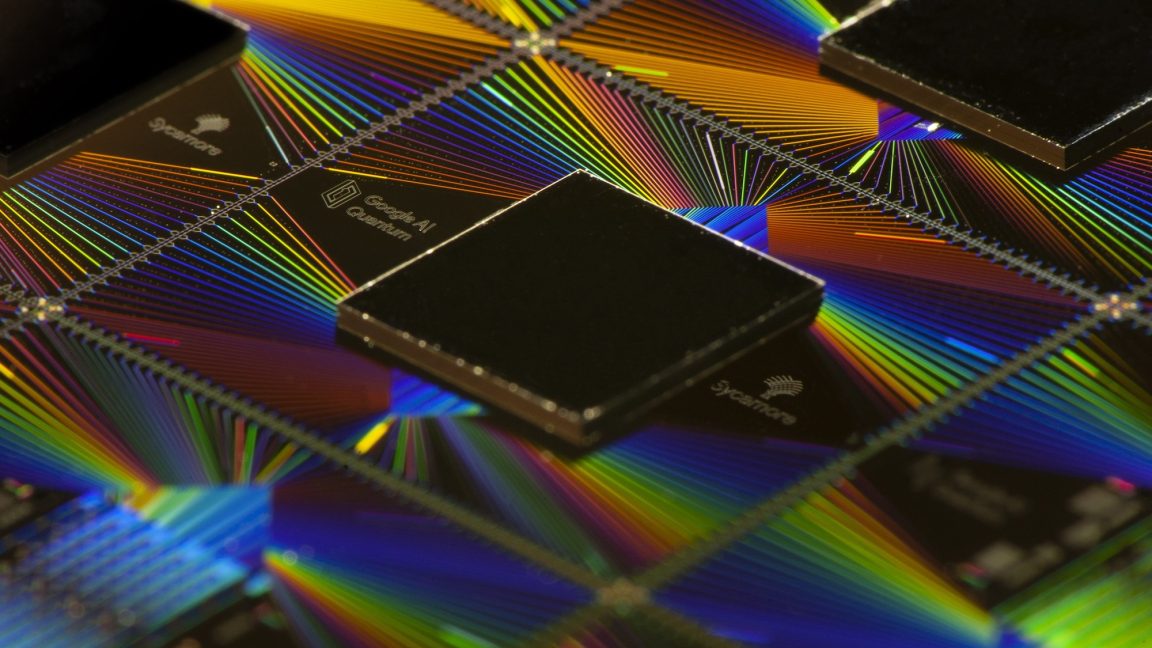
Google researchers have shown a way for a quantum processor to adjust its controls while a computation is running, according to a paper published in Nature. The work addresses a practical problem for future quantum computers: hardware settings can drift during long calculations, raising error rates when stopping to recalibrate would not be viable.
The issue applies to some quantum computing systems, including superconducting qubits known as transmons. Those devices are controlled by microwave pulses whose frequency and strength must be tuned through calibration before use, because manufactured qubits can vary slightly from one another.
According to the Nature paper, the external control hardware that produces those pulses can also shift over time, including from heating during operation. Google says current systems can halt a computation and recalibrate when signs of drift appear, but that approach would not work during the long, complex algorithms envisioned for useful quantum computers.
Using error signals as calibration clues
Future quantum machines are expected to rely on error-corrected logical qubits, which combine many physical qubits. In those systems, measurements on some qubits are used to detect and characterize errors affecting the data-carrying qubits.
The Google team’s insight, as described in Nature, is that calibration problems leave traces in the same error-detection data already used for quantum error correction. The researchers wrote that errors caused by imperfect calibration generate detectable syndromes like other errors.
The hard part is separating ordinary random errors from errors caused by drifting controls. To do that, the researchers used reinforcement learning, a method in which software tests small changes and scores which ones reduce errors.
In the experiment, the system made small simultaneous adjustments across roughly 1,000 control parameters during computation. Those changes altered the statistics of error-detection events, giving the software information about which control settings should reduce certain errors.
The researchers tested the method on two logical qubits using different error-correction schemes: a surface code and a color code. With reinforcement-learning-based corrections enabled, the system improved the ability to detect and correct logical-qubit errors by 20 percent, according to the Nature paper.
Limits for longer calculations
The approach depends on the processor staying close enough to the conditions under which the reinforcement-learning system was trained. If the hardware drifts too far, a correction that helps in one state may not help in another.
Google’s team also examined whether the system could keep learning during a computation. That creates a trade-off, because testing new control settings means the processor must sometimes operate away from its best-known configuration.
Simulations using a very small error-corrected qubit indicated the trade-off could be favorable if drift happened slowly enough, according to the paper. The team also demonstrated real-time operation on a larger error-corrected qubit in which the reinforcement-learning system controlled about 40,000 parameters.
The result does not mean current quantum computers are ready for long, useful calculations. The Nature paper frames the work as preparation for machines capable of running algorithms long enough for calibration drift to become a serious concern.
For now, the demonstration suggests that error correction may be able to do more than preserve fragile quantum information. In Google’s implementation, it also supplied feedback that helped the processor keep its own control system aligned during operation.
This story draws on original reporting from Ars Technica.