
Study casts Flores Hobbits as scavengers, not elephant hunters
Marks on Stegodon bones suggest Homo floresiensis ate leftovers from Komodo dragon kills, a finding that bears on its debated ancestry.
By Hana Yoshida · Markets Reporter
4 min read
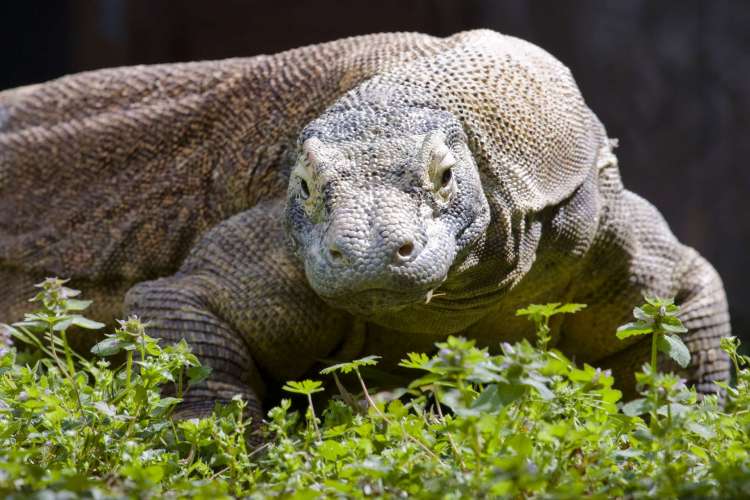
A new study argues that Homo floresiensis, the small-bodied hominin from Indonesia’s Flores island, likely scavenged pygmy elephant carcasses after Komodo dragons fed on them. The finding matters because earlier interpretations of the same cave remains had suggested a more complex hunting and butchery strategy by the hominins nicknamed “Hobbits.”
University of Tübingen anthropologist Elizabeth Veatch and colleagues reported the work in Science Advances. Their analysis centers on bones of extinct Stegodon, pygmy relatives of modern elephants, found at Liang Bua, the Flores cave where Homo floresiensis remains were also discovered.
Homo floresiensis lived on Flores until about 60,000 years ago, according to the researchers. At the time, the island also had Komodo dragons, giant rats and several species of Stegodon, which stood roughly 1.25 to nearly 2 meters tall and weighed between 500 kilograms and 1.5 tons.
Tooth marks point to Komodo dragons
The Stegodon bones from Liang Bua preserve both stone-tool cut marks and damage from Komodo dragon teeth, Veatch and colleagues said. To compare the patterns, the researchers fed a nearly whole goat carcass to a Komodo dragon at Zoo Atlanta and examined the resulting marks.
Komodo dragons use serrated teeth and a side-to-side pulling motion to strip flesh from bone, the team reported. The damage left by the zoo animal tended to be shorter, broader and shallower than marks made by stone tools.
The location of the marks also mattered. Veatch and colleagues said tooth damage on the Liang Bua Stegodon bones appeared on meat-rich areas, including limbs, ribs and fat-rich feet. Stone-tool marks were found on less desirable parts, a pattern the researchers said fits scavenging after Komodo dragons had eaten rather than first access to a fresh kill.
The team also reported no evidence of fire in the Homo floresiensis layers at Liang Bua. If the hominins ate the scavenged meat there, Veatch and colleagues said, they probably did so without cooking it.
An ancestry debate
The interpretation weakens the idea that Homo floresiensis regularly organized hunts for large prey, according to the study. That question feeds into a larger debate over where the species came from and which hominins first spread beyond Africa.
One common hypothesis links Homo floresiensis to Homo erectus, a species that appears in Africa’s fossil record around 1.9 million years ago and later shows up in the Levant, Georgia, China and Indonesia. The oldest hominin bones outside Africa are Homo erectus fossils from Dmanisi Cave in Georgia dated to between 1.77 million and 1.85 million years ago, according to the account cited by the researchers.
Stone tools complicate that picture. Tools from Shangchen in China have been dated to about 2.1 million years ago, and tools from Xihoudu in northern China to about 2.43 million years ago, according to the study discussion. That leaves open whether Homo erectus is older than currently known or whether another hominin, such as Homo habilis or Homo rudolfensis, left Africa earlier.
Veatch and colleagues wrote that evidence for complex behavior in Homo floresiensis, including controlled fire use and sophisticated tool use, has become less persuasive over time. They suggested the species may have lacked the broad behavioral range seen in modern humans or Neanderthals, possibly because its ancestors did not evolve large-game hunting or fire control.
Evidence remains mixed
The case is not settled. Some anatomical traits of Homo floresiensis, including features of the feet and upper arms, have been read as more primitive than Homo erectus, while the shape of the inside of the skull has been interpreted as showing a prefrontal cortex with similarities to modern humans, according to the researchers.
The study also does not prove the hominins were incapable of hunting Stegodon. Veatch and colleagues calculated that, despite the calories available from an elephant carcass, the time, effort and danger of killing, butchering and moving such prey could outweigh the benefits. Giant rats ranked much higher than Stegodon as attractive prey in the team’s analysis, and their remains are common in Liang Bua layers associated with both Homo floresiensis and later Homo sapiens.
The researchers said Komodo dragon venom would probably not have poisoned scavengers eating leftover meat, because the venom proteins are too large to pass through modern human stomach linings and would likely be broken down by digestive enzymes. They reported no evidence that Komodo dragons ate Homo floresiensis, though they noted the reptiles would have been dangerous animals for meter-tall hominins to approach.
This story draws on original reporting from Ars Technica.