
Epomaker RT98 review finds a keyboard with a movable numpad
The $119 mechanical keyboard lets users place its number pad on either side, though The Verge found the swap fiddly and the plastic build a drawback.
By Hana Yoshida · Markets Reporter
3 min read
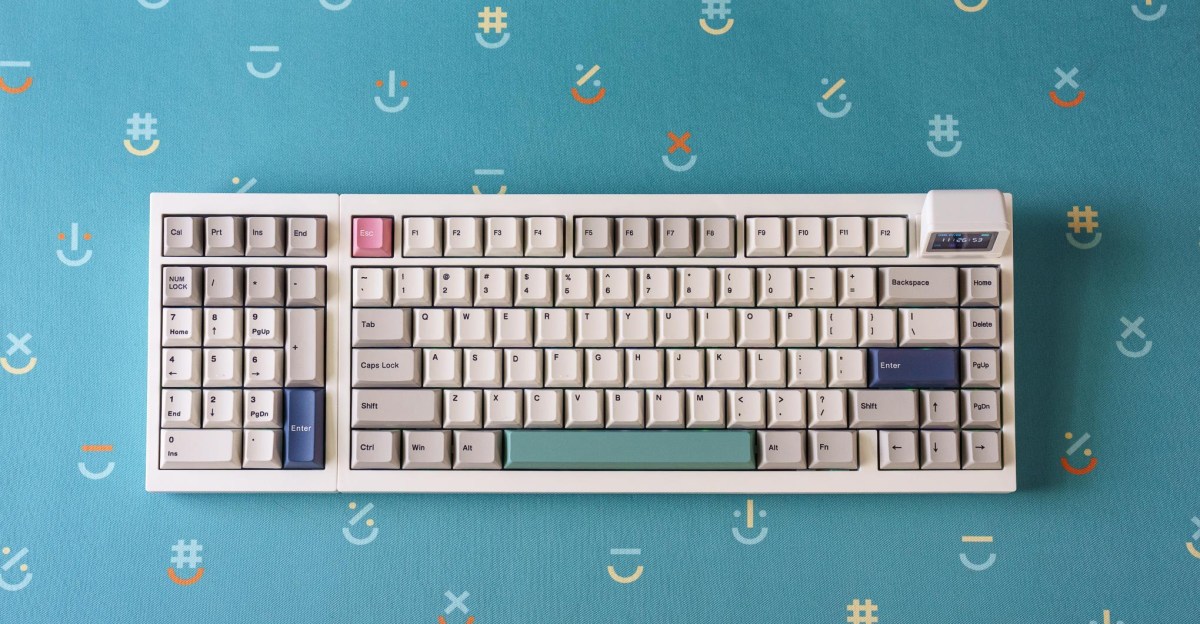
Epomaker’s RT98 mechanical keyboard gives users a rare choice: keep the number pad on the right or move it to the left. In a review published by The Verge, Antonio G. Di Benedetto said that flexibility is the board’s main appeal, especially for people who want a numpad without giving up mouse space.
The RT98 is Epomaker’s latest crowdfunded keyboard and sells for $119 in a prebuilt configuration, according to The Verge. Buyers can order it with Epomaker Creamy Jade linear switches or Sea Salt Silent V2 linear switches, and can choose a left- or right-side numpad layout at purchase.
The difference is that the layout is not fixed. The Verge said the number pad can be moved after purchase, making the RT98 less restrictive than many compact full-size or 1800-layout keyboards.
A flexible take on a familiar layout
Left-side numpad keyboards are not new; The Verge pointed to Keychron’s southpaw models as an example. The review said keyboards with removable or swappable numpads have also appeared before, including Asus ROG Claymore models and the Mountain Everest Max, but described those as pricier gaming-focused products.
The RT98 takes a more understated approach, according to The Verge. Di Benedetto highlighted its retro styling, VIA compatibility and a magnetic CRT-style screen, which the review said ships with cat animations and a cat clip.
The Verge gave the RT98 a score of 7. Its listed strengths included the ambidextrous numpad, good typing feel, the choice of silent or “creamy” switches, and the playful screen. Drawbacks included a plastic case, a somewhat awkward numpad-moving process, keycap legends that looked low-grade, and a price that overlaps with some aluminum keyboards.
Typing feel and build
The Verge said the RT98 uses several common enthusiast-keyboard design choices, including a gasket-mounted internal structure and foam layers beneath the PCB. The board has a plastic chassis, a solid PCB and a polycarbonate switch plate without flex cuts, which the review said gives it a sharper feel than softer, bouncier keyboards.
Both switch options received positive marks from The Verge. The Sea Salt Silent V2 switches were described as smooth and quiet, though Di Benedetto said the plate-mounted stabilizers on larger keys such as the space bar and enter key were louder than the switches themselves.
The review was more enthusiastic about Epomaker’s Creamy Jade linear switches. The Verge said they gave the keyboard a crisp, darker sound and that Di Benedetto preferred them to the feel and tone of an Aula F75 Max he had briefly used.
Keycaps were a weaker point. The Verge said the beige PBT keycap set fit the keyboard’s retro look, but the dye-sub printed legends appeared cheap and lacked sharpness.
Moving the numpad takes work
The Verge said shifting the numpad is possible but not as easy as snapping off a module. The process involves removing bottom screws, taking off the top case pieces for the main keyboard and number pad, moving the internals, repositioning a ribbon cable and temporarily disconnecting the cable for the screen’s pogo-pin connector.
Di Benedetto said the box did not include instructions for the swap, but Epomaker’s video tutorial guided the process, which took about 30 minutes. The review said the ribbon cable work was manageable, while prying open the plastic shell and pressing its clips back into place was uncomfortable.
The Verge said many buyers will likely choose their preferred side at purchase and leave it there, or change it once. Even so, the review found the RT98’s movable numpad a useful compromise for a mechanical keyboard that keeps number-pad functionality while giving users more control over desk layout.
This story draws on original reporting from The Verge.