
Doctors remove live 10-inch tapeworm during hernia surgery
A New England Journal of Medicine case report says the 71-year-old had a second worm removed after a similar finding four years earlier.
By Hana Yoshida · Markets Reporter
3 min read
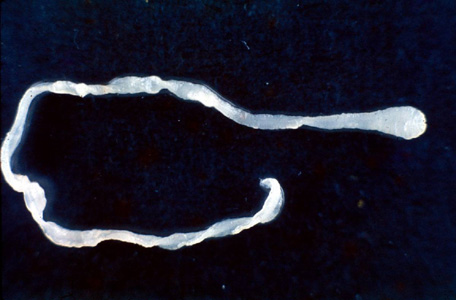
Surgeons repairing a 71-year-old man’s inguinal hernia found a live 10.2-inch tapeworm inside his abdomen, according to a case report in the New England Journal of Medicine. The finding matters medically because the man had no signs of parasitic infection before the elective operation, and he said another worm had been found during a prior hernia repair.
The man had chosen surgery for a painless bulge on the right side of his groin, the report said. Doctors identified the bulge as an inguinal hernia, a common condition in which abdominal tissue protrudes through a weak area in the abdominal wall.
According to the report, the man otherwise appeared healthy before the procedure. His blood tests did not show abnormalities, including the kind of elevated white blood cell count that can point to a parasitic infection.
Worm found during laparoscopic repair
Surgeons used a laparoscopic approach, making small incisions to insert instruments and repair the abdominal wall, the report said. During the operation, they noticed a pale, threadlike object between the bladder and pubic bone.
The surgical team grasped a visible loop with forceps and slowly pulled the organism free, according to the case report. Once removed and stretched out, it measured 26 centimeters, or 10.2 inches, and was still moving on the operating table.
Genetic testing later identified the organism as Spirometra erinaceieuropaei, the report said. That tapeworm causes sparganosis, a parasitic infection that is uncommon in humans.
The New England Journal of Medicine published an image of the worm after its removal. The case report is available here.
A rare infection in humans
The report said Spirometra tapeworms normally use dogs and cats as their definitive hosts. Eggs are shed in animal feces, hatch in water and are taken up by small crustaceans before moving into fish, amphibians or reptiles that eat those crustaceans.
Humans can become infected by drinking contaminated water or by eating undercooked fish, reptiles or amphibians, according to the report. Because humans are not the usual final host, the larvae can migrate through tissues and settle in different parts of the body.
Symptoms depend on where the parasite lodges, the report said. Movement can be painless, but infection in the brain or spine can cause neurological problems.
Earlier worm was not identified
The patient told doctors that surgeons had found another worm four years earlier, during an operation for a left-side inguinal hernia, according to the case report. That worm measured 18 centimeters, or about 7 inches.
The earlier parasite was not identified, and the man did not receive antiparasitic treatment after that operation, the report said. After the second discovery, doctors prescribed antiparasitic medication to kill any remaining worms.
Doctors also asked the man about possible exposures, according to the report. He recalled eating raw snake meat during military service about 50 years earlier, though the report noted that Spirometra worms in humans are typically reported to live about 20 to 30 years.
This story draws on original reporting from Ars Technica.