
China prepares Long March 10B test as Rocket Lab speeds military launch
Rocket Lab flew a Space Force mission within 17 hours of orders, while China appears close to testing sea recovery of a reusable booster.
By Maya Lindqvist · Senior Technology Correspondent
3 min read
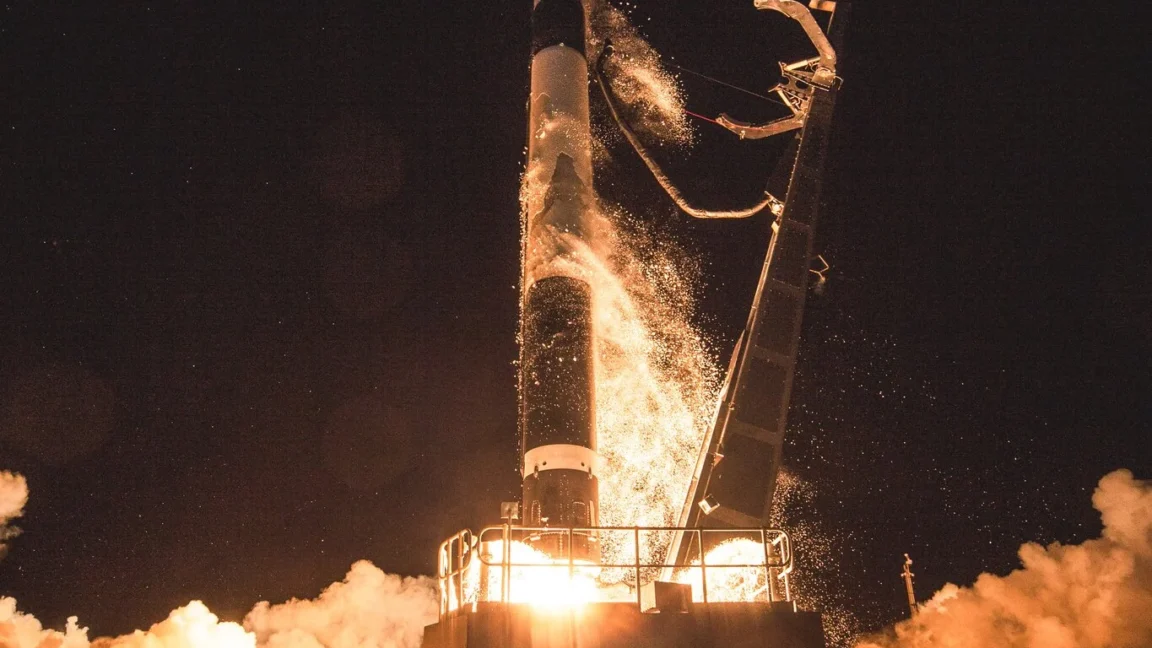
Rocket Lab launched a U.S. Space Force mission less than 17 hours after receiving its order to fly, setting a new rapid-response mark for the company. At the same time, China is preparing a July debut for its Long March 10B rocket that may include an attempt to recover the first stage at sea, according to Space News.
Rocket Lab said its Electron rocket carried the Victus Haze mission after a Notice to Launch from the Space Force, lifting off 16 hours and 42 minutes later. Ars Technica reported that the mission had almost no public buildup, with aircraft and maritime hazard notices serving as the main outside sign that a launch was near.
Rapid military launch test
The Space Force outlined Victus Haze in 2024 after choosing Rocket Lab and True Anomaly for a two-satellite exercise in low Earth orbit, according to Ars Technica. True Anomaly’s spacecraft was to play the role of a potentially hostile satellite, while Rocket Lab kept another satellite ready to launch on short notice to inspect it.
The mission is meant to show whether the military and commercial space companies can respond quickly to a possible threat in orbit, Ars Technica reported. Rocket Lab did not provide its usual launch livestream for the flight.
China’s reusable rocket step
China’s Long March 10B could fly as soon as July 10 from the Hainan Commercial Space Launch Site, Space News reported, citing airspace and maritime warning notices. The two-stage rocket uses kerosene and liquid oxygen and is described as a cargo version of the Long March 10A, which is intended to launch a new crew spacecraft to low Earth orbit.
Space News reported that Long March 10B can lift about 11 metric tons to low Earth orbit. China conducted a wet dress rehearsal in April, but the first flight slipped for reasons that have not been specified.
Pressure on small satellite access
SpaceX may be nearing the end of taking new bookings for its Falcon 9 Transporter rideshare program, Space News reported. At least nine SpaceX customers and partners told the publication that the company is not accepting Transporter reservations beyond late 2028 or early 2029, and that near-term manifests are close to full.
The report said some customers expect SpaceX could extend Falcon 9 rideshares if Starship takes longer than planned to enter regular service. For small satellite operators, any reduction would matter because SpaceX has offered frequent and relatively low-cost rides to orbit.
Other launch sector developments
European Spaceflight reported that OHB, the publicly traded German space technology company, plans to raise up to 510.7 million euros, or about $580 million, through a new share issue. OHB is tied to launch work through MT Aerospace, an Ariane 6 supplier, and Rocket Factory Augsburg, which is developing the RFA One rocket.
European Spaceflight also reported that France’s CNES selected Sirius Space Services for a place at the Guiana Space Center’s multi-user commercial launch facility. Sirius is developing three small launch vehicles, with planned payload capacities ranging from 180 kilograms to 1,100 kilograms.
Reuters reported that SpaceX plans to begin construction next month on an eight-mile natural gas pipeline to Starbase in Texas. The line, called Starpipe in county filings, is expected to support Starship operations, which currently rely on large numbers of tanker trucks to supply liquid methane.
NASA’s Office of the Inspector General warned that Kennedy Space Center infrastructure is aging as launch demand rises, Ars Technica reported. The watchdog cited helium and nitrogen supply lines, roads, bridges and a decades-old electrical distribution system among the areas under strain.
This story draws on original reporting from Ars Technica.