
Blue Origin expected to raise $10 billion in private capital
DealBook reported the Jeff Bezos-founded space company is seeking outside funding at a $130 billion valuation after years of relying on Bezos.
By Maya Lindqvist · Senior Technology Correspondent
3 min read
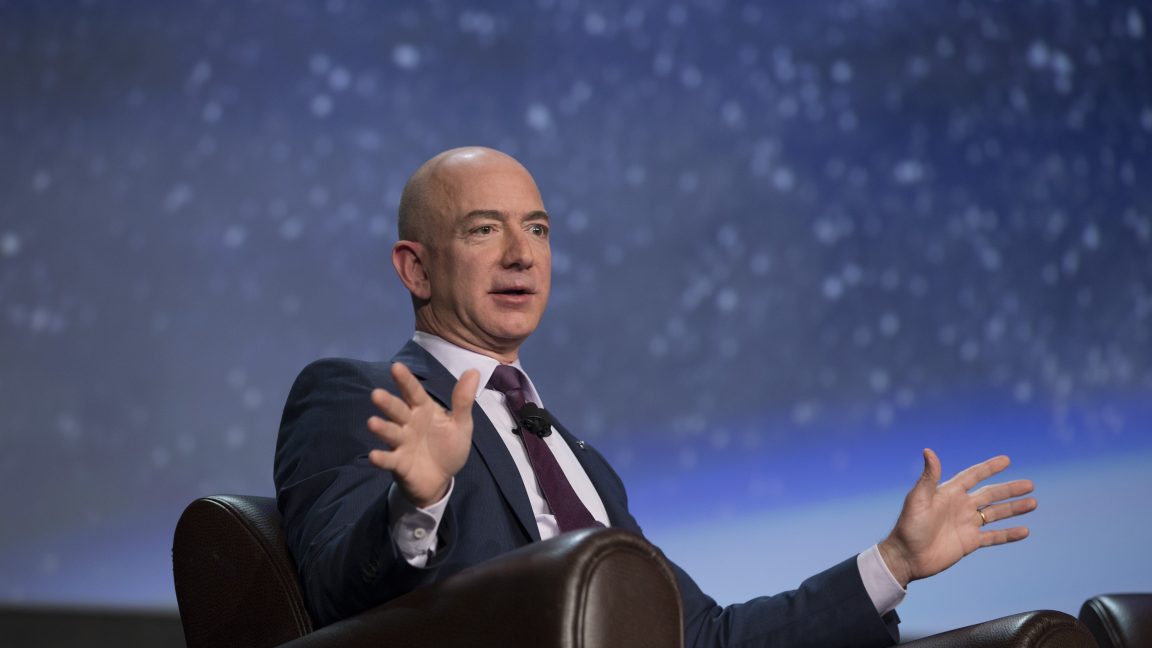
Blue Origin is expected to raise $10 billion from private investors, a shift for the Jeff Bezos-founded rocket company after years of heavy reliance on his funding. DealBook reported Wednesday that the round would value the company at $130 billion.
DealBook said Coatue Management is expected to lead the financing with a $4 billion commitment. The newsletter reported that large institutional investors are expected to provide another $4 billion, while Bezos would add $2 billion of his own money.
Founded in 2000, Blue Origin is trying to build a broad space business that includes very large rockets, lunar landers and satellite networks, Ars Technica reported. Ars said the company is aiming at markets where SpaceX already has major operations, including launches, telecommunications and space-based data centers.
Blue Origin’s funding history has differed sharply from SpaceX’s, according to Ars. SpaceX grew through a mix of Elon Musk’s early money, government and commercial work, private investment and loans, while Blue Origin has depended largely on Bezos, who now puts several billion dollars a year into the company, Ars reported.
Fundraising follows New Glenn setback
Ars reported that Bezos had been working on fundraising this spring and summer before a late-May accident disrupted those plans. The company’s New Glenn rocket exploded during a static-fire test in Florida and destroyed Blue Origin’s only launch pad, according to Ars.
Since then, Bezos and Blue Origin Chief Executive Dave Limp have moved quickly to clear the site and start rebuilding, Ars reported. Bezos has said publicly that he wants New Glenn flying again before the end of the year, though Ars said most industry observers see that schedule as unlikely and expect a timeline closer to 12 months.
New Glenn is central to Blue Origin’s plans, Ars reported. The rocket is meant to support lunar cargo and crew missions for NASA and commercial customers, and satellite companies are counting on it as another launch option against SpaceX’s Falcon and Starship rockets, according to Ars.
The company has also announced two satellite network projects, Ars reported. One is TeraWave, an Internet constellation in low-Earth and medium-Earth orbit for enterprise connectivity; the other is Project Sunrise, a proposed group of as many as 51,600 satellites in sun-synchronous orbits between 500 and 1,800 kilometers above Earth.
Cost pressure rises
Ars reported that Blue Origin’s plans would require tens to hundreds of billions of dollars if they are fully carried out. Sources told Ars that Bezos, 62, has grown tired of funding the company largely by himself.
Ars said Bezos hired Bob Smith in 2017 to turn Blue Origin into a larger space company supported by government and commercial contracts. Company programs were told to become cash-flow neutral, but Ars reported that the effort largely failed and Smith left in 2023.
The reported private round would also help Blue Origin compete for workers, Ars said, because SpaceX has offered employees valuable stock options. Ars reported that the expected Blue Origin financing is still much smaller than the $85 billion SpaceX raised through its initial public offering process earlier this year, which valued SpaceX at about $2 trillion.
This story draws on original reporting from Ars Technica.