
AI data center power demand raises costs for Rust Belt factories
Manufacturers in PJM territory face higher power bills as AI data centers add demand, complicating Washington’s push to expand U.S. factory output.
By Maya Lindqvist · Senior Technology Correspondent
3 min read
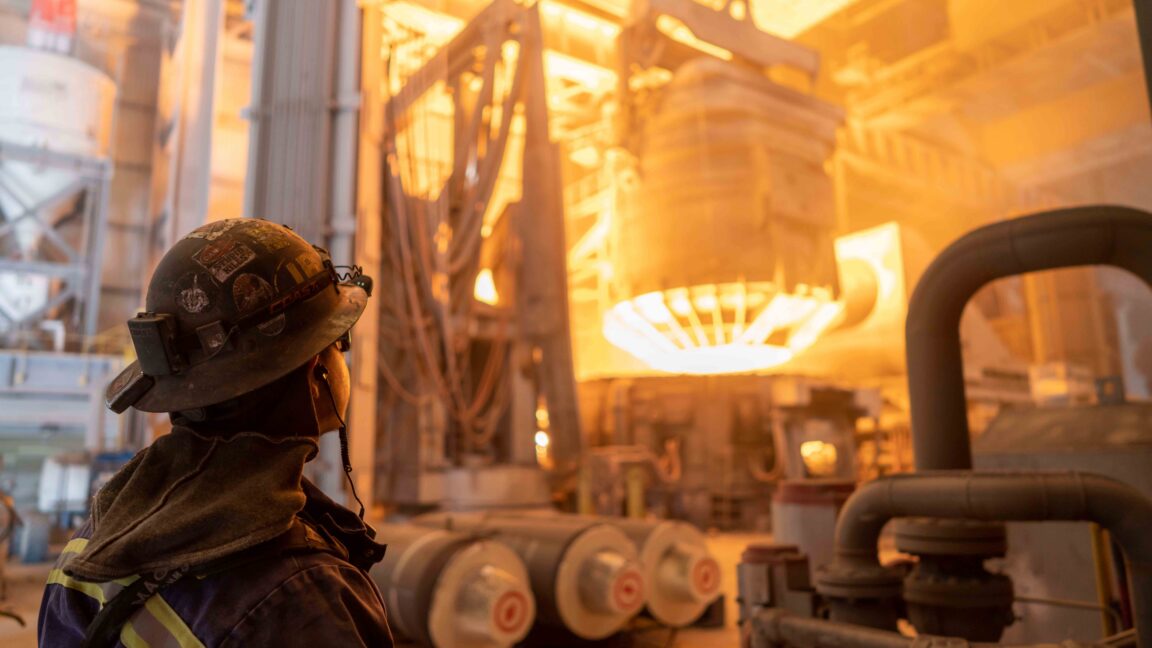
Factories across parts of the Rust Belt are paying more for electricity as AI data centers add strain to the country’s largest grid operator. The higher costs are squeezing manufacturers that the Trump administration says it wants to strengthen under its “Made in America” agenda.
A Reuters analysis found that factory power bills in many communities served by PJM Interconnection are rising faster than bills for other commercial customers and households. PJM serves a 13-state region and sets capacity charges tied to forecasts for power supply and demand.
Reuters cited Belden Brick Company, a 141-year-old Ohio manufacturer, as one example of the pressure. The company’s monthly electricity bill rose from $1,600 to $12,000 after a higher capacity charge took effect, according to Reuters.
Steelmakers face higher operating costs
The Steel Manufacturers Association has warned that steel companies concentrated in PJM territory are paying tens of millions of dollars more each year for power. The group said electricity represents 20% to 40% of total steel production costs.
Steelmaking uses large amounts of electricity. According to the Steel Manufacturers Association, each electric arc furnace carries an operating load of 40 to 200 megawatts, and the U.S. steel industry can draw as much as 11 gigawatts at peak output across its facilities.
Data center construction has also created business for steelmakers. The Wall Street Journal reported that data centers require an estimated 1 million tons of steel a year, while also raising the electricity costs of the companies supplying that steel.
Ohio-based Metallus told the Wall Street Journal that its electricity costs have climbed 70% since 2024. The company said the increase adds $15 million a year to its energy expenses.
Capacity prices jump in PJM
Reuters reported that data center growth has helped drive PJM capacity prices from $28.92 per megawatt-day in 2024 to $329.17 per megawatt-day in 2026. Those payments go to power generators based on expected supply needs and demand.
PJM has forecast that demand in its territory will exceed available supply by 6.6 gigawatts starting in 2027. The Wall Street Journal described that shortfall as equal to more than six nuclear power plants.
Manufacturers are responding in several ways. Reuters reported that some companies have increased customer prices to offset electricity costs, while others are considering moving operations.
The Wall Street Journal also reported that steel executives have warned of a greater risk of production outages if local grids become overloaded. Such disruptions would add another challenge for U.S. manufacturing, which the Trump administration has said is a priority even as CBS News reported that 83,000 manufacturing jobs were lost in Trump’s first year back in office.
Policy fixes remain uncertain
The White House has promoted a Ratepayer Protection Pledge under which major technology companies would pay for new power generation and transmission infrastructure. The pledge lacks a meaningful enforcement mechanism, according to the reporting.
The Trump administration and state governors have also pushed PJM to hold a one-time backstop auction to buy new power supply capacity. That effort aims to bring more capacity into the system as large data center projects increase demand.
Building enough generation and transmission remains difficult. Michael Thomas, chief executive of Cleanview, said 266 gigawatts of U.S. power projects were canceled in 2025, equal to 25% of current U.S. generation capacity and more than Texas’ total electricity generation.
Thomas said clean energy projects made up 93% of those cancellations. He cited Trump administration cancellations of wind projects, local opposition to renewable projects in states including Ohio and Indiana, and high interconnection costs caused by a lack of new transmission lines as factors in the cancellations.
This story draws on original reporting from Ars Technica.