
Social media photos lead scientists to rare wasp record in Japan
Kyushu University Museum researchers say posts on X helped document Eupelmus curvator in Japan and describe the species’ male for the first time.
By Lucas Ferreira · Science & Environment Writer
3 min read
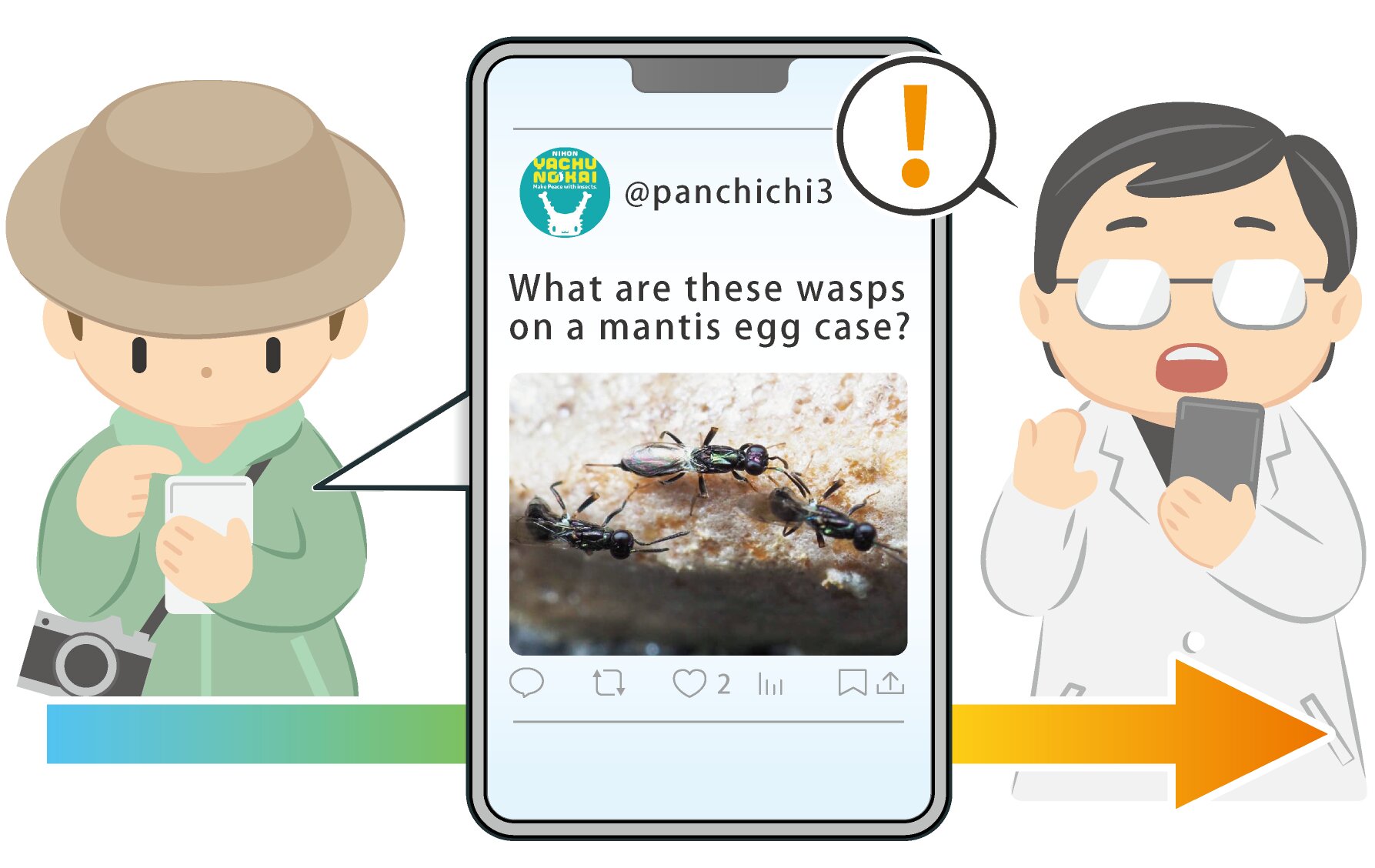
Researchers in Japan have documented the wasp Eupelmus curvator in the country for the first time after nature observers posted photos and videos of the insect on Twitter, now X. The finding matters because the species had previously been known only from China, and the study also gives the first formal scientific description of its male, according to Pensoft Publishers.
The work was led by Taisuke Kawano, a eupelmid wasp specialist at the Kyushu University Museum, and published in Travaux du Muséum National d'Histoire Naturelle "Grigore Antipa." Pensoft said the discovery began when an online user shared an image of a wasp emerging from a praying mantis egg case, which was then brought to Kawano’s attention by a colleague.
A wasp found through online observation
According to the study, the insect was identified as Eupelmus curvator, a parasitic wasp associated with mantis egg cases. Kawano’s team reported that the species was observed in Fukuoka, including on the Kyushu University Ito campus.
Pensoft said citizen scientists and nature enthusiasts posted images and videos of the wasp’s behavior in spring 2018 and again in 2021. After contact through the social media platform, some observers sent specimens to Kawano so researchers could examine and identify them.
The researchers said the case shows how online posts can expand the reach of field biology. Kawano told Pensoft that social media gives scientists access to observations from places and times they would not normally be able to cover, and that researchers can sometimes follow up directly with people who made the observations.
An unusual parasite of mantis eggs
Eupelmus curvator drew attention because it develops in the egg cases of praying mantises, according to Kawano. Pensoft reported that most species in the genus Eupelmus attack larvae or pupae of other insects, while only a small number are known to use mantis oothecae, the protective cases that hold mantis eggs.
The study confirmed the wasp parasitizes the Narrow-winged Mantis, Tenodera angustipennis. In one recorded case from Fukuoka, Pensoft said a single mantis egg case produced 77 wasps and only a few surviving mantis nymphs.
The team used macro photography and focus-stacking methods to document the wasp’s anatomy in detail, Pensoft reported. Female specimens measured about 2.2 to 3.2 millimeters, excluding the ovipositor, according to the study.
Citizen science role highlighted
Kawano and colleagues framed the finding as an example of digital collecting, where public observations posted online help researchers find or document organisms. Pensoft said the case also suggests that Japan, despite being well studied, still holds biodiversity records that may surface through new routes.
The paper is titled "When your posts yield biodiversity findings: social media-facilitated discovery of Eupelmus (Eupelmus) curvator Yang (Hymenoptera, Eupelmidae) in Japan with notes on its bionomics." Pensoft listed the DOI as 10.3897/travaux.69.e171809.
This story draws on original reporting from Phys.org.