
Mountain lions reshaped life in a small California preserve
Stanford researchers found that rising puma activity at Jasper Ridge coincided with fewer deer, recovering plants and shifts among smaller predators.
By Priya Raghavan · Science Reporter
3 min read
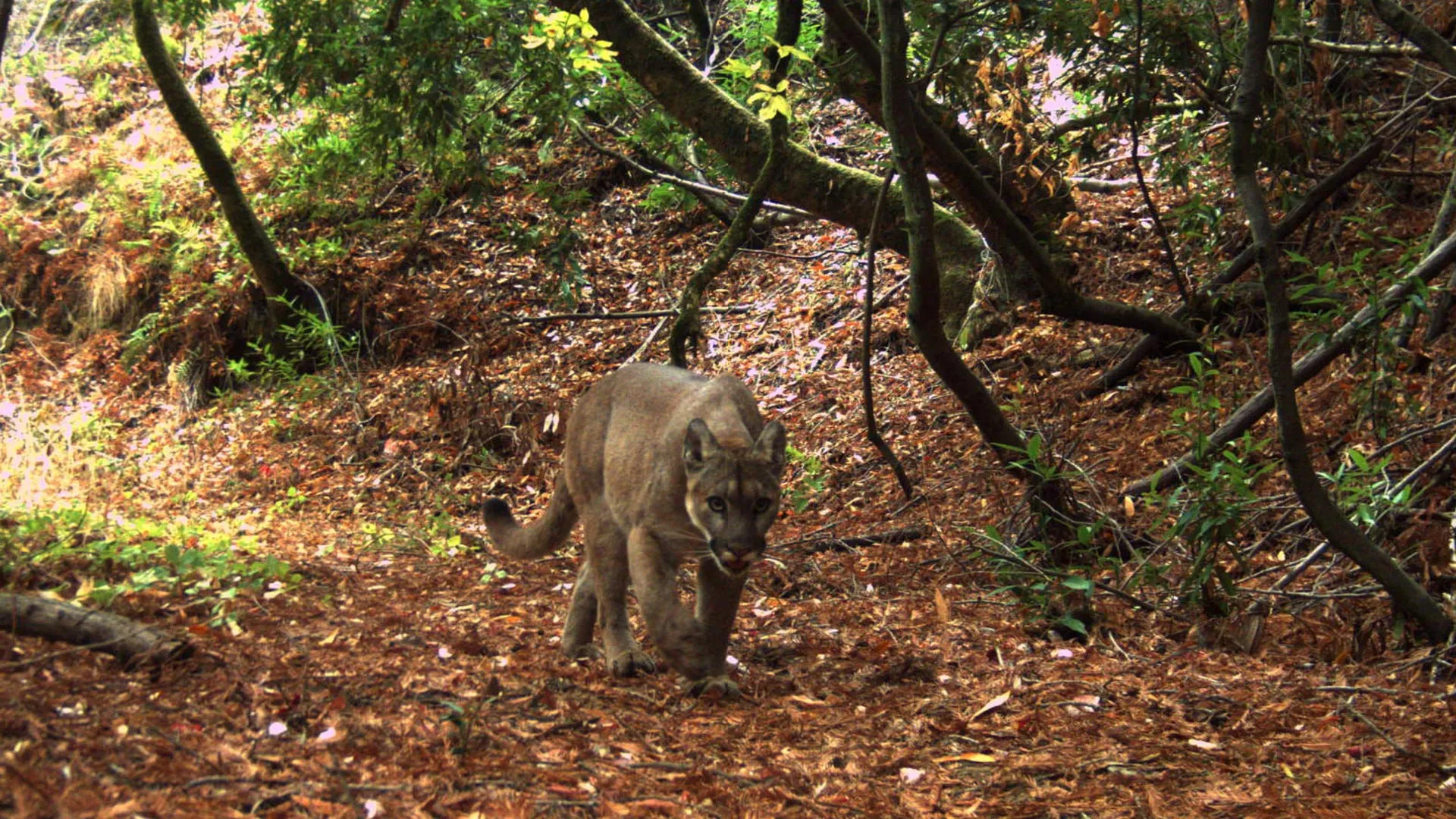
Mountain lions visiting a small protected area south of San Francisco appear to have changed how animals used the preserve and how plants grew there, according to Stanford University researchers. The findings matter because they suggest top predators can trigger broad ecological effects even in small preserves near cities.
The study, published in Ecology and Evolution, examined Stanford’s Jasper Ridge Biological Preserve, also known as ’Ootchamin ’Ooyakma, about 45 miles south of San Francisco. Researchers reported that pumas appeared more often on motion-activated cameras from 2015 to 2020, a period that also brought a drop in deer activity compared with years when mountain lions were rare or absent.
Stanford said vegetation surveys showed recovery among woody plants that deer often browse or damage, including young oaks. The pattern points to a trophic cascade, in which changes involving a top predator spread through prey populations and plants.
Predators altered the preserve’s rhythms
Chinmay Sonawane, the study’s first author and a Stanford doctoral student in biology, said the work challenges the idea that small preserves have little ecological value. He said connected sites such as Jasper Ridge can still show ecological processes often associated with remote parks such as Yellowstone.
The researchers described two linked cascades. One connected pumas, deer and plants. The other involved smaller carnivores that also use the preserve.
As mountain lion activity rose, cameras recorded fewer coyotes and bobcats, according to Stanford. The researchers suggested those animals may have avoided the area or changed when they moved through it to reduce the chance of encountering pumas.
Foxes appeared more often when coyotes and bobcats were less common, Stanford said. The study also reported a possible decline in rabbit activity, which could be tied to fox predation because rabbits are among foxes’ main prey.
Scientists call these behavior changes the “ecology of fear,” a term for the way predators influence other animals even when they are not killing them. Stanford said an animal’s response to a nearby predator can change where it feeds, when it travels and how much risk it takes.
Some links were stronger than others
The Stanford team cautioned that not every pattern can be pinned firmly on pumas. The study said changes in plants, foxes and rabbits could also reflect environmental shifts such as fog or temperature changes.
The evidence was stronger for links between mountain lion activity and changes in deer, coyote and bobcat behavior, according to the researchers. They said the findings support the ecological value of apex predators as well as the importance of small reserves connected to larger wild areas.
Stanford said 82% of protected areas in the United States are smaller than 5 square kilometers, or about 2 square miles. Rodolfo Dirzo, a study co-author and Stanford biology professor, said sites that keep predators, prey and plant resources together are important because ecosystems lose function when top predators disappear.
Why pumas used Jasper Ridge remains unclear
The researchers do not know why mountain lions began visiting Jasper Ridge more often. Stanford said one possibility is that female pumas may see the preserve as a safer place to raise young, and cameras recorded a mother with kittens during the study period.
The preserve is too small to support resident mountain lions, according to Stanford. Pumas in the Santa Cruz Mountains usually hold territories ranging from 20 to 170 square kilometers, far larger than Jasper Ridge.
Elizabeth Hadly, the study’s senior author and Stanford professor emerita of biology, said pumas generally avoid people and are mostly active at night. She said humans remain the leading cause of mountain lion deaths, including through hunting and vehicle collisions.
This story draws on original reporting from ScienceDaily.