
Long-lived tropical butterflies point to slower aging in insects
A Bristol-led study found some Heliconius butterflies live far longer than close relatives and may resist age-related physical decline.
By Priya Raghavan · Science Reporter
3 min read
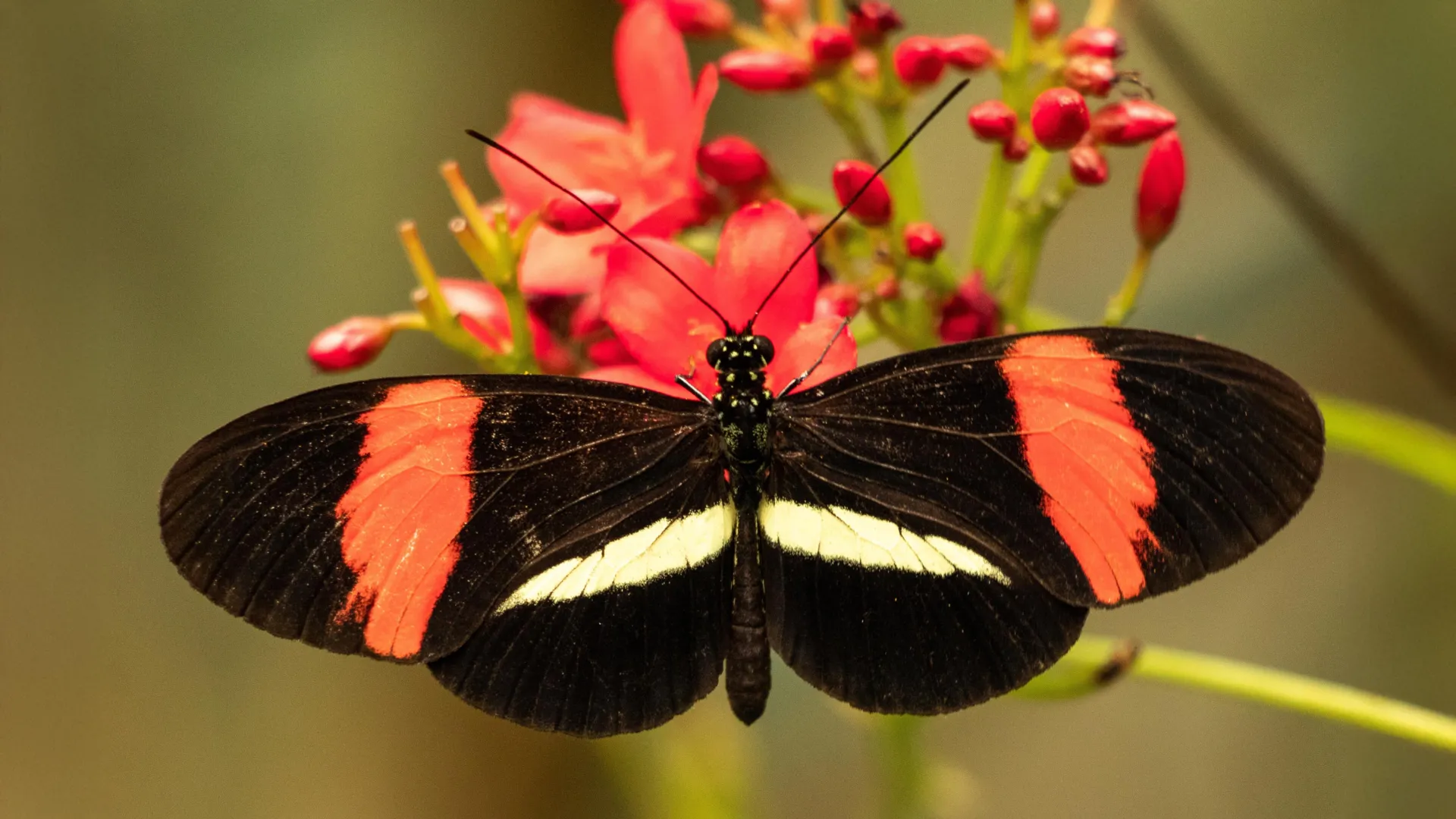
Some tropical butterflies can live far longer than closely related species and may avoid much of the physical decline usually linked with aging, according to a University of Bristol-led study. The findings could give longevity researchers a new insect model for studying how animals extend healthy life.
The study, published June 16 in Nature Communications, examined Heliconius butterflies, a rainforest group found in Central and South America. The University of Bristol said the butterflies are among the longest-lived butterflies documented.
Most adult butterflies survive for only weeks, the researchers said. In the study, some Heliconius species lived about three times longer on average than their nearest relatives, and some individuals survived close to a year.
The sharpest comparison cited by the researchers involved Heliconius hewitsoni, which reached 348 days, and the related species Dione juno, which lived 14 days. That amounted to a 25-fold gap in maximum lifespan, according to the study.
Grip tests showed little decline
The Bristol-led team, working with scientists at the Smithsonian Tropical Research Institute in Panama, also tested whether longer life came with slower physical aging. In at least one species, Heliconius hecale, the researchers reported little detectable weakening with age.
The team used grip strength as a measure of physical performance. Older H. hecale butterflies performed comparably to younger butterflies, while Dryas iulia, a shorter-lived close relative, showed a clear age-related drop, according to the study.
The researchers combined several kinds of evidence, including records from butterfly houses, mark-release-recapture studies and controlled insectary experiments. Across the Heliconiini tribe, they found Heliconius butterflies had longer average and maximum lifespans, lower baseline mortality and slower aging rates than relatives that do not eat pollen as adults.
Pollen may be part of the answer
University of Bristol researchers said Heliconius butterflies are unusual because adults can feed on pollen, while most butterflies rely mostly on nectar. Scientists have considered that diet a possible explanation for the group’s unusually long lives.
To test the idea, the team compared pollen-feeding H. hecale with non-pollen-feeding D. iulia. The researchers found that H. hecale kept body mass and muscle performance longer and did not show the same age-linked physical decline seen in D. iulia.
Diet did not explain the full difference, according to the study. When pollen was removed from the diet of H. hecale, the species still lived substantially longer than its relative, suggesting that inherited biological changes also help support longer survival.
A potential model for aging biology
Lead author Dr. Jessica Foley of the University of Bristol’s School of Biological Sciences said insects show wide variation in lifespan, from adult mayflies that live only days to reproductive ants and termites that can live for decades. She said Heliconius butterflies stand out because they appear to have evolved both longer lives and slower aging.
Foley said comparisons between long-lived Heliconius butterflies and shorter-lived relatives offer a natural way to study how lifespan increases. The researchers said the group may help scientists investigate how ecological changes, including adult pollen feeding, become linked to healthier aging.
This story draws on original reporting from ScienceDaily.