
Gene edit turns red lettuce green while raising other flavonoids
University of Tsukuba researchers say blocking a pigment enzyme changed lettuce color and shifted its beneficial plant compounds without slowing growth.
By Lucas Ferreira · Science & Environment Writer
3 min read
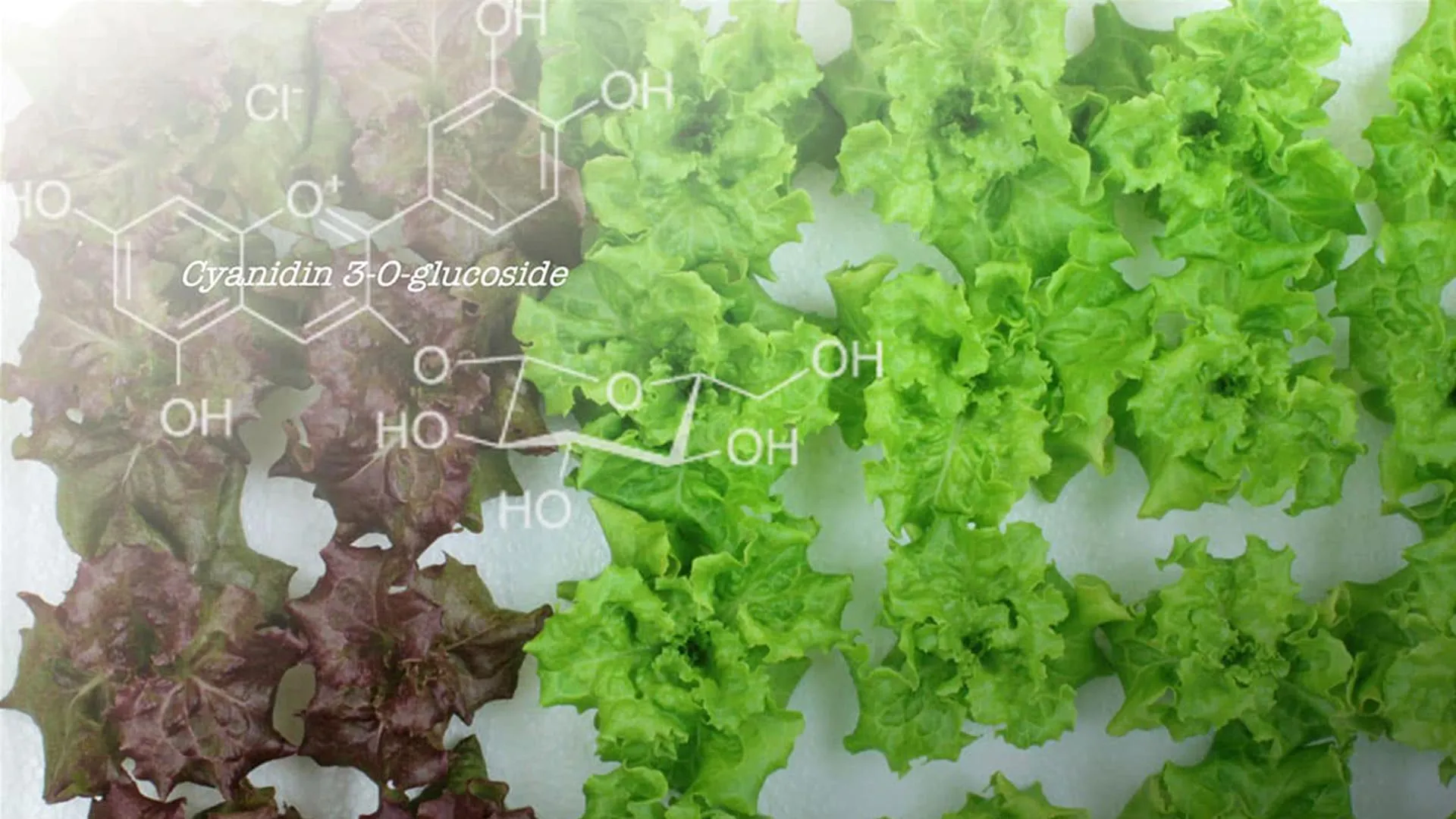
Researchers at the University of Tsukuba used CRISPR/Cas9 genome editing to remove the red color from red leaf lettuce, and the change altered the plant’s chemistry without reducing its growth. The work points to a possible route for breeding lettuce with tailored levels of flavonoids, a family of plant compounds linked to antioxidant activity, according to the university.
The study, published in Frontiers in Genome Editing, focused on anthocyanins, the polyphenol pigments that give red leaf lettuce its color. According to the researchers, anthocyanins are produced through a chain of enzyme-driven reactions that begins with the amino acid phenylalanine and passes through several flavonoid compounds before red pigments form.
The team targeted a gene tied to dihydroflavonol 4-reductase, or DFR, an enzyme involved late in the pathway before anthocyanin production. By knocking out that gene, the researchers prevented the lettuce from making its usual red pigments, leaving the edited plants green, according to the University of Tsukuba.
Chemical analysis showed that the edit did more than change leaf color. The university said several other flavonoids accumulated at higher levels in the edited lettuce, including quercetin. The researchers interpreted that shift as evidence that blocking anthocyanin formation redirected biochemical activity toward earlier or related compounds in the flavonoid pathway.
Growth was not detectably reduced
The edited plants did not show a meaningful growth penalty, according to the study. That finding matters for crop development because a nutritional or chemical change that harms yield would be less useful to growers.
The researchers said the result suggests lettuce flavonoid profiles may be adjusted by encouraging the buildup of precursor compounds instead of anthocyanins. The university said this approach could help create lettuce varieties with customized functional components while preserving normal productivity.
The study did not directly compare the edited lettuce with conventional green lettuce varieties, according to the University of Tsukuba. The researchers noted, however, that red lettuce is already known for relatively high polyphenol production, which may make it a useful starting point for this kind of crop modification.
The findings may be especially relevant for indoor growing systems. According to the university, flavonoid production in plants responds strongly to environmental conditions such as light intensity and temperature. Plant factories, where those conditions can be controlled closely, could use that control alongside edited varieties to produce lettuce with specific compound profiles.
The paper was authored by Ai Nagamine, Masaki Ono, Osuke Sato, Eiji Goto and Hiroshi Ezura. The University of Tsukuba said the Ezura group’s research was funded through the Program on Open Innovation Platform with Enterprises, Research Institute and Academia of the Japan Science and Technology Agency.
This story draws on original reporting from ScienceDaily.