
Fossil goose points to newer origins for New Zealand’s giant birds
Researchers say a small ancient goose from Central Otago challenges an older theory about the ancestry of New Zealand’s giant flightless geese.
By Lucas Ferreira · Science & Environment Writer
3 min read
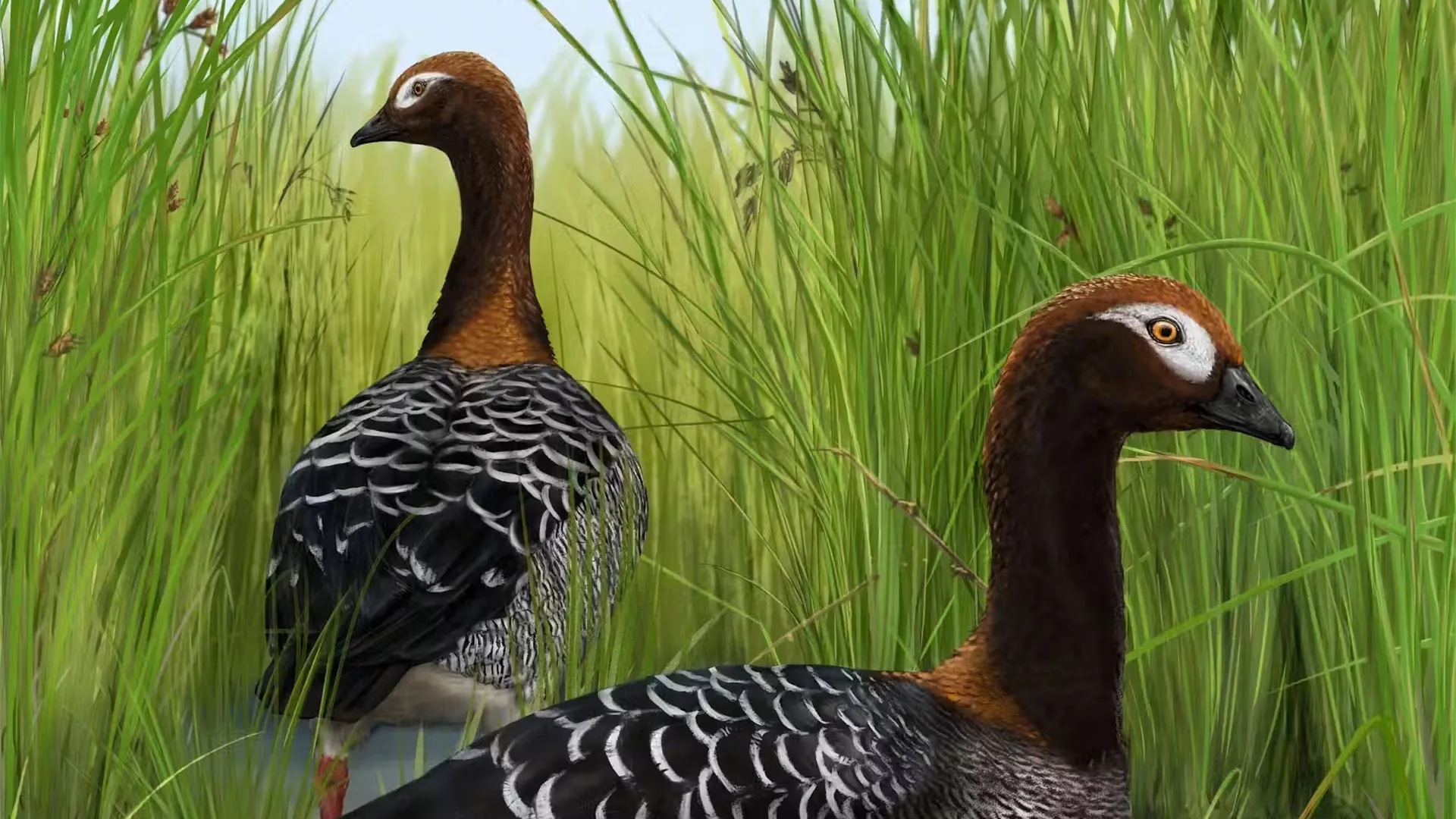
A newly identified fossil goose from Central Otago is changing how researchers interpret the origins of some of New Zealand’s large extinct birds. The University of Otago said the find supports evidence that several major bird lineages reached Aotearoa more recently than earlier fossil-based theories suggested.
The study, published in Historical Biology, examined goose fossils from the Miocene St Bathans deposits, a well-known fossil site formed from the remains of an ancient lake. The research team included scientists from the University of Otago, the Museum of New Zealand Te Papa Tongarewa and the University of Cambridge.
According to Otago Associate Professor Nic Rawlence, co-author of the study and director of the Otago Palaeogenetics Laboratory, waterfowl fossils are common at St Bathans, but goose fossils are comparatively rare. The team rechecked every bone from the site that had previously been classified as goose material.
Researchers compared those fossils with other ancient waterfowl from St Bathans and with a broad set of modern and extinct bird skeletons. Rawlence said that work showed the material included a previously undescribed species about the size of a small goose.
A new species in old lake mud
The researchers named the bird Meterchen luti. The University of Otago said the name draws on “Old Mother Goose,” with Meterchen meaning “mother goose” in ancient Greek and luti meaning “of the mud” in Latin.
Rawlence said the St Bathans goose was not a close relative of New Zealand’s recently extinct giant flightless geese, known as Cnemiornis, or of their Australian relative, the Cape Barren goose. That distinction matters because previous interpretations had treated the St Bathans goose as a possible direct ancestor of Cnemiornis.
Lead author Alan Tennyson of Te Papa said an older theory placed the roots of the giant flightless geese deep in Zealandia’s past, with a lineage stretching back at least 14 million years. Tennyson said that view conflicted with genetic evidence indicating that the ancestors of Cnemiornis arrived from Australia about 7 million years ago.
The new reassessment backs the later-arrival explanation, Tennyson said. In that view, the St Bathans goose represents an older lineage that reached Zealandia more than 14 million years ago but eventually died out without living descendants, according to Rawlence.
A shifting picture of bird evolution
The University of Otago said the discovery adds to a broader revision of New Zealand bird evolution. Tennyson said many birds arrived in New Zealand across millions of years, and that the ancestors of some prominent large species arrived only four to five million years ago.
Those later arrivals include takahē, Forbes’ harrier and Haast’s eagle, according to Tennyson. The finding places the giant flightless geese in a similar pattern of relatively recent arrival followed by rapid change on islands.
Rawlence said fossils and DNA together are giving researchers a more detailed picture of how Zealandia’s geology, climate and human history shaped native fauna. He said Cnemiornis also shows how quickly island birds can alter in form: the extinct geese stood about one metre tall, weighed up to 18 kilograms and were the largest geese known.
This story draws on original reporting from ScienceDaily.