
Early tadpole immunity helps some frogs survive lethal fungus
A study of Pyrenees toads links population recovery after chytrid outbreaks to antimicrobial defenses that mature before adulthood.
By Priya Raghavan · Science Reporter
3 min read
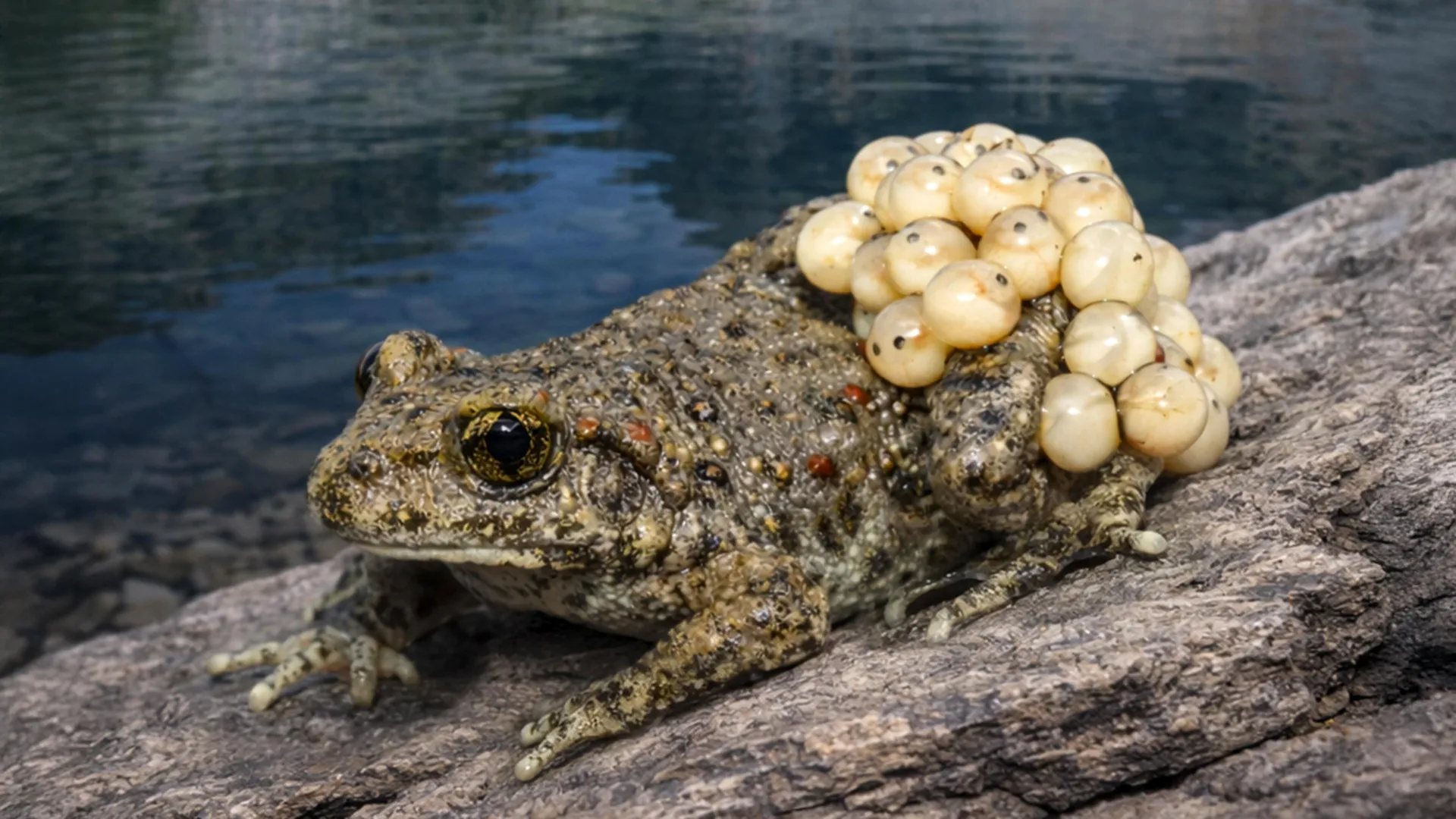
Some amphibian populations appear to recover from a devastating fungal disease because their immune defenses mature while they are still tadpoles, according to researchers led by University College London, ZSL and Imperial College London. The finding may help explain why some frogs and toads persist after outbreaks that have driven steep declines worldwide.
The study, published in Nature Chemical Biology, focused on chytridiomycosis, a disease caused by the fungus Batrachochytrium dendrobatidis, or Bd. According to UCL, the fungus damages amphibian skin and interferes with the animals’ ability to control water, salts and minerals.
UCL said tadpoles and larvae have some protection because they do not yet have the keratin-rich skin the fungus uses. The danger rises after metamorphosis, when frogs and toads develop keratinized skin and become more exposed to infection.
Survivors were prepared before metamorphosis
The research team studied common midwife toads at four lakes in the French and Spanish Pyrenees that had suffered severe Bd outbreaks, according to UCL. One lake’s population was still falling and had nearly vanished, while populations at the other three lakes had recovered even though the fungus remained in the area.
The researchers examined antimicrobial peptides, natural chemicals released from amphibian skin that form part of the animals’ immune defenses. UCL said toads from recovering populations began producing these protective molecules earlier, during the tadpole stage.
By the time those animals became adults and more vulnerable to Bd, their defenses were already established, according to the study. Toads from the population that was still declining made fewer protective peptides as tadpoles, leaving them less prepared after metamorphosis.
Lead author Phillip Jervis of UCL Chemistry, the ZSL Institute of Zoology and Imperial College London said the work shows heavily affected species can recover if their defenses are ready at the right stage. He said the disease tends to kill frogs and toads as they change from tadpoles into adults, and that mature immunity during the tadpole stage can help populations continue.
More than 1,100 peptides identified
To study the toads’ chemical defenses, the team used mass spectrometry to analyze peptides released from the animals’ skin, according to UCL. The researchers identified 1,152 peptides, only seven of which had been previously documented.
The study found that tadpoles producing a broader set of peptides were more likely to survive in places where Bd outbreaks persisted, UCL said. Populations with fewer peptides during the tadpole stage continued to experience high mortality.
Jervis said future work will examine why some immune systems mature earlier than others. According to UCL, possible factors include genetics, temperature and the presence of trout, which can threaten tadpoles and may affect how quickly they leave the water.
Senior author Alethea Tabor of UCL Chemistry said the team found far more peptide diversity than expected and now needs to determine which of the molecules act against microbes. She said such compounds could offer leads for future medicines, as researchers look for new ways to treat infections amid rising antimicrobial resistance.
UCL said the team used tandem mass spectrometry to break peptides into fragments, measure them and reconstruct their structures. Co-author Kersti Karu of UCL Chemistry said the ability to analyze hundreds or thousands of molecules at once has developed over the past decade and is now being applied beyond human health research.
The work was funded by the UK’s Natural Environment Research Council and the Leverhulme Trust, according to UCL.
This story draws on original reporting from ScienceDaily.