
Chimpanzee crystal study points to ancient roots of human curiosity
A Frontiers in Psychology study found enculturated chimpanzees picked out and closely examined crystals, offering a possible clue to early hominin collecting.
By Lucas Ferreira · Science & Environment Writer
3 min read
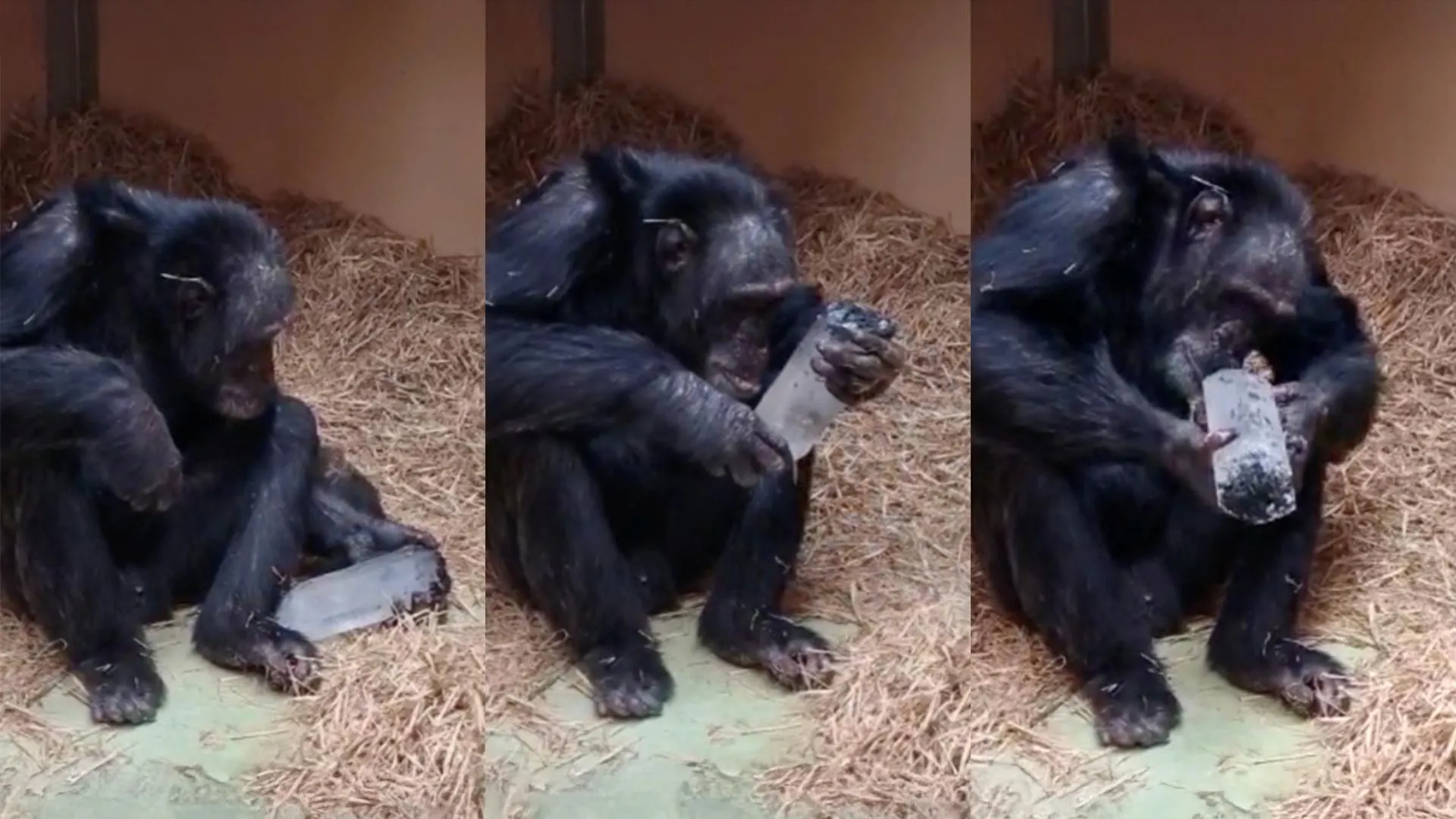
Chimpanzees given access to crystals chose them over ordinary stones and examined them closely, according to a study published in Frontiers in Psychology. The researchers say the behavior may help explain why early human relatives collected crystals long before those stones had any known practical use.
Archaeologists have found crystals at multiple sites associated with Homo remains, and Frontiers said some finds date back as far as 780,000 years. The stones were not tools, weapons or ornaments, which has left researchers asking what made them worth carrying and keeping.
Juan Manuel García-Ruiz, an Ikerbasque Research Professor on crystallography at the Donostia International Physics Center in San Sebastián and lead author of the study, said the team found that enculturated chimpanzees could tell crystals apart from other stones. García-Ruiz said the strength of the animals’ attraction suggested a possible evolutionary basis for sensitivity to such objects.
Two tests with enculturated chimpanzees
The study examined two groups of chimpanzees at the Rainfer Foundation in Spain, according to Frontiers. The first group included Manuela, Guillermo, Yvan, Yaki and Toti; the second included Gombe, Lulú, Pascual and Sandy.
In one experiment, researchers placed a large crystal beside a similarly sized ordinary rock. Frontiers reported that both objects drew attention at first, but the chimpanzees soon focused on the crystal while largely leaving the other rock alone.
After removing the crystal from its platform, the chimpanzees turned it, tilted it and looked at it from several angles, according to the study. The researchers reported that Yvan later picked up the crystal and carried it to the dormitories.
The team said the animals’ interest was strongest soon after they first encountered the crystal and then declined over time, a pattern the researchers compared with the fading effect of novelty in humans. Frontiers said caretakers later used bananas and yogurt to get the chimpanzees to give the crystal back.
Crystals picked from piles of pebbles
A second experiment tested whether the chimpanzees would identify smaller quartz crystals resembling those known from ancient hominin contexts, according to Frontiers. When researchers mixed crystals into a group of 20 rounded pebbles, the chimpanzees selected the crystals within seconds.
The researchers then added pyrite and calcite crystals, which differ from quartz in shape. Frontiers reported that the chimpanzees still picked out the crystal-type stones and studied them for long periods.
García-Ruiz said the animals held crystals near eye level and looked through them, paying close attention to their transparency. The study also described Sandy carrying both pebbles and crystals in her mouth to a wooden platform, then separating the crystals from the pebbles.
According to García-Ruiz, Sandy sorted three kinds of crystals despite differences in transparency, symmetry and shine. The researchers said chimpanzees do not usually carry objects in their mouths, and they suggested Sandy may have been hiding the crystals because she treated them as valuable.
Limits and implications
The authors said the study did not test whether individual personality shaped each chimpanzee’s interest in crystals. García-Ruiz said future research should examine such differences, noting that some animals may be drawn to visual features while others may test smell or edibility.
The researchers also cautioned that the chimpanzees in the study live around humans and often encounter unfamiliar objects. They said similar experiments should be carried out with less enculturated apes and, if possible, wild populations.
Based on the experiments, the team argued that crystals’ transparency and geometric form may explain their pull. García-Ruiz said the work contributes to understanding the evolutionary roots of aesthetics and worldview, and suggested that crystal fascination may reach back to the common ancestor of humans and chimpanzees, which the study places six to seven million years ago.
This story draws on original reporting from ScienceDaily.