
Chemical pretreatment may make atom-thin chip materials easier to etch
Princeton researchers say oxygen or fluorine can help plasma remove sulfur atoms from molybdenum disulfide with more control.
By Lucas Ferreira · Science & Environment Writer
3 min read
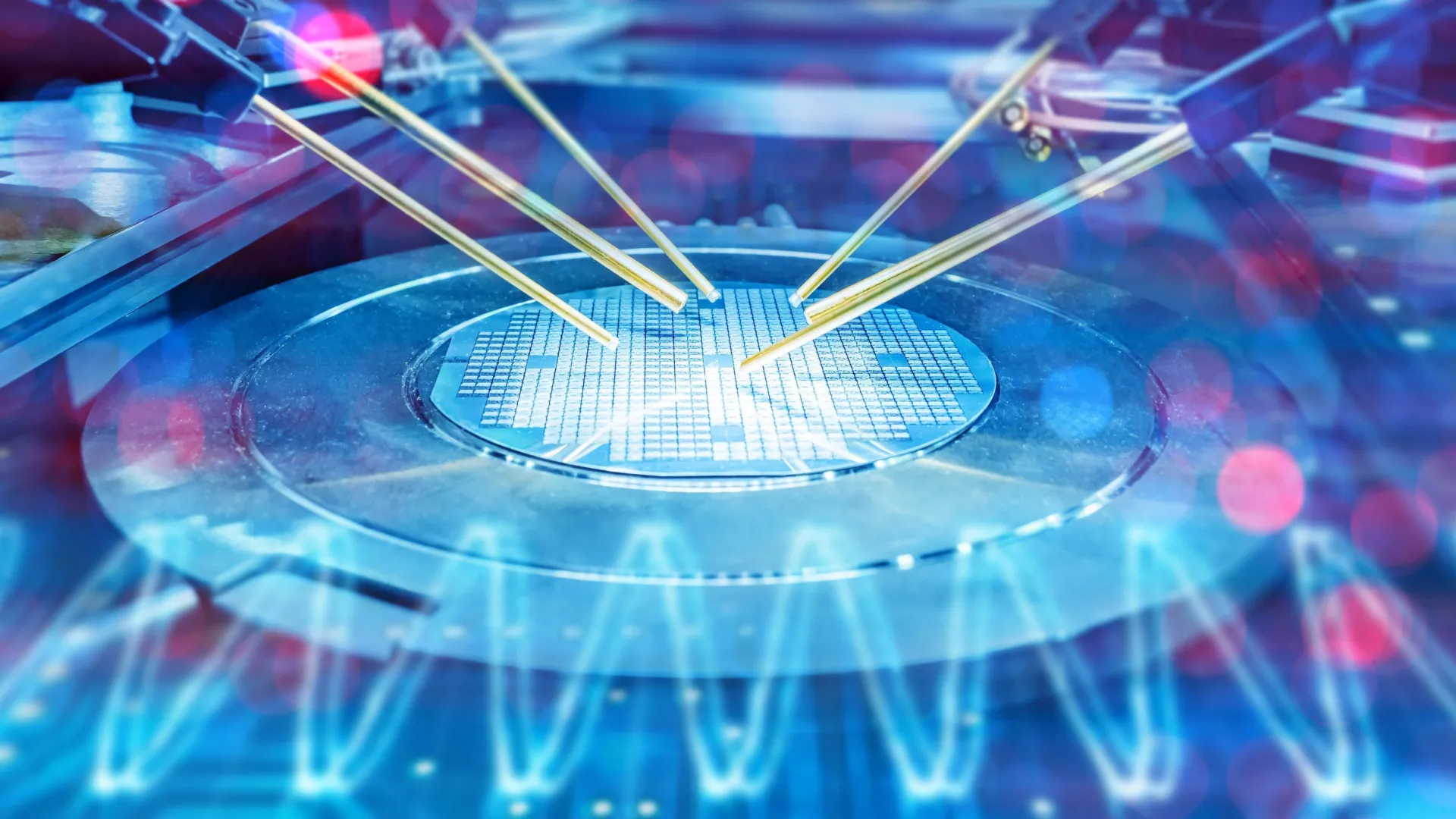
Princeton University researchers say a chemical pretreatment could make it easier to manufacture future chips that use atom-thin materials alongside silicon. In computer simulations, oxygen or fluorine added to molybdenum disulfide helped plasma strip away the material’s top sulfur layer while reducing the risk of damage below.
The work targets a problem facing chip designers as conventional silicon technology runs into physical limits, according to Princeton. Researchers are studying transition metal dichalcogenides, or TMDs, because they can be only a few atoms thick and may support smaller, higher-performance electronic components.
Molybdenum disulfide is one of the candidates. Princeton describes it as a three-atom-thick material, with one molybdenum layer between two sulfur layers.
Why one layer matters
For possible future transistors that combine silicon and TMD materials, manufacturers may need to remove only the upper sulfur atoms and leave the rest of the material intact, according to Princeton. Plasma processing can do that in principle, because energetic particles in plasma can hit a surface and knock atoms loose.
The difficulty is control. The researchers said the energy needed to remove sulfur atoms from untreated molybdenum disulfide is close to the energy level that can harm the molybdenum layer underneath, leaving little room for error during processing.
The team reported in The Journal of Physical Chemistry Letters that oxygen and fluorine pretreatments widened that margin in simulations. On an untreated surface, removing a sulfur atom required about 30 electron volts, Princeton said. With fluorine, that fell to about 10 electron volts; with oxygen, it fell to about 14 electron volts.
That shift matters because ions in plasma do not all arrive with the same energy, according to the researchers. A lower sulfur-removal threshold gives process engineers a broader range in which the top layer can be etched without striking the lower layer too hard.
Chemistry assists the plasma
The simulations suggest the pretreatments change the process from a mostly impact-driven removal step into one helped by chemical reactions, Princeton said. On oxygen-treated molybdenum disulfide, two oxygen atoms can react with sulfur to form sulfur dioxide, a stable gas that can leave the surface more readily.
Fluorine appeared to help in a related way by forming sulfur-fluorine compounds that are easier to dislodge, according to the university.
“We are not directly breaking the bonds,” said Yury Polyachenko, the study’s lead author and a Princeton chemistry graduate student who worked at the Princeton Plasma Physics Laboratory in summer 2025. “We are forming some intermediate products, such as sulfur dioxide. This intermediate product is much easier to break off.”
Princeton said the research team also included Igor Kaganovich and Shoaib Khalid of PPPL, along with PPPL alumnus Yuri Barsukov. The work was supported by the U.S. Department of Energy, the Office of Science, Fusion Energy Sciences and Basic Energy Sciences, as part of the Extreme Lithography & Materials Innovation Center.
The researchers plan to study how much damage the process causes and whether the same idea works in related materials, Polyachenko said. Those tests would include swapping molybdenum for tungsten or sulfur for selenium, according to Princeton.
This story draws on original reporting from ScienceDaily.