
Study finds temporary gene pattern tied to artery tears in young stroke patients
UVA researchers found short-lived changes in 11 genes after cervical artery dissection, a major cause of stroke in adults under 55.
By Priya Raghavan · Science Reporter
3 min read
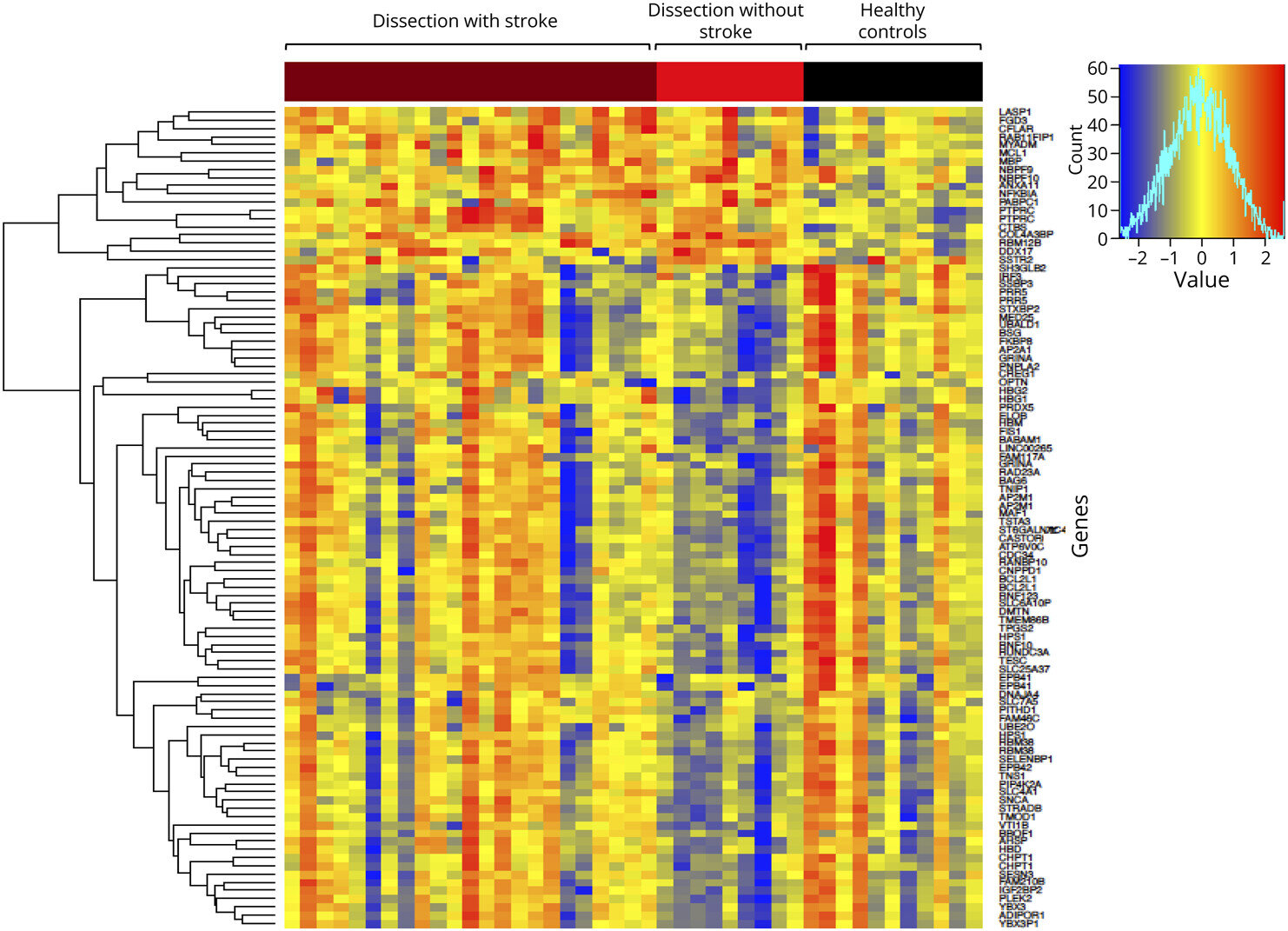
UVA Health stroke researchers have reported a temporary pattern of gene activity in people with cervical artery dissections, tears in neck arteries that can lead to stroke. The finding could help researchers understand why some young and middle-aged adults develop these arterial injuries without an obvious trigger.
The work, published in Neurology Genetics, focused on a condition that UVA Health describes as a leading cause of stroke in younger adults. According to the university, cervical artery dissections account for one in five strokes among people younger than 55.
What the researchers studied
A cervical artery dissection occurs when a tear forms inside the wall of an artery supplying blood to the brain, UVA Health said. Blood can collect at the injury site and create blockages that deprive brain tissue of oxygen, causing a stroke.
UVA Health said some dissections follow minor neck trauma, including whiplash or chiropractic manipulation, and some are linked to genetic disorders. Many cases, however, are considered spontaneous because clinicians do not identify a clear cause.
Andrew M. Southerland, a stroke specialist at the University of Virginia School of Medicine and UVA’s Comprehensive Stroke Center, said the effects can be severe because patients are often young or in their working adult years. He said identifying genetic and environmental risk factors could help doctors find people at higher risk and, in time, prevent some dissections.
Eleven genes stood out
Southerland and colleagues studied 37 UVA patients with cervical artery dissection and compared them with healthy participants, including spouses, friends and community volunteers, according to UVA Health. The team looked for a gene-activity pattern around the time of the arterial tear.
The researchers found significant differences in the activity of 11 genes shortly after patients had dissections, compared with the healthy control group, UVA Health said. They also found that the pattern changed later, suggesting the gene activity seen soon after dissection was short-lived.
UVA Health said many of the genes were tied to how the body uses hemoglobin, the oxygen-carrying substance in blood. Hemoglobin also has a role in clotting, according to the university.
Based on those results, the researchers said impaired oxygen transport may increase susceptibility to cervical artery dissection. They also said hemoglobin may have another role, such as setting off body-wide conditions that leave arteries more vulnerable.
Researchers call findings preliminary
Southerland said the findings need confirmation in larger and more diverse groups of patients. UVA Health said the team is working with international collaborators to continue studying genetic contributors to cervical artery dissection.
The published research team included Robert B. Ferguson, Ilana E. Green, Timothy L. McMurry, Keith L. Keene, Stephen R. Williams, Fang-Chi Hsu, Stefan Bekiranov, Hyacinth I. Hyacinth, Glen C. Jickling, Michèle M. Sale, Bradford B. Worrall and Southerland.
This story draws on original reporting from Medical Xpress.