
Tear-based dopamine sensor points to less invasive brain monitoring
A laser-made graphene sensor detected dopamine in artificial tears, suggesting a possible route to simpler neurological biomarker tests.
By Priya Raghavan · Science Reporter
3 min read
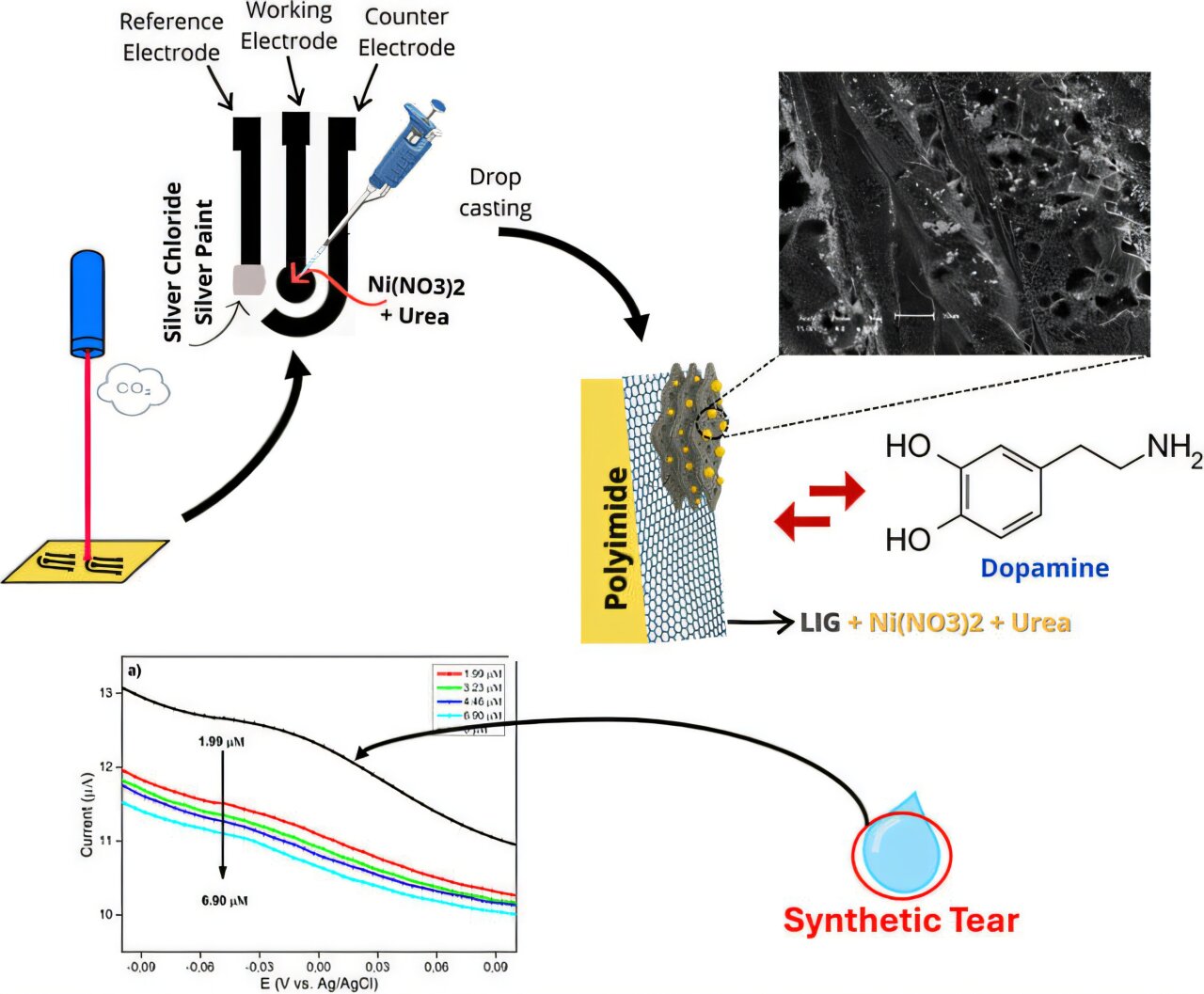
Researchers have developed a low-cost sensor that detected dopamine in artificial human tears, according to a study reported by the American Chemical Society in ACS Omega. The work matters because dopamine levels are tied to neurological and psychiatric conditions, and the team says tear samples could one day offer a less invasive way to track related biomarkers.
The device is an electrochemical sensor built to measure dopamine, a neurotransmitter involved in movement, learning, motivation and emotional regulation, according to the American Chemical Society. In Parkinson’s disease, dopamine concentrations tend to fall, the society said.
Current ways to monitor dopamine-related changes can involve blood draws, urine testing or implanted devices, according to the researchers. Those approaches can take time or require invasive procedures, while tears can be collected quickly and without pain, the American Chemical Society said.
How the sensor works
To make the sensor, corresponding author Neftalí Lênin Villarreal Carreño and colleagues used a laser to turn parts of a thin plastic film into electrically conductive graphene, according to ACS Omega. The finished device is about the size of a postage stamp.
The sensor produces an electrical signal when dopamine reacts with the graphene surface, the researchers reported. In laboratory testing, the team added dopamine to artificial human tears and measured whether the device could identify different concentrations.
The researchers said the sensor accurately detected a range of dopamine levels in the artificial tear samples. The American Chemical Society said the device also held up when compounds commonly present in tears were included, suggesting the measurement was not easily disrupted under those test conditions.
Lucas Minghini Gonçalves, a co-author of the study, said the sensor could detect dopamine from levels below a healthy baseline through concentrations up to three times higher, according to the American Chemical Society. The team said that range includes concentrations similar to those previously reported in tears from people with Parkinson’s disease.
Early-stage work
The researchers described the study as groundwork for future testing with human tear samples. They said the longer-term goal is to develop point-of-care devices that can monitor neurological biomarkers from a small tear sample.
Carreño said the group aims to support very early detection of neurological disorders, giving clinicians a chance to intervene before major symptoms appear, according to the American Chemical Society. The study did not report a clinical test in patients, and the findings were based on artificial tears rather than samples collected from people.
The paper, titled Toward Non-Invasive Neurological Biomarker Monitoring: Dopamine Sensing in Tears with Laser-Induced Graphene Electrochemical Sensors, was published in ACS Omega. Its authors include Gonçalves and colleagues, with Carreño listed as corresponding author.
This story draws on original reporting from Medical Xpress.