
Roundup ruling widens rift between MAHA activists and Trump administration
The Supreme Court sided with Bayer on Roundup warning labels, angering health activists who had pressed Trump officials on pesticide regulation.
By Priya Raghavan · Science Reporter
3 min read
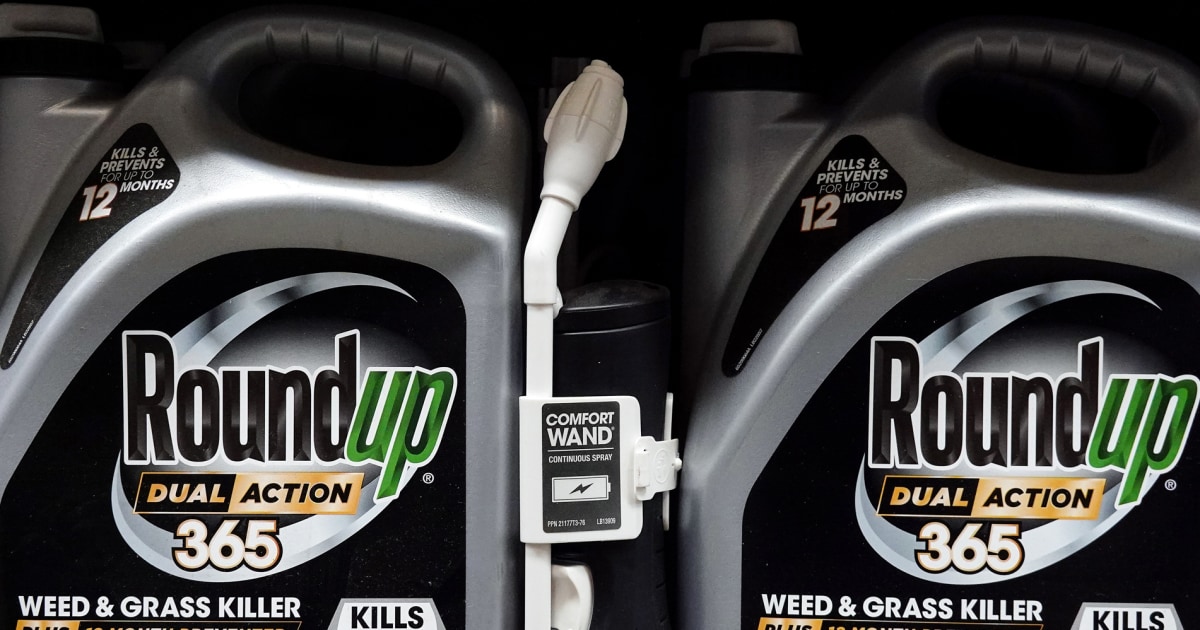
The Supreme Court ruled Thursday that Bayer does not have to warn Roundup users about a potential cancer risk, a decision NBC News reported is likely to block thousands of state-court claims over the weed killer. The ruling angered prominent figures in the Make America Healthy Again movement, who have pushed the Trump administration to take a harder line on pesticides and food chemicals.
In a 7-2 decision, the court said Bayer could not be sued in state courts over the absence of a cancer warning because federal regulators have found a cancer link to Roundup unlikely and have not required such a label. NBC News reported that the Trump administration backed Bayer’s appeal, while the Biden administration had previously urged the court to reject a similar Bayer request in another Roundup case.
The case was brought by John Durnell, a Missouri man who sued Monsanto in 2019 and alleged that two decades of Roundup use caused his non-Hodgkin lymphoma, according to NBC News. A jury sided with Durnell in 2023 and awarded him $1.25 million before the case reached the Supreme Court on appeal.
Vani Hari, a high-profile MAHA figure known as “Food Babe,” told NBC News in a text message that “the decision is sickening and would have never happened had the administration not given Bayer Monsanto a favor.” Bayer bought Monsanto, Roundup’s original manufacturer, in 2018, NBC News reported. Hari added that Congress must respond.
The White House did not answer NBC News’ questions about the ruling, and the Department of Health and Human Services did not respond to a request for comment, according to NBC News.
The dispute centers on glyphosate, Roundup’s active ingredient. The Environmental Protection Agency determined in 2020, during Trump’s first administration, that glyphosate is unlikely to be carcinogenic to humans, according to NBC News. Environmental groups challenged that assessment, and a federal appeals court later ruled that the EPA had not adequately explained its analysis; the agency agreed to update its evaluation but has not released a new version, NBC News reported.
The International Agency for Research on Cancer, part of the World Health Organization, classified glyphosate in 2015 as “probably carcinogenic to humans.” NBC News also cited a March symposium in Seattle where dozens of international scientists concluded that glyphosate can cause cancer, with the strongest evidence tied to non-Hodgkin lymphoma.
Kelly Ryerson, a MAHA activist known as “Glyphosate Girl,” wrote on X that the ruling had damaged the Trump administration’s standing with parts of the movement. “It is unforgivable,” she wrote, adding that voters would be told “exactly how this domestic chemical attack happened.”
NBC News reported that MAHA activists have clashed with the Trump administration on several health and environmental decisions this year, including an executive order to boost glyphosate supplies, FDA changes expanding access to fruit-flavored e-cigarettes, EPA rollbacks on mercury emissions standards and efforts to rescind drinking water limits for some PFAS chemicals.
Health Secretary Robert F. Kennedy Jr. backed Trump’s glyphosate supply order as a way to increase domestic agricultural production but called pesticides “toxic by design,” according to NBC News. Kennedy told senators in April that he believes glyphosate causes cancer; before joining the administration, he represented plaintiffs who alleged Roundup caused their non-Hodgkin lymphoma, NBC News reported.
Justice Ketanji Brown Jackson and Justice Neil Gorsuch dissented. Jackson wrote that the majority “unjustifiably closes the courthouse doors” to plaintiffs such as Durnell, according to NBC News.
Bayer said in a statement that the ruling “is good for science, farmers, and industries that depend on regulatory clarity for innovation.” Rep. Anna Paulina Luna, R-Fla., wrote on X that she plans to introduce legislation to remove liability protections for pesticide companies, saying they should be held accountable for omitting labeling information about health risks.
This story draws on original reporting from NBC News.