
Parasite mitochondria maps identify 33 potential drug target families
A four-year research effort mapped parasite mitochondrial proteins and flagged 33 early-stage target families absent from human mitochondria.
By Tom Brennan · Health & Medicine Correspondent
2 min read
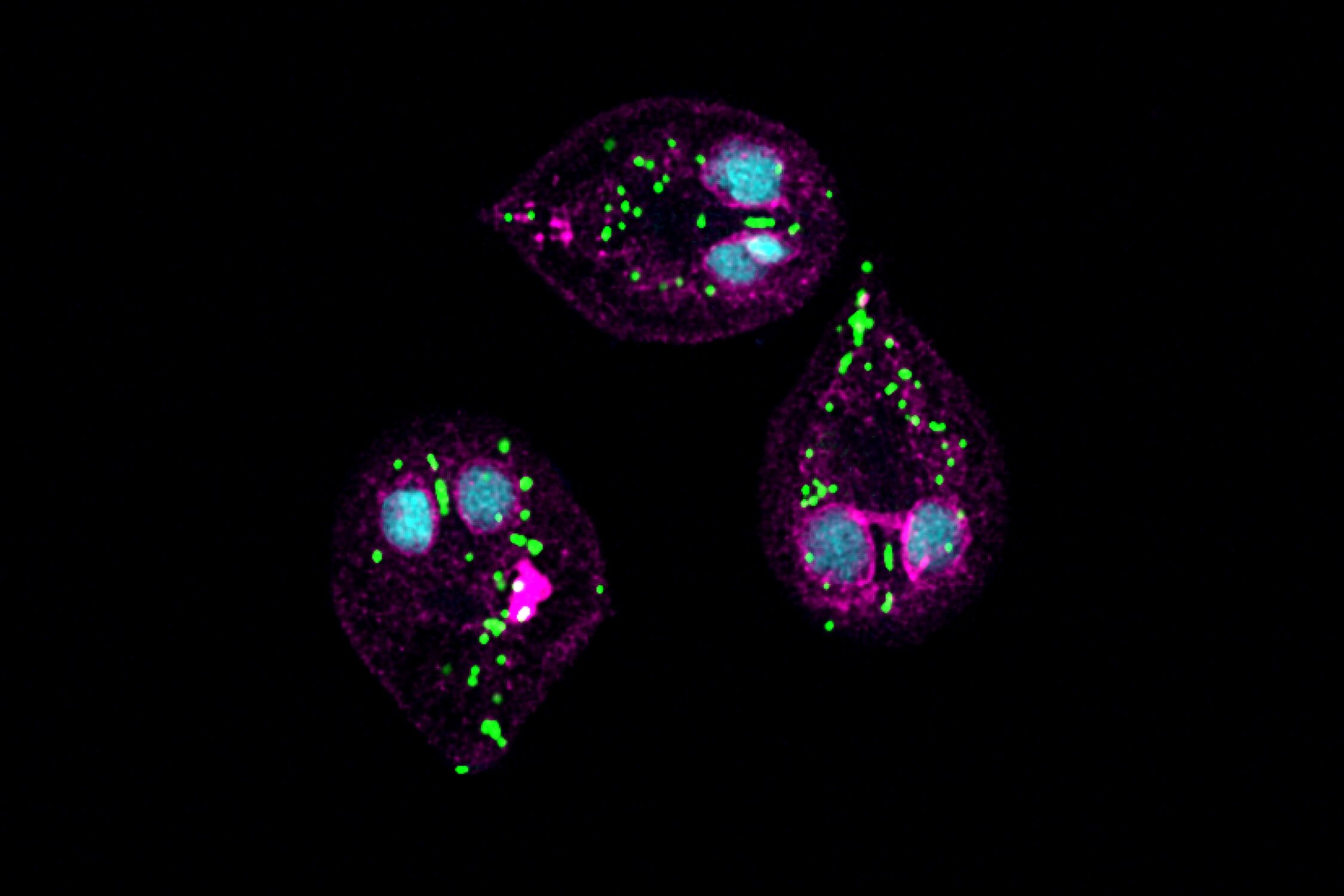
A consortium led by Vamsi Mootha has produced maps of parasite mitochondrial proteins that identify 33 protein families as possible starting points for new medicines. The parasite mitochondria drug targets are early research candidates, however, rather than proven treatments or validated drug targets, the Howard Hughes Medical Institute said.
The four-year effort mapped mitochondrial proteomes—the complete protein inventories of mitochondria—in five organisms: Giardia, Acanthamoeba, trypanosomes, Leishmania and Babesia. HHMI said the work, conducted by 25 scientists from several Boston-area institutions, resulted in nine papers and spans roughly a billion years of evolution.
How did the parasite mitochondria maps find drug targets?
The researchers used protein correlation profiling, according to HHMI. They separated cells into fractions and used mass spectrometry to identify proteins that repeatedly sorted alongside known mitochondrial components, allowing the team to build inventories that included proteins not previously assigned to the organelle.
For the drug-target screen, the group looked for protein families present in the mitochondria of trypanosomes, Leishmania, Acanthamoeba and Babesia. They found 33 families shared by at least two of those groups and absent from human mitochondria, HHMI reported.
Absence from human mitochondria was used as a way to prioritize targets that might be more selective for parasites and therefore less likely to harm patients. That filter does not establish that any family is essential to a parasite, can be reached by a drug, or will prove safe and effective in people.
There is precedent for investigating parasite mitochondria as a treatment strategy. HHMI said the antimalarial drug atovaquone blocks a mitochondrial protein in Plasmodium falciparum. Mootha cautioned that substantial work separates a candidate protein family from a safe medicine.
What else did the maps reveal about parasite mitochondria?
The comparison also found mitochondrial features that differ from the familiar view of the organelle as an oxygen-dependent energy producer with its own DNA. HHMI said the team reconstructed features of an early mitochondrion and identified ancient machinery in some parasites that human mitochondria have since lost.
Giardia's mitochondrion-related organelles have no genome, according to HHMI. Its map contained 59 proteins, more than half of whose functions remain unknown. In Acanthamoeba, the researchers reported that a hydrogenase enzyme can enable mitochondria under low-oxygen conditions to make hydrogen gas instead of water.
The findings create a comparative catalogue for follow-up experiments across several parasite groups. They do not yet show that a drug aimed at any of the 33 families will work against multiple diseases.
This story draws on original reporting from Medical Xpress.