
Mouse skin kept renewing after most fibroblasts were removed
A Yale-led study found skin stem cells in mice divided normally after major fibroblast loss, pointing to backup mechanisms in tissue repair.
By Tom Brennan · Health & Medicine Correspondent
3 min read
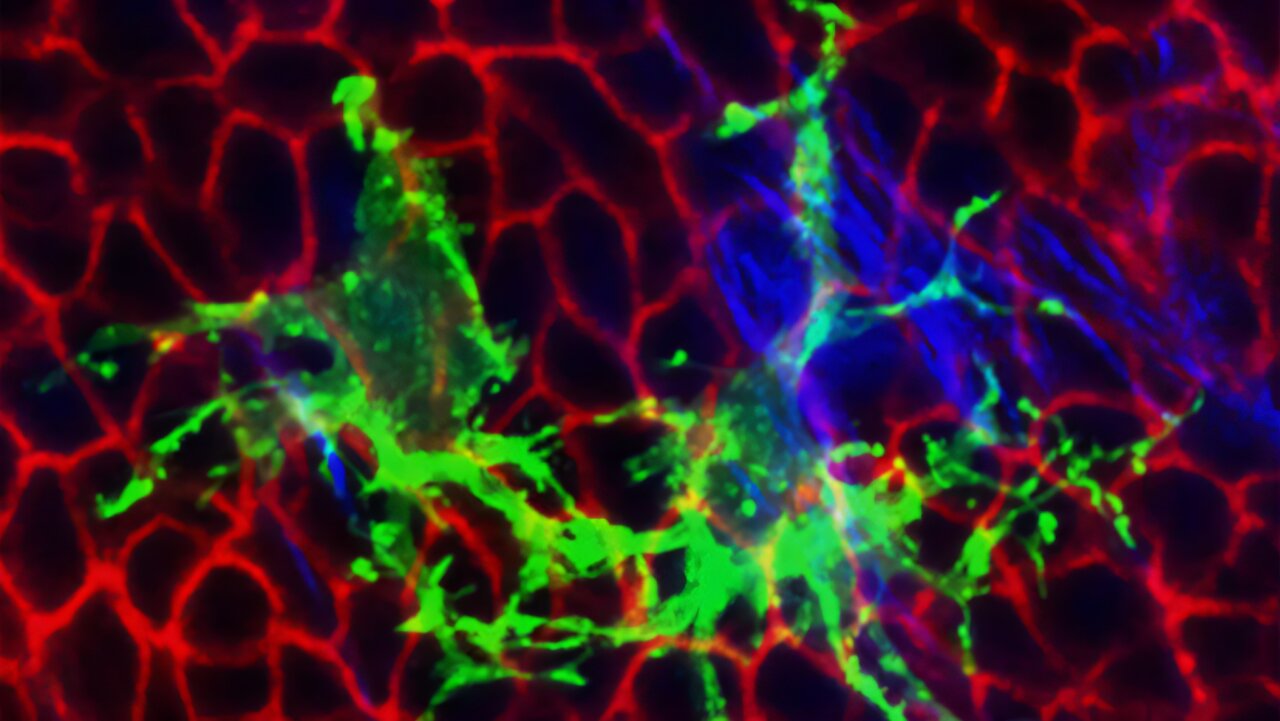
Mouse skin continued to renew itself after researchers eliminated most of a key support cell population, according to a Yale School of Medicine-led study. The findings challenge a long-standing view that fibroblasts are required to keep skin stem cells dividing at normal rates.
The study, published in the Journal of Cell Biology, tested what happened when 60% to 70% of skin fibroblasts were removed in mice. Researchers reported that stem cell division in the skin remained stable in both adult and newborn animals, and the skin barrier stayed intact.
Fibroblasts sit in the dermis, the deeper layer of skin, where they help produce structural material and molecules that can promote growth. For decades, scientists have linked them closely to skin renewal, in part because older cell culture experiments showed skin stem cells grew poorly without fibroblasts or substances released by them.
Yale said the new work tested that assumption in living animals rather than in dishes. Isabella Gaeta, a postdoctoral genetics researcher at Yale School of Medicine and co-first author of the study, said the team expected stem cell growth to fall after fibroblast loss, but that result did not appear.
Normal division after cell loss
The research was conducted in the lab of Valentina Greco, a professor of genetics at Yale School of Medicine and a Howard Hughes Medical Institute investigator, in collaboration with Sara Wickström, director of the Max Planck Institute for Molecular Biomedicine. Gaeta and Shuangshuang Du, a former graduate student in Greco’s lab now at the International Society for Stem Cell Research, were among the researchers who used a genetic mouse model to target fibroblasts in the skin.
To measure stem cell proliferation, the team used two approaches, according to Yale: a chemical label that marks cells copying DNA and a stain that identifies cells in the process of dividing. The researchers checked the skin one week after fibroblast depletion and again after one month.
In both time frames, Yale reported, mice with depleted fibroblast populations showed stem cell division numbers similar to typical mice. The pattern also held in newborn mice, a stage when skin is growing quickly and might be expected to depend more heavily on support from fibroblasts.
Gaeta said the newborn animals with fibroblast depletion weighed less than typical mice, but their skin stem cell compartment still appeared normal in its proliferation pattern.
Signs of compensation
The study did find changes short of barrier failure. Yale said the basement membrane, the structural layer on which skin stem cells sit, became softer after fibroblast depletion. Cells also moved upward from the dividing layer into more differentiated tissue at a slightly slower pace.
The authors interpreted the findings as evidence that skin has redundancy built into its repair and maintenance systems. Yale said the remaining fibroblasts appeared to compensate: their nuclei became much larger after depletion, a possible marker of cellular stress, while the fibroblast network’s coverage of dermal space fell by only about 10%.
Gaeta said the work does not show fibroblasts are unimportant. Instead, she said, the results suggest the remaining cells may try to make up for the loss of neighboring fibroblasts.
The study also leaves open how depleted skin would respond under pressure. Gaeta told Yale that a wound scenario might produce a different outcome, with proliferation possibly failing to keep pace.
Yale said that question could matter for medicine because fibroblast populations decline with age, a change that may contribute to slower healing in older skin. The researchers also identified the softened basement membrane as an area for more study, including possible links to fibrosis and scar formation.
Du said the findings shift attention toward how skin adapts after fibroblast loss and what mechanisms keep stem cell proliferation steady. Gaeta said the team next plans to study gene expression in the fibroblasts that remain after depletion to see whether they adopt a different molecular program.
This story draws on original reporting from Medical Xpress.