
Lung cancer study links tumor nerve signals to wasting syndrome
Researchers reported that one lung cancer subtype drove cachexia in mice by signaling through lung sensory nerves, with diet and PGE2 blockade reducing symptoms.
By Priya Raghavan · Science Reporter
3 min read
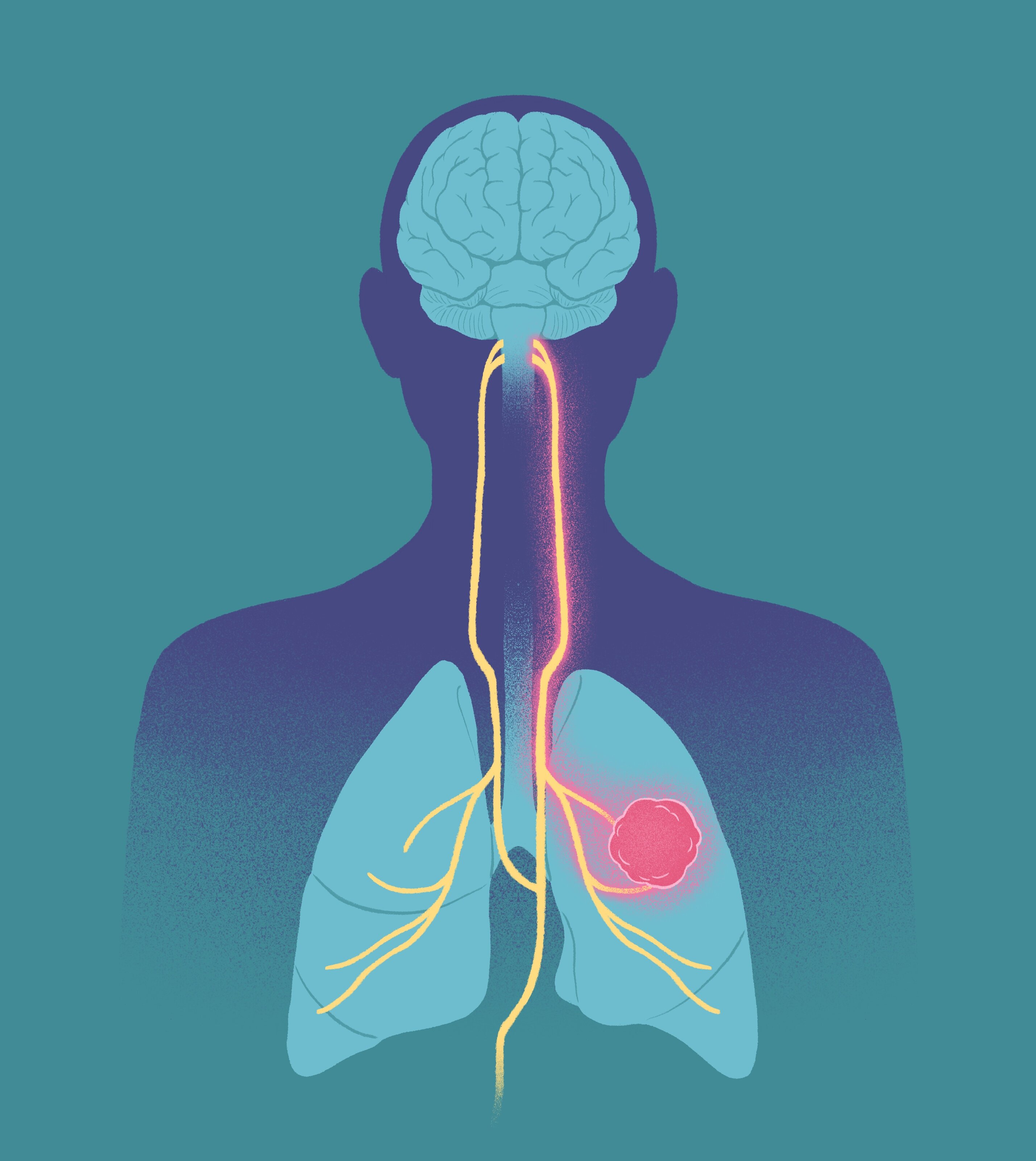
A lung cancer subtype may worsen cancer-related wasting by sending signals through sensory nerves in the lung to the brain, according to a study published in Science. The finding matters because cachexia, a syndrome marked by unwanted loss of muscle and fat, can reduce quality of life and limit cancer treatment options.
The study was led by Thales Papagiannakopoulos, an incoming professor at the Salk Institute who conducted the work at NYU Grossman School of Medicine. According to the Salk Institute, the team found that disrupting lung sensory nerves or limiting production of the lipid signaling molecule prostaglandin E2, or PGE2, reduced cachexia in mouse models.
Cachexia accompanies chronic diseases including cancer, Alzheimer’s disease and cardiovascular disease. The Cleveland Clinic attributes a quarter of cancer deaths to cachexia, and a 2015 German study cited by Salk estimated that the condition affects about half of cancer patients and roughly 9 million people worldwide.
Mouse models pointed to one lung cancer subtype
Researchers built mouse models intended to more closely match human lung cancer, with tumors growing in lung locations and at sizes the team considered more physiologically relevant. In those models, they compared several lung cancer subtypes and found that one genetic subtype promoted cachexia while the others did not, according to Salk.
First author Michael Cross, a graduate student researcher in Papagiannakopoulos’ NYU lab, said the model allowed the team to make more specific discoveries, including that one lung cancer subtype was more likely to drive cachexia and communicate locally with the peripheral nervous system.
The affected mice ate less, so the researchers tested whether richer food could counter the weight loss. Salk said a high-fat, high-calorie diet instead made the wasting worse, prompting the team to examine whether tumor signals were moving through nerves that connect the lung and brain.
Papagiannakopoulos drew on related work showing that lung sensory neurons can detect flu infection, signal the brain and promote sickness behaviors and cachexia-like symptoms, according to Salk. His team then tested whether cutting part of the sensory connection between lung and brain, or fully deactivating lung-based sensory nerves, would reduce cachexia symptoms. Both approaches helped, Salk reported.
PGE2 emerged as a possible signal
The cachexia-promoting lung cancer subtype produced much higher levels of PGE2 than other tumor subtypes, according to the study summary from Salk. PGE2 is known for its role in infection-related symptoms, including fever.
When the researchers genetically altered mice so they could not make PGE2, the animals did not develop cachexia, Salk said. Smaller trials in mice using aspirin and ibuprofen, drugs that block the body’s ability to make PGE2, also prevented cachexia, according to the institute.
The team also reported that diet changed the outcome in the mouse models. Because PGE2 can be derived from animal fats such as omega-6 fatty acids, switching from high-fat diets to diets containing only omega-3 fatty acids limited PGE2 production and prevented the tumors from using that signal to communicate with the nervous system and brain, Salk said.
The findings do not establish a treatment for patients, and the reported interventions were tested in mice. The authors said the work points to possible therapeutic targets, including tumor-nerve communication and PGE2 production.
Stefan Kotschi, a postdoctoral researcher in Papagiannakopoulos’ NYU lab, said the group now wants to identify the specific neurons and brain circuits involved. Papagiannakopoulos said those circuits could later be examined in relation to other cancer symptoms, such as depression or memory loss.
This story draws on original reporting from Medical Xpress.