
Human tau seeds make mouse tau copy disease-specific folds
A mouse study found tau from Alzheimer’s and CBD brains reproduced matching protein folds, supporting a prion-like mechanism without showing infection.
By Tom Brennan · Health & Medicine Correspondent
3 min read
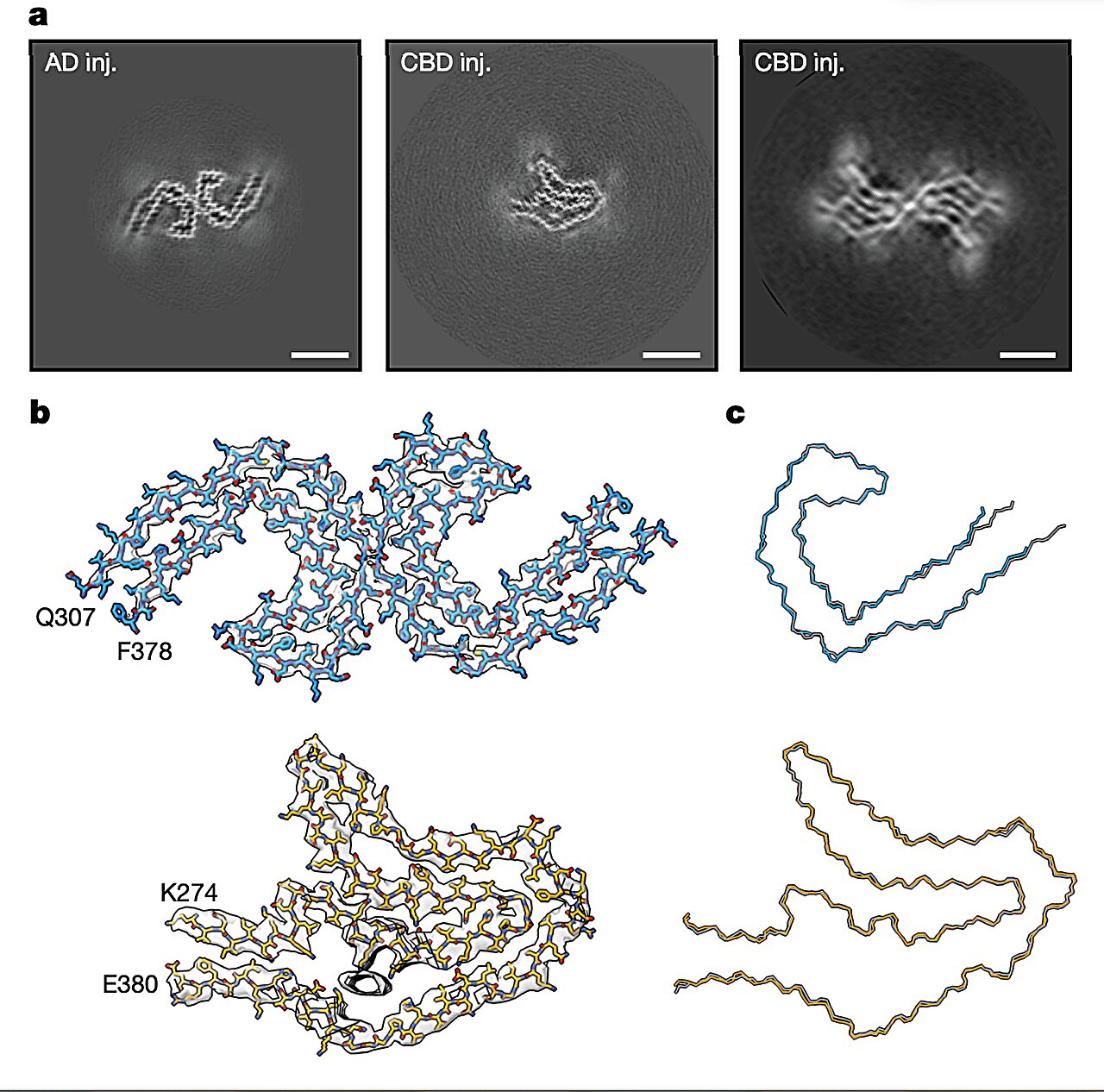
Human tau seeds in mouse brains caused the animals’ own tau proteins to form the distinct folds associated with Alzheimer’s disease or corticobasal degeneration, according to a study published in Nature. The result gives direct structural evidence for a proposed way abnormal tau may propagate, though it came from an injected-seed experiment in mice and does not show that either disease is infectious between people.
The researchers extracted tau filaments from donated brain tissue from people who had had Alzheimer’s disease, known as AD, or corticobasal degeneration, or CBD. They injected those filaments into the striatums of wild-type mice, which produce normal mouse tau rather than engineered human tau, Alzforum reported.
What did human tau seeds do in mouse brains?
Nine months after injection, the researchers found abnormal mouse tau in brain areas including the cerebral cortex and corpus callosum, away from the injection site, according to Alzforum. Cryo-electron microscopy showed that tau in mice given AD material had adopted the AD-associated paired helical filament fold, while tau in mice given CBD material had adopted the CBD fold, Medical Xpress reported.
That distinction also tracked with the types of cells containing tau aggregates. In the AD-seeded mice, pathology was limited to neurons and their processes. CBD-derived seeds produced aggregates in neurons as well as glial cells, including astrocytes and oligodendrocytes, Alzforum reported. Those patterns resembled features observed in the corresponding human diseases.
Tau is a protein normally found in the brain. Tauopathies are neurodegenerative conditions marked by abnormal tau accumulating inside cells, and different tau-related diseases can have different filament structures and affect different cell types, according to a 2021 review in the International Journal of Molecular Sciences.
What does prion-like templated seeding mean for tau?
Templated seeding describes a process in which a misfolded protein can prompt normally folded copies of the same protein to take on its abnormal shape. Earlier experiments had shown that human disease-derived tau could spread through mouse brains and yield disease-like pathology. This study addressed a narrower unresolved question: whether the newly formed tau retained the seed’s exact atomic structure, Alzforum reported.
Medical Xpress reported that the injected human tau was no longer detectable within about a week, while mouse tau aggregates accumulated over the following nine to 12 months. The structural match supports a prion-like mechanism for tau propagation, meaning a protein shape can be copied as pathology spreads.
The finding does not establish a treatment, prove how tau disease begins in people, or show that AD or CBD can pass from person to person. ScienceAlert noted that neither condition is known to naturally spread between people, a key difference from infectious prion diseases.
This story draws on original reporting from Medical Xpress.