
Gene deletion makes resistant colon tumors respond in mouse study
University of Calgary researchers report that disabling NOTUM exposed resistant colon cancer cells to immune attack in mouse models.
By Tom Brennan · Health & Medicine Correspondent
2 min read
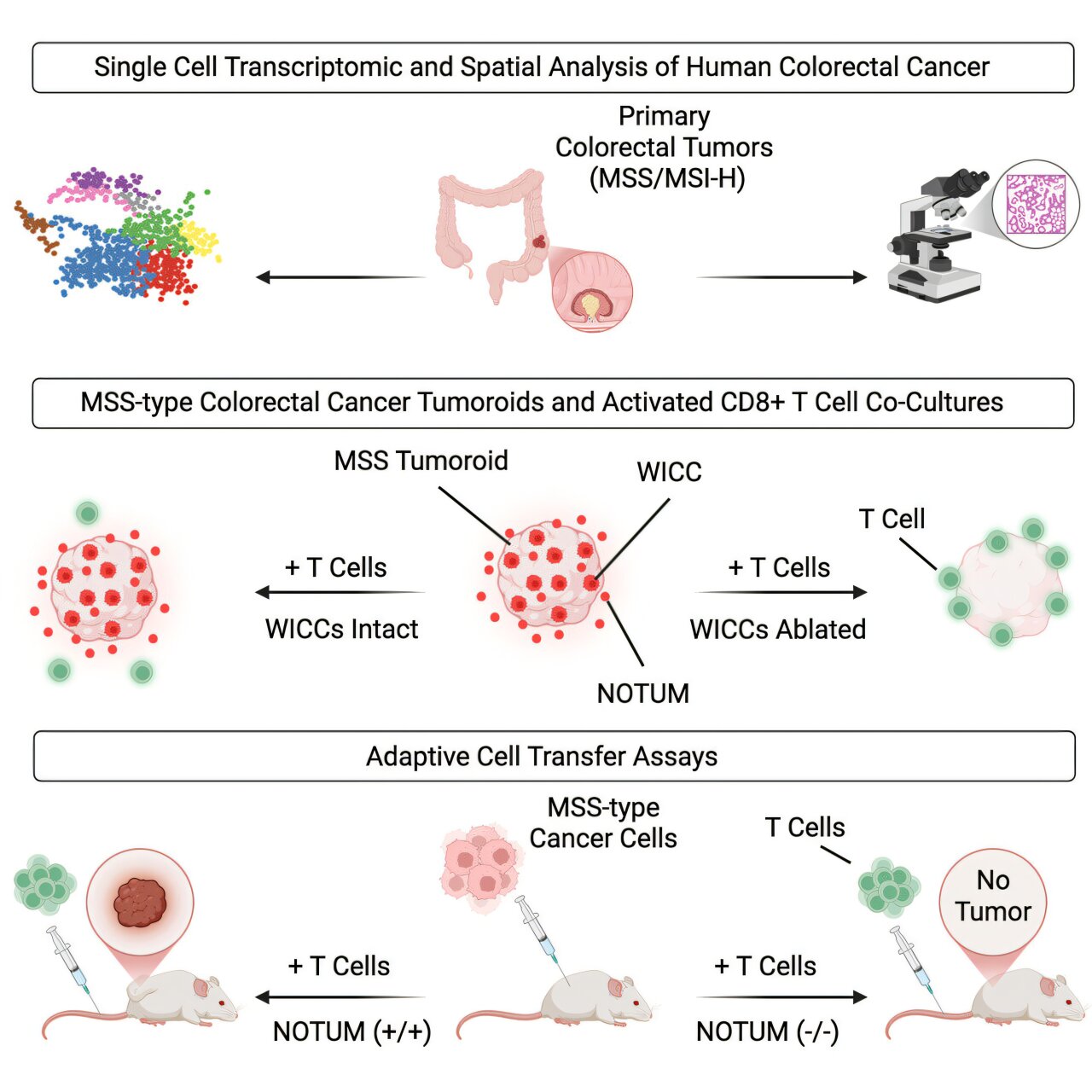
Deleting one gene made treatment-resistant colon cancer cells vulnerable to immune attack in a University of Calgary study, raising a possible route to improve immunotherapy for a cancer that often resists it. The work, published in Cell Reports Medicine, showed full tumor eradication in mouse models when the edited cancer cells were paired with immunotherapy, according to the university.
The study was led by Dr. Arshad Ayyaz, an assistant professor in the Department of Biological Sciences and a member of the Arnie Charbonneau Cancer Institute. The paper identifies a tumor-driven NOTUM program tied to immune resistance in microsatellite stable colorectal cancer.
Immunotherapy is designed to help a patient’s immune system recognize and kill tumors. According to Ayyaz, the approach has worked well in several cancers, but colon cancer remains a difficult target, with only about 15% of colon cancers responding to immunotherapy.
How the experiment worked
Ayyaz’s team compared colon cancers that respond to immunotherapy with those that do not, using genetic analysis to look for differences. The researchers reported finding a cancer cell type that helps resistant tumors avoid immune detection by producing a protein that interferes with the immune system’s response.
The team then created gene-edited versions of those cancer cells. When researchers disabled the gene responsible for making the protein, the cancer cells became detectable to the immune system, according to the University of Calgary.
In mouse models, combining the gene-edited cancer cells with immunotherapy eliminated tumors in 100% of cases reported by the team. Ayyaz also said the tumors shrank even without added immunotherapy, suggesting the edit made them more susceptible to the body’s own immune defenses.
The findings point to a different way of thinking about immunotherapy resistance. Many cancer research efforts focus on strengthening immune cells so they can attack tumors more effectively; Ayyaz’s group is studying how tumors may avoid an immune system that is otherwise working.
Still far from patient treatment
Ayyaz cautioned that the work is early-stage research and not close to routine clinical use. The reported results come from laboratory and mouse-model work, not a human trial.
The University of Calgary said the discovery could help researchers study why other solid tumors also resist immunotherapy. Ayyaz pointed to pancreatic and lung cancers as examples where similar immune-evasion mechanisms may be worth investigating.
The study, by Julian Chua and colleagues, was published under the title “A tumor-intrinsic WNT-inhibitory NOTUM program drives immune resistance in microsatellite stable colorectal cancer” in Cell Reports Medicine. The journal lists the DOI as 10.1016/j.xcrm.2026.102776.
This story draws on original reporting from Medical Xpress.