
Engineered CAR-T cell coating shrinks lymphoma tumors in mouse study
Florida International University researchers report that altering CAR-T cell surface sugars helped the cells resist tumor defenses in lab and mouse tests.
By Tom Brennan · Health & Medicine Correspondent
3 min read
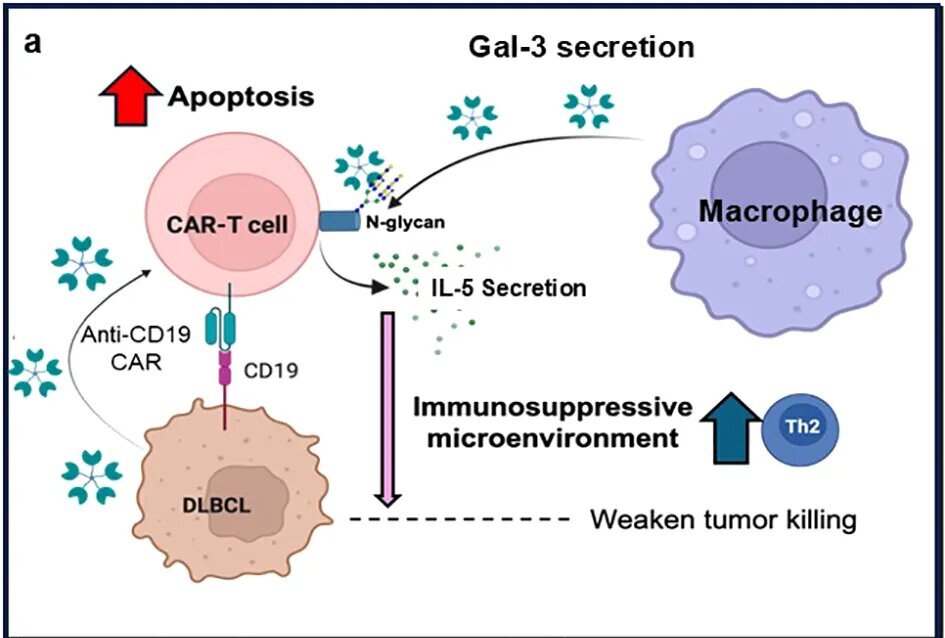
Florida International University researchers say they have modified CAR-T cells so they last longer and attack lymphoma more effectively in preclinical experiments. The work matters because CAR-T therapy can be powerful against blood cancers, but tumor defenses can weaken the engineered immune cells before they finish their job.
The findings were published in Frontiers in Immunology, according to FIU. The study focused on glycoengineering, a method that changes sugar structures on the outside of cells.
CAR-T therapy uses a patient’s own T cells, which are removed, altered in a laboratory to recognize cancer, and returned to the body to attack tumors. FIU said the treatment has helped patients with blood cancers including lymphoma and leukemia, but its durability remains a problem.
According to FIU, tumors can create a protective microenvironment that interferes with immune cells. In many cases, the engineered cells do not persist long enough to eliminate the disease.
Charles Dimitroff, a study author and professor in FIU’s Herbert Wertheim College of Medicine, said the group’s approach roughly doubled the number of CAR-T cells that remained active in laboratory experiments. FIU said the altered sugar coating helped shield the cells from tumor-driven suppression.
Targeting a protein that suppresses immune cells
The FIU team examined blood samples from 62 people, including lymphoma patients and healthy volunteers. According to the university, the researchers found elevated levels of galectin-3, a protein linked in the study to weaker immune-cell function, in people with cancer.
Dimitroff said galectin-3 interferes with immune cells such as CAR-T cells and limits their cancer-fighting activity. FIU said the research group spent more than five years studying sugar patterns on CAR-T cells to understand why the cells were vulnerable to that protein.
The researchers then redesigned the surface sugars so galectin-3 would have more difficulty attaching to the engineered cells, according to FIU. The published paper describes the work as glycoengineering CAR-T cells to counter galectin-3-mediated immunosuppression.
Mouse tests showed smaller tumors
FIU said the modified CAR-T cells were tested in mice with lymphoma. In those experiments, tumors became smaller, and the engineered cells survived longer and performed better against cancer than standard CAR-T cells, according to the university.
Lee Seng Lau, an FIU postdoctoral scientist in Dimitroff’s lab who helped lead the study, said the approach does not change the basic design of CAR-T therapy. Instead, Lau said, it aims to increase each cell’s resilience by changing its sugar surface.
Dr. Guenther Koehne, deputy director and chief of blood and marrow transplant and hematologic oncology at Baptist Health Herbert Wertheim Cancer Institute, said CAR-T therapy has worked well in blood cancers but the cells have limited survival and function over time in the body. He said the FIU work shows CAR-T cells can live longer and work better by reversing immune suppression tied to tumor cells.
FIU said the finding may point toward ways to improve CAR-T treatments for other cancers, including solid tumors, which have been harder to treat with current CAR-T approaches. The researchers are continuing to study the upgraded cells for potential use against other difficult cancers, according to the university.
The study, by Lee Seng Lau and colleagues, is titled “Glycoengineering CAR-T cells to overcome galectin-3-mediated immunosuppression” and appears in Frontiers in Immunology. The DOI is 10.3389/fimmu.2026.1766555.
This story draws on original reporting from Medical Xpress.