
Carbon monoxide prodrug curbs cancer spread in mouse studies
Weill Cornell-led researchers say an experimental metal-free compound reduced metastases in pancreatic and triple-negative breast cancer models.
By Priya Raghavan · Science Reporter
3 min read
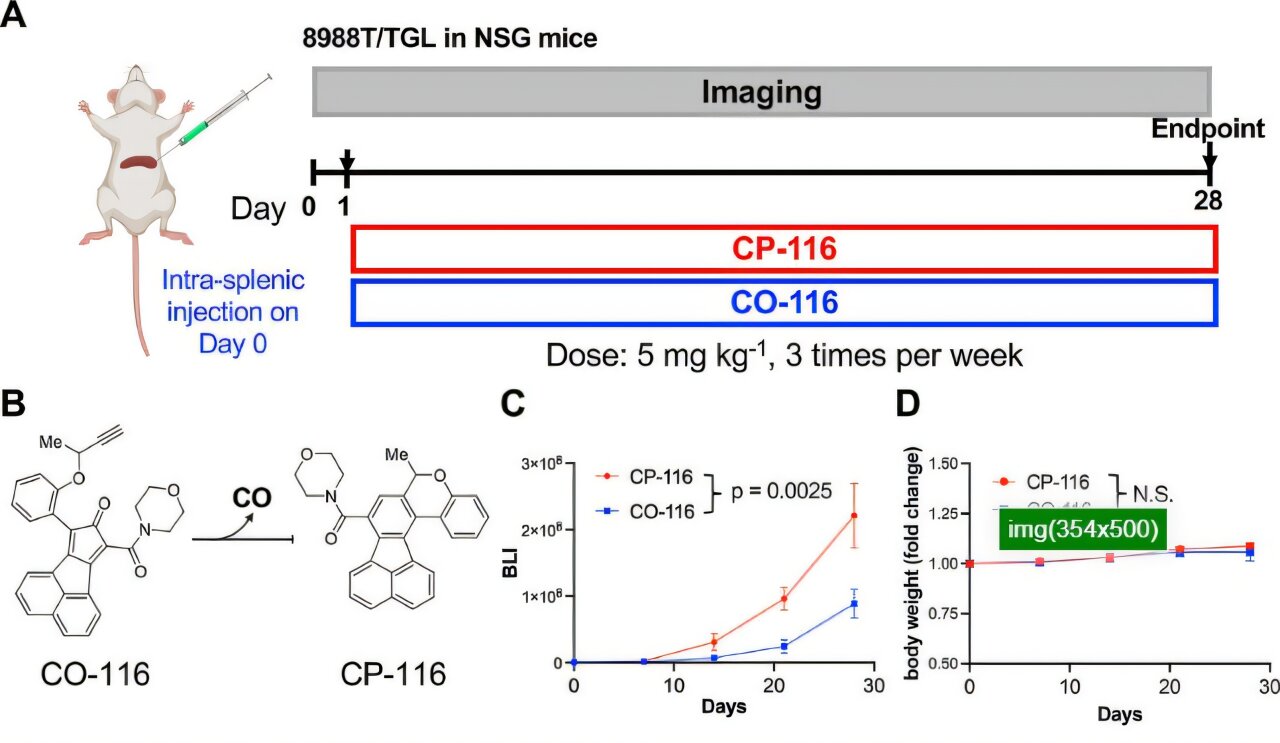
Researchers at Weill Cornell Medicine say an experimental carbon monoxide-releasing drug reduced the spread of pancreatic and triple-negative breast cancers in preclinical models. The finding matters because metastasis after surgery or chemotherapy is a major cause of cancer recurrence and death.
The study, published in Advanced Science, tested a metal-free prodrug called CO-116. A prodrug is an inactive compound designed to convert into an active form after it enters the body.
According to Weill Cornell Medicine, the compound was built to release small, controlled amounts of carbon monoxide after intravenous delivery. Carbon monoxide can be poisonous at high levels, but the human body also produces it in low amounts, senior author Dr. Nancy Du of Weill Cornell Medicine said.
Du’s group previously reported in 2022 that low-dose carbon monoxide slowed metastatic progression in preclinical cancer models. The newer work focuses on a delivery problem: inhaled carbon monoxide can be hard to control, while earlier experimental carbon monoxide-releasing molecules often contained metals such as ruthenium, manganese or iron and could leave toxic metal-containing residues, according to the researchers.
The metal-free molecules used in the new study were synthesized under the direction of Dr. Binghe Wang, a chemistry professor at Georgia State University, according to Weill Cornell Medicine.
Lower metastasis in liver and lung models
The researchers tested CO-116 in several mouse models of pancreatic cancer and triple-negative breast cancer. Weill Cornell Medicine said treatment significantly reduced metastatic tumor growth in the liver and lungs.
The team reported no signs of toxicity, weight loss or behavioral changes in the treated animals. The work remains preclinical, meaning the compound has not yet been tested in patients.
Dosing schedule appeared to affect results. According to first author Dr. Tiantian Zhang, a research associate in Du’s laboratory, smaller doses given more often worked better than the same total amount delivered as one larger weekly dose.
That finding could shape future development if CO-116 or related compounds advance toward human testing, Zhang said. Researchers still need to assess long-term safety, refine dosing and determine whether the anti-metastatic effect lasts after treatment ends.
HRG1 pathway draws attention
The study also identified a possible mechanism for the drug’s effect. According to the research team, CO-116 lowered levels of HRG1, a protein involved in importing heme, an iron-containing molecule used in many cell functions.
By reducing HRG1, the compound disrupted a pathway linked to cancer cell movement and metastatic growth, the researchers said. In experiments that altered HRG1 levels in cancer cells, raising HRG1 made cells more aggressive and less responsive to the carbon monoxide-based treatment.
Lowering HRG1 expression, by contrast, slowed metastatic growth in pancreatic and breast cancer models, according to the study. The authors said HRG1 could become both a treatment target and a biomarker to help identify patients who might benefit from this type of therapy.
Weill Cornell Medicine said CO-116 or similar compounds could eventually be explored as adjuvant treatments, given after surgery or chemotherapy to reduce recurrence risk. Du said the findings offer early evidence that a non-inhaled, metal-free carbon monoxide prodrug can suppress metastasis across multiple cancer models.
This story draws on original reporting from Medical Xpress.