
World Cup travel lift is uneven as some host cities lag
Travel and hospitality companies expect World Cup gains, but Sojern, hotel executives and analysts say demand varies sharply by market and match.
By Hana Yoshida · Markets Reporter
3 min read
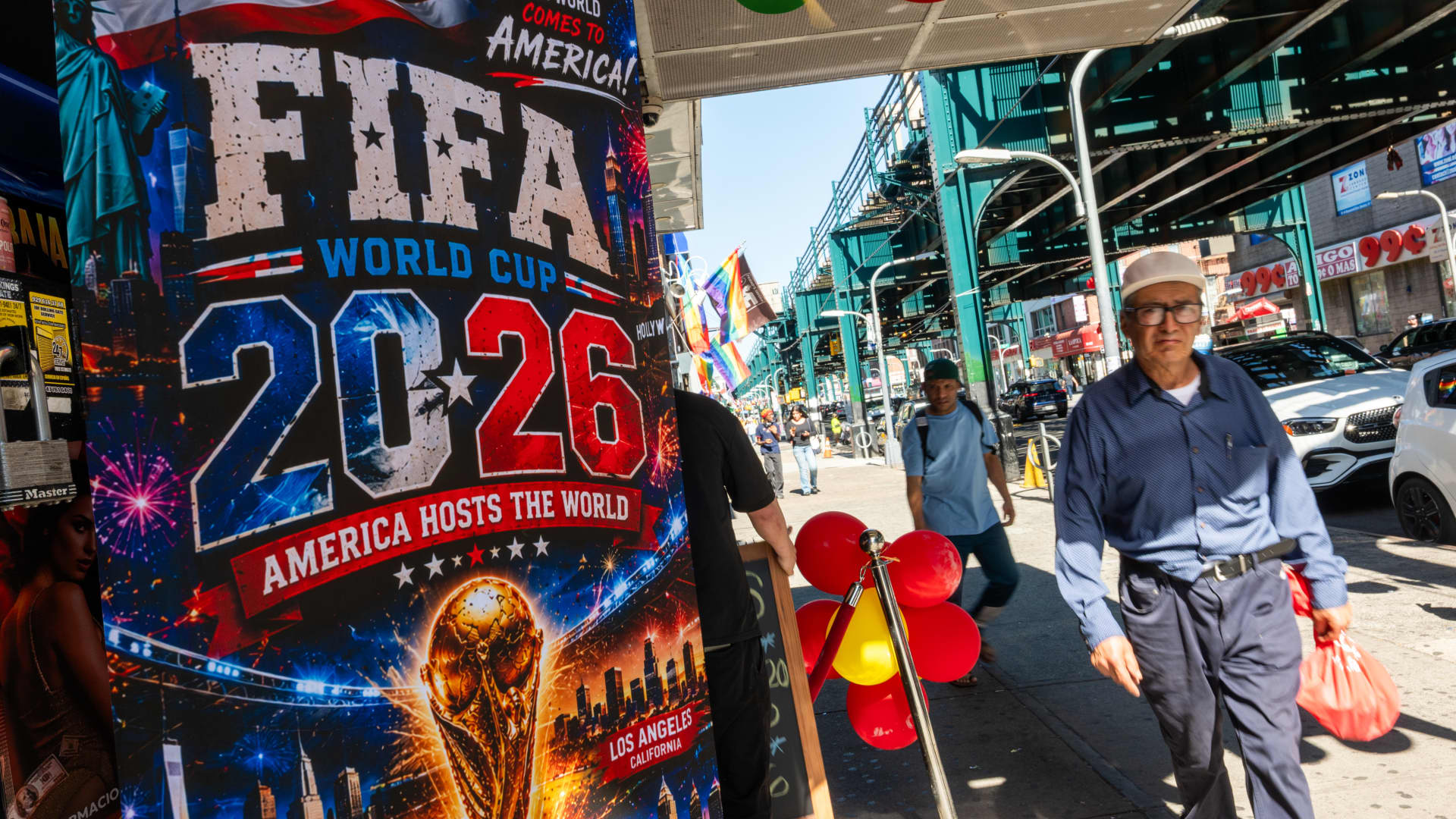
The 2026 World Cup begins Thursday with high expectations for tourism spending across North America, but early travel data points to an uneven payoff for U.S. businesses. Hotels, airlines, restaurants and ride-hailing companies may benefit, though executives and analysts told CNBC the gains are likely to depend heavily on the city and the matchup.
Sojern President Jay Wardle told CNBC that demand tied to the tournament is positive but not spread equally across host markets. Sojern flight-booking data shows Houston and Dallas among the strongest U.S. performers, while Seattle and the three Mexican host cities are running behind last year’s pace for the tournament period.
The tournament starts in Mexico City and concludes in mid-July at MetLife Stadium in East Rutherford, New Jersey, which FIFA refers to as New York New Jersey Stadium. FIFA has expanded the event to 48 teams and 104 matches across the United States, Canada and Mexico.
FIFA has projected the tournament could add as much as $17.2 billion to U.S. gross domestic product, CNBC reported. Deutsche Bank said the effect on the broader U.S. economy would probably be modest even if 1.2 million international visitors come to North America, estimating a short-term GDP increase of about 0.05% if FIFA’s projection is met.
Hotels see mixed signals
Airbnb told CNBC it expects the World Cup to be its largest event to date, surpassing the 2024 Paris Olympics, helped by families and groups seeking larger units or lower per-person lodging costs. Sojern data cited by CNBC shows more than three-quarters of World Cup travelers plan stays of six to 12 nights.
Marriott CEO Tony Capuano told CNBC the company is seeing strong summer booking patterns in both World Cup and non-World Cup U.S. cities. Capuano said Marriott expects the tournament to raise U.S. revenue per available room by about 40 basis points.
RateGain’s World Cup 2026 Travel Index, cited by CNBC, shows June hotel booking activity up 11.6% year over year in Houston, 9.5% in Dallas, 8.8% in the San Francisco Bay Area and 7.2% in Miami. The same data shows declines of 21% in Seattle, 20.9% in Mexico City, 24% in Guadalajara and 8.5% in Monterrey.
American Hotel & Lodging Association President and CEO Rosanna Maietta told CNBC that host-city hotel demand has developed differently than many operators first expected, partly because international visitation has been lower than anticipated. The group’s April survey found 80% of respondents said reservations were below expectations, CNBC reported.
Maietta said demand is now improving as travelers book closer to game dates. Sojern told CNBC that 35% of hotel bookings in World Cup host cities historically happen within seven days of travel.
Late demand could decide winners
FIFA President Gianni Infantino told CNBC that conclusions about travel demand should wait until after the tournament. He said FIFA has never seen as many ticket requests.
Hard Rock International Chairman and Seminole Gaming CEO Jim Allen told CNBC that South Florida is already getting a boost, with Miami-area ticket demand coming from both local buyers and tourists. Allen said Hard Rock is seeing high-end international visitors and casino activity above normal levels tied to the event.
Deutsche Bank told CNBC that full-service hotel real estate investment trusts may benefit from demand for rooms, meeting space and food-and-beverage service from teams, sponsors and business groups. The bank said restaurants could also gain from tourism, watch parties, sports bars, delivery-heavy concepts and locations near stadiums.
Derek Evans, CEO of Marcus Samuelsson Group, told CNBC that restaurant demand has not fully arrived yet. He said fans may spend more once their national teams start winning.
This story draws on original reporting from CNBC.