
World Cup health plans focus on measles more than Ebola
Public health officials say Ebola risk is low, while measles, respiratory viruses, heat and foodborne illness are bigger concerns at the 2026 World Cup.
By Sofia Marchetti · World Affairs Correspondent
4 min read
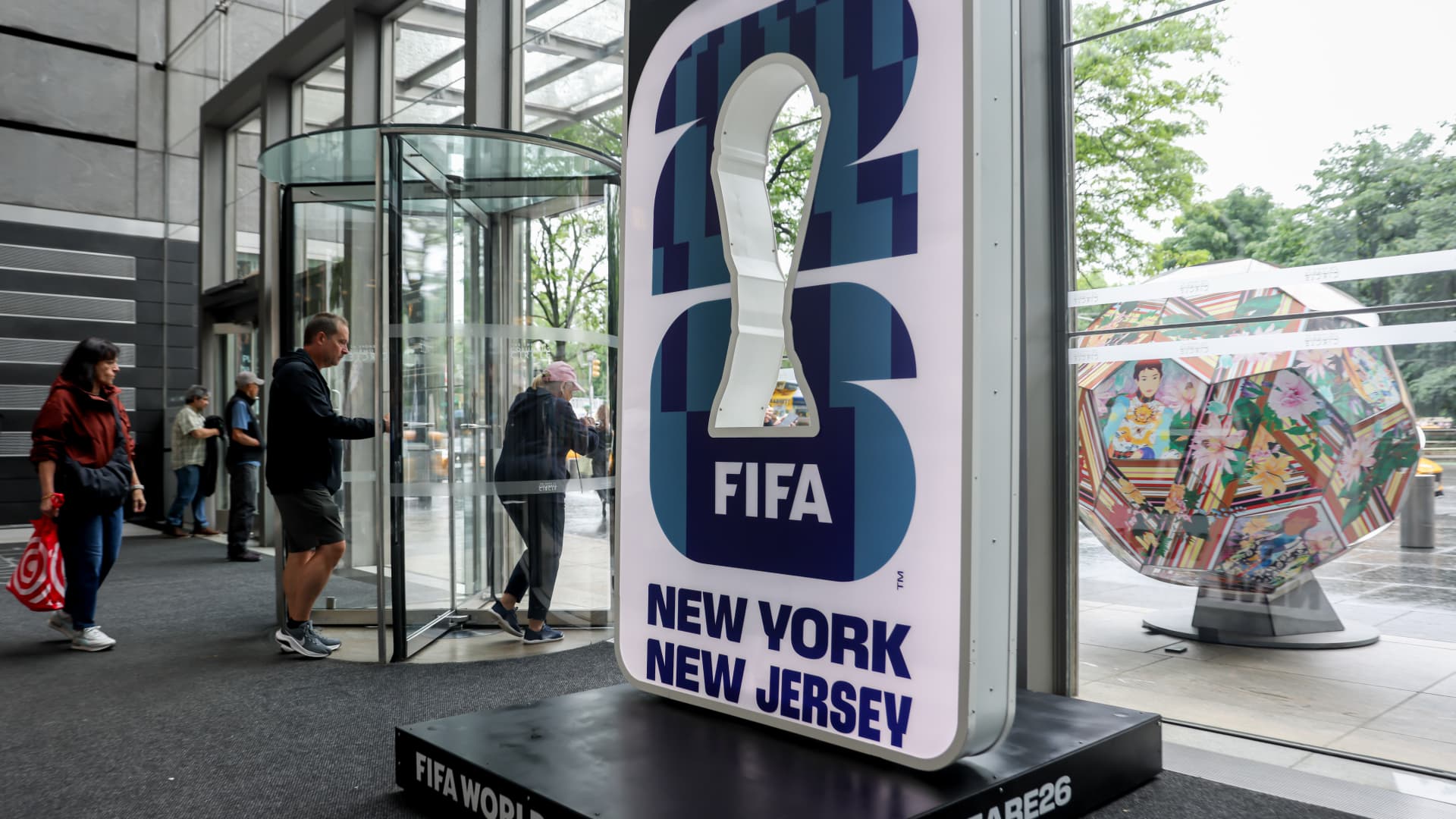
Public health agencies are stepping up disease monitoring as the 2026 FIFA World Cup begins across the United States, Canada and Mexico. Health experts told CNBC that Ebola is on their watch list, but faster-spreading infections such as measles, Covid-19 and flu pose the larger risk around packed stadiums and fast-moving crowds.
FIFA says this year’s tournament is the largest in World Cup history, with 48 teams playing in 16 host cities across three countries. The event opens June 11 as the World Health Organization tracks an Ebola outbreak in Congo and Uganda that it has designated a public health emergency of international concern.
Dr. Shruti Gohil, associate medical director for epidemiology and infection prevention at University of California, Irvine Health, told CNBC that Ebola and hantavirus are lower on her list of concerns because they do not spread easily from person to person. Dr. Amesh Adalja of the Johns Hopkins Bloomberg School of Public Health told CNBC that Ebola requires close contact with blood or bodily fluids from a symptomatic patient, making crowd transmission unlikely.
The WHO has confirmed more than 260 Ebola cases and is examining about 1,100 suspected infections in Congo and Uganda, according to CNBC. The current Bundibugyo strain has no approved vaccine or treatment, CNBC reported, but there were no U.S. Ebola cases as of Wednesday.
The Centers for Disease Control and Prevention has added entry screening for travelers who recently spent time in Congo, Uganda or South Sudan, according to the agency. Those travelers must arrive through designated airports in Atlanta, Houston, New York or the Washington area, where officials collect travel and symptom information, take temperatures and arrange follow-up monitoring during the 21-day incubation period.
Local departments in host cities also are planning for rare but serious cases. Kansas City health Director Dr. Marvia Jones told CNBC that local agencies are notified when travelers from affected areas arrive. Dallas County health Director Dr. Phil Huang said his department has coordinated with hospitals and emergency responders on transport, isolation, contact tracing and protective equipment, drawing on lessons from Dallas’ 2014 Ebola case.
Measles draws sharper concern
Several officials told CNBC that measles is a more immediate infectious-disease concern because it spreads through the air and can travel with visitors moving among cities. James Garrow of Philadelphia’s Department of Public Health told CNBC that measles is the city’s biggest World Cup infection concern, citing outbreaks in the U.S. and overseas.
The CDC reported more than 2,100 confirmed U.S. measles cases in 2025, the highest annual total since 1991, with cases in 45 jurisdictions and 48 outbreaks. The CDC says about 93% of confirmed cases last year involved people who were unvaccinated or whose vaccination status was unknown.
Dr. Theresa Tran, director of the Houston Health Department, told CNBC that airborne diseases such as Covid-19 and influenza are more likely than Ebola to create a public health threat. Houston is also preparing campaigns on heat illness in the city’s humid conditions and has sanitation teams ready to investigate foodborne illness, Tran said.
Officials in Santa Clara County, California, are checking that food vendors tied to matches and related events have proper permits, Dr. Monika Roy told CNBC. Other officials cited norovirus, sexually transmitted infections and insect-borne diseases such as dengue among the issues they will monitor.
Surveillance systems expand
The CDC said in a statement to CNBC that it is working through the White House FIFA World Cup 2026 Task Force and with local health departments, federal agencies and partner groups. The agency said it is finishing a World Cup data dashboard meant to help state and local officials track disease trends across jurisdictions.
Dr. Rebecca Katz of Georgetown University’s Center for Global Health Science and Security told CNBC that public health cuts and the U.S. withdrawal from the WHO have strained disease information-sharing systems. Katz said her new Health Security Operations Center will send daily situation reports to health officials, federal agencies, tournament organizers and hospital emergency managers.
Host cities are also expanding local monitoring. Dallas is adding wastewater sampling sites and broader sewage testing, Huang told CNBC, while Philadelphia is using a mobile lab to test samples closer to potential outbreak sites, Garrow said.
This story draws on original reporting from CNBC.