
World Cup visitors make American chain food a viral soft-power story
International soccer fans are posting U.S. food pilgrimages, turning ranch, Buc-ee’s and fast-food chains into an accidental diplomacy campaign.
By Daniel Okafor · Business Editor
3 min read
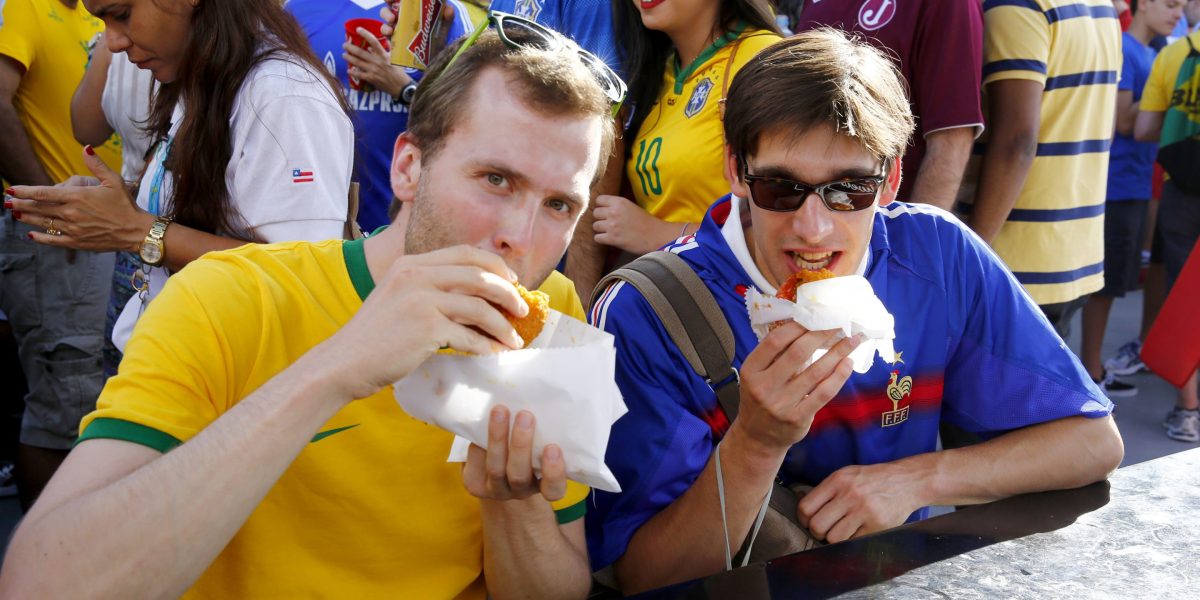
International soccer fans in the United States for the FIFA World Cup have turned American fast food and casual dining into a viral side event, according to Fortune. The online joke, known as the “FIFA 15,” matters because it shows how everyday food can shape foreign visitors’ impressions of the country.
Fortune reported that the meme plays off the “Freshman 15,” the phrase used for weight gain sometimes associated with a first year of college. In this version, fans are swapping campus dining halls for stops at chains including Raising Cane’s, Whataburger, Taco Bell, Waffle House, Wendy’s, Chili’s, Dunkin and Chipotle.
One of the most visible examples, according to Fortune, is German soccer fan @FreddyLA7, whose trip from Georgia to Texas has attracted hundreds of thousands of followers on X. Fortune said his posts included enthusiastic visits to Taco Bell, Waffle House, Buc-ee’s, Walmart, Wendy’s and Chili’s, along with reactions to Atlanta’s greenery and a Coca-Cola Freestyle machine.
Other visitors have joined the food tour online. Fortune cited Japanese fans in Texas who praised steak and Caesar salad, a Whataburger visitor who called the meal the best dining experience of his life, and a Norway fan who paired clam chowder with a Dunkin drink.
Ranch dressing has become a leading subject of the World Cup food posts, Fortune reported. A Swedish X user asked why Europeans had not been told about ranch sauce sooner, while the Transportation Security Administration joked on Instagram about airport “ranch” incidents after bottles were taken at checkpoints, according to Fortune.
Kraft responded with a limited-edition travel kit designed to comply with TSA rules, Fortune reported. Visitors have also shown strong interest in barbecue, steak, pizza, deli sandwiches, clam chowder and large-format American drinks, according to the report.
Food as soft power
Fortune framed the trend as an unplanned example of culinary diplomacy, a term associated with public diplomacy scholars Paul Rockower and Sam Chapple-Sokol. Fortune said their work helped popularize the idea that food can help countries build warmer ties with foreign publics.
Thailand offers one of the clearest government-led examples, according to Fortune. The country launched its “Global Thai” initiative in 2002 to expand tourism and food exports, and Fortune reported that the number of Thai restaurants worldwide rose from about 5,500 before the program to more than 10,000 within 10 years.
Fortune reported that the Export-Import Bank of Thailand offered loans of up to $3 million to Thai nationals opening restaurants abroad. The outlet also cited estimates that there are about 10,000 Thai restaurants in the United States, even though Thai people account for about 0.1% of the U.S. population.
A study cited by Fortune found that for every million people who eat at a Thai restaurant worldwide, about 100,000 later visit Thailand. Fortune also reported that Thai tourism has increased 200% since Global Thai began, with nearly one-third of new tourists naming food as a critical reason for traveling there.
Fortune also cited Lucy Long, a Bowling Green State University folklorist credited with coining “culinary tourism,” and Krishnendu Ray, an NYU food studies professor and author of “The Ethnic Restaurateur,” as scholars whose work helps explain why visitors use food to experience another culture.
The United States has not needed a Thai-style campaign, Fortune argued, because American food culture has spread through chains, movies, television and other cultural exports. Fortune cited a Public Diplomacy Magazine study finding that more than half of respondents felt more positively about a country after eating its cuisine.
This story draws on original reporting from Fortune.