
Washington edges toward AI rules as public concern grows
The Trump administration is showing new openness to AI oversight as polls, safety concerns and China talks put pressure on its earlier deregulatory stance.
By Daniel Okafor · Business Editor
3 min read
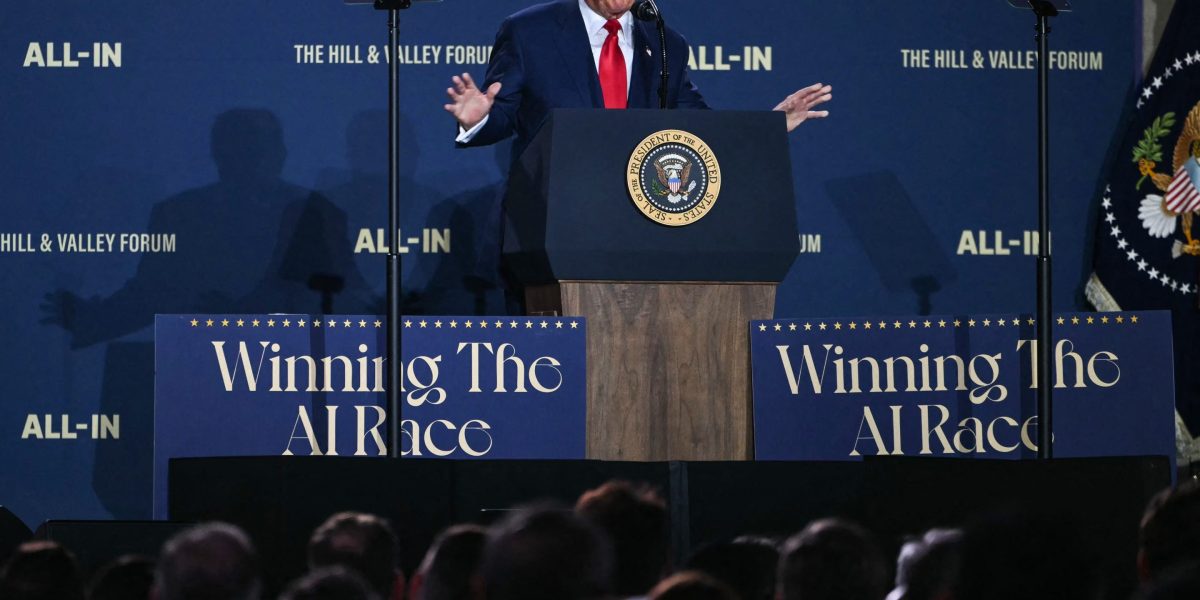
Washington’s posture on artificial intelligence regulation is shifting, with the Trump administration showing interest in tighter federal oversight after previously working against AI rules. Fortune’s Jeremy Kahn reported that officials are weighing a possible federal licensing system for AI models as public concern and national security worries grow.
The change matters because AI policy is moving from a largely industry-friendly debate into a broader political fight. Kahn reported that support for regulation is rising in both parties on Capitol Hill, and he wrote that some form of AI legislation would be highly likely if Democrats win at least one chamber of Congress in November.
Public backlash changes the politics
Kahn identified public unease as one of the main forces behind the shift. The Wall Street Journal reported this week that resistance to AI has been gaining strength across the U.S., while a widely circulated video showed University of Arizona graduates booing former Google CEO Eric Schmidt whenever he mentioned AI in a commencement speech.
Polling has also added pressure. Pew Research Center surveys cited by Kahn found that Americans are more worried than optimistic about AI, with the gap reaching as much as 40 percentage points in some polls. Fortune also reported that seven in 10 Americans oppose data centers being built in their own communities.
An Annenberg Public Policy Center poll released last week found that two-thirds of Americans believe the government has done too little to regulate AI. Kahn reported that view was held by majorities of Republicans, independents and Democrats.
The changing mood is also visible in industry behavior. OpenAI last week endorsed the bipartisan Kids Online Safety Act, which would require online platforms that may be used by children to take steps to prevent and reduce harm, according to The Verge. OpenAI also backed Illinois SB 315, a state bill that would require frontier AI developers to create safety frameworks, conduct annual audits, report critical incidents and protect whistleblowers, Kahn reported.
Anthropic model sharpens security debate
Kahn said a second factor is Mythos, an Anthropic AI model described as having superhuman hacking abilities. He reported that the model has increased concern inside government that advanced AI can be a powerful dual-use technology whose release cannot be left entirely to private companies.
The Trump administration has reportedly blocked Anthropic from expanding “Project Glasswing,” a program that shared a version of Mythos with selected companies to help find and fix software flaws, Kahn wrote. He also reported that Treasury Secretary Scott Bessent is playing a role in deciding which foreign financial authorities and banks receive access to the model.
Brad Carson, a former Oklahoma congressman who leads Americans for Responsible Innovation, told Kahn that Mythos is an “El Alamein moment” for AI regulation, referring to the 1942 World War II battle that marked a turning point for British forces. Carson said AI regulation is now likely, though the political fight is not finished.
The model may also be influencing international policy. The New York Times reported that after President Donald Trump’s summit with Chinese President Xi Jinping last week, the U.S. appeared to agree to hold AI safety talks with Beijing. Kahn reported that some earlier Trump AI advisers had opposed such talks, arguing that any agreement could restrain U.S. companies while China might not honor its commitments.
Export controls are also under scrutiny. Jacob Feldgoise, a senior data analyst at Georgetown University’s Center for Security and Emerging Technology, told Kahn there is little evidence that U.S. controls have delayed China’s access to militarily useful AI capabilities. Feldgoise said the controls may instead be slowing China’s commercial AI deployment by limiting access to GPUs needed for wide use of AI systems across the economy.
This story draws on original reporting from Fortune.