
Wang takes charge of Meta’s costly push for superintelligence
Meta has put Scale AI co-founder Alexandr Wang over its AI teams after a $14.3 billion investment tied to a major talent push.
By Hana Yoshida · Markets Reporter
4 min read
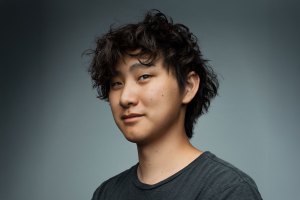
Meta has placed Alexandr Wang, the 28-year-old co-founder of Scale AI, in charge of its artificial intelligence operation as Mark Zuckerberg spends heavily to regain ground in the AI race. The move matters because Meta is pairing one of Silicon Valley’s largest AI budgets with a newly recruited team aimed at building what Zuckerberg calls superintelligence.
Fortune reported that Wang became Meta’s first chief AI officer in June as part of a $14.3 billion investment in Scale AI. Wang now oversees Meta’s AI product and research groups under a new unit called Meta Superintelligence Labs.
Wang’s rise began far from the top of a major tech company. According to Fortune, he and Lucy Guo started Scale AI in 2016 while taking part in Y Combinator, working from a pool house and sleeping on air mattresses as they built a data-labeling business.
Scale did not build large language models itself. Its business centered on preparing and organizing data used to train AI systems, work that became more valuable as model builders competed for better training material.
Meta’s new AI group
Zuckerberg has assembled a senior roster around Wang. Fortune reported that the new group includes former GitHub CEO Nat Friedman, former Safe Superintelligence CEO Daniel Gross and researchers hired from OpenAI, Anthropic, Google and Apple.
Some compensation packages have been rumored to exceed $100 million, Fortune reported. Ruoming Pang, who led Apple’s foundation models team, is reportedly set to receive $200 million over four years.
In a July post on Threads, Zuckerberg said he was focused on building “the most elite and talent-dense team in the industry.” He has also described Wang as “the most impressive founder of his generation,” according to Fortune.
The spending comes as Meta tries to improve the standing of its Llama models. Fortune reported that Meta’s April 2025 release of Llama 4 drew criticism over alleged inflated benchmarks, a rushed launch and limited transparency. Meta has said claims that it manipulated performance metrics are not true.
The superintelligence target
The new lab’s stated goal reaches beyond near-term model competition. Fortune reported that Zuckerberg wants Meta to pursue superintelligence, a still-theoretical form of AI generally described as surpassing human abilities across many areas.
In an internal memo obtained by Fortune, Zuckerberg wrote that developing superintelligence was “coming into sight,” though he did not give a date. OpenAI CEO Sam Altman wrote in June that humanity is “close” to building digital superintelligence, Fortune reported.
Zuckerberg has pointed to Meta’s data centers and capital as advantages. On Threads, he said Meta would invest hundreds of billions of dollars in compute for superintelligence and cited planned data centers called Prometheus and Hyperion, including one with a footprint he described as nearly the size of Manhattan.
Meta is not alone in that arms race. Fortune reported that Microsoft and Google are spending tens of billions of dollars on AI infrastructure, while OpenAI has said it plans to invest $500 billion with partners including SoftBank on the Stargate data center network.
Why Wang was chosen
Wang is an unusual pick because he is known as a founder and operator rather than a model researcher. Supporters told Fortune that his strength is recruiting and building teams, skills Zuckerberg appears to prize as Meta competes for scarce AI talent.
Sarah Guo, founder of Conviction and a former Greylock partner, described Wang to Fortune as highly smart and ambitious. A former Scale AI manager told the magazine that Wang is among a small group of people worth betting on to build the type of team Meta wants.
Meta had worked with Scale since 2019 as a data provider, according to Fortune, and invested in Scale’s $1 billion funding round in 2024. Fortune reported that Zuckerberg and Wang began spending more time together in April, as Zuckerberg sought closer collaboration.
Wang’s immediate challenge is to sharpen Meta’s existing AI models while pursuing a much broader research goal. Whether the investment pays off remains uncertain, but a current Meta AI research scientist told Fortune that major progress by the new group within six months could justify the spending.
This story draws on original reporting from Fortune.