
Trump team races to replace expiring tariff revenue
After a Supreme Court defeat, the administration is using Section 301 trade cases to try to restore import-tax income before a July deadline.
By Maya Lindqvist · Senior Technology Correspondent
4 min read
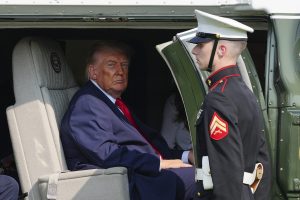
President Donald Trump’s trade team is trying to replace tariff revenue that fell sharply after the Supreme Court limited his authority to tax imports, Fortune reported. The effort matters because a temporary set of 10% global tariffs expires July 24, leaving the administration little time to keep import duties flowing into the Treasury.
Fortune reported that Trump first turned to Section 122 of the Trade Act of 1974 after the court ruling, using it to impose 10% tariffs worldwide. That law allows such tariffs for only 150 days, and an extension would require Congress, which Fortune reported is considered unlikely before the Nov. 3 midterm elections amid voter concern over living costs.
The administration’s longer-running option is Section 301 of the same trade law, according to Fortune. That provision lets the president impose tariffs or other penalties after findings that foreign trade practices are unjustifiable, unreasonable or discriminatory.
Trump used Section 301 against China during his first term, Fortune reported. Late Wednesday, he also announced 25% tariffs on some Brazilian imports while accusing Brazil of unfair trade practices, according to Fortune.
Trade lawyer Ryan Majerus, a King & Spalding partner who served in trade roles under Trump and President Joe Biden, told Fortune he expects the administration to replace the expiring Section 122 duties with Section 301 tariffs by the deadline. “They’re going to raise the tariff wall again,” Majerus said.
Court ruling turned revenue into refunds
Fortune reported that Trump previously relied on the 1977 International Emergency Economic Powers Act to impose broad tariffs on imports from most countries, arguing that U.S. trade deficits amounted to a national emergency. In February, the Supreme Court ruled that the law could not be used to impose tariffs, forcing the administration to refund importers that had paid them, according to Fortune.
Import-tax revenue reached more than $31.4 billion last October, Fortune reported. It dropped to $22 billion in both March and April after the ruling, then turned negative as refunds outpaced new collections: a $42 million shortfall in May and a $25.6 billion loss in June, according to Fortune.
Trump and Treasury Secretary Scott Bessent have said they would use other legal authorities to recover the lost income, Fortune reported. Section 301 gives the administration broad power to set and adjust tariffs, but only after steps such as public comments and hearings, according to Fortune.
Sarah Bianchi, a former U.S. trade official who is now chief strategist of international political affairs at Evercore ISI, told Fortune that a shift to Section 301 would make tariff policy more rule-based. “There’s less uncertainty but not no uncertainty,” she said.
Forced labor case moves first
Fortune reported that the administration is using two Section 301 investigations to rebuild its tariff program. One targets 60 countries, which account for 99% of U.S. imports, over claims they have not done enough to stop imports made with forced labor. The other examines whether 16 trading partners, including China, the European Union and Japan, are producing too many goods and pushing down global prices to the detriment of U.S. manufacturers.
U.S. Trade Representative Jamieson Greer has proposed tariffs tied to the forced-labor case, Fortune reported. The plan would set duties of 10% on 16 countries and 12.5% on 44 others, but Greer’s office is still taking public comments and has not yet imposed the tariffs, according to Fortune.
Nathaniel Halvorson, a Baker McKenzie partner and former U.S. trade official, told Fortune he expects the forced-labor tariffs to be ready in time to closely follow the expiring Section 122 duties. “Really, they’re operating about as fast as legally possible,” he said.
The overproduction investigation has not been completed, Fortune reported. Majerus told Fortune he expects another round of large tariff proposals from that case in a month or two and said they may be timed to take effect after the midterm elections.
Bianchi told Fortune that Section 301 tariffs have generally held up in court, but using the law for near-universal tariffs could draw legal challenges. “No one has tried to use it to basically put in place universal tariffs,” she said.
This story draws on original reporting from Fortune.