
Wall Street sees few clear exits for Trump on Iran conflict
Analysts say fighting around the Strait of Hormuz has left Trump caught between oil prices, shipping security and Iran’s leverage.
By Daniel Okafor · Business Editor
3 min read
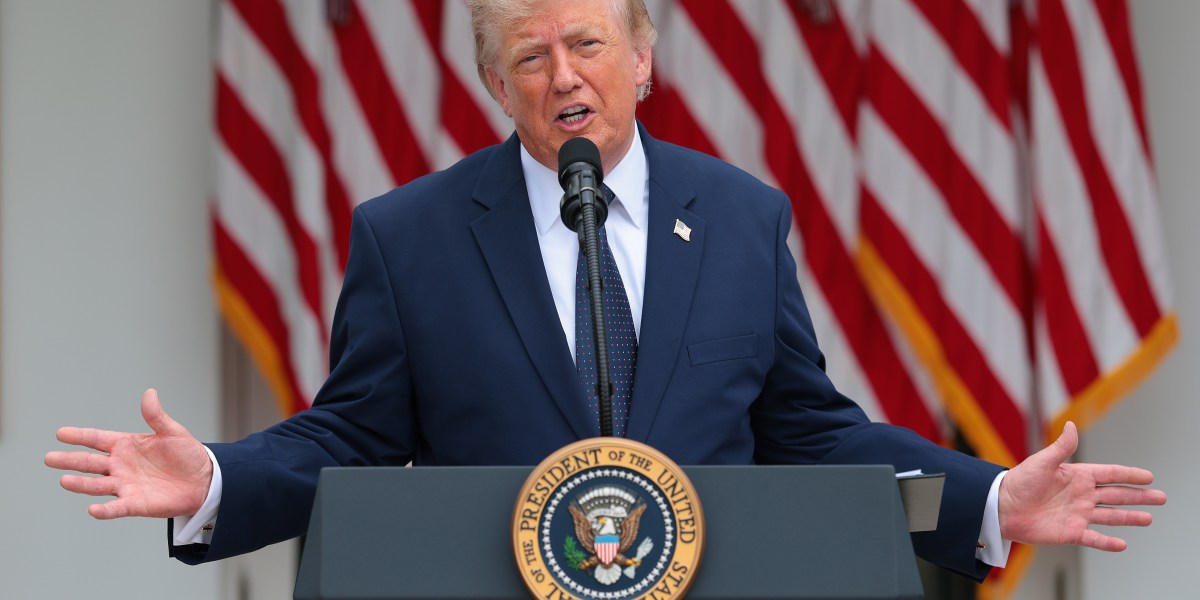
Wall Street analysts are warning that President Donald Trump may have limited room to end the renewed conflict with Iran without worsening either energy prices or U.S. leverage in the Gulf. Fortune reported that research notes it reviewed describe a bind over the Strait of Hormuz, the key oil-shipping route now at the center of the fighting.
According to Fortune, analysts see two politically difficult choices: reopening the strait in a way that lets Iran claim a win, or keeping pressure on Iran while the strait remains threatened and gasoline prices risk becoming a midterm election issue. The concern is that Iran’s position over shipping routes has turned the waterway into a test of U.S. resolve.
Shipping route dispute drives the tension
Before fighting resumed earlier this week, the U.S. had been trying to move ships through the Strait of Hormuz on a southern path close to Oman, Fortune reported. Iran wants ships to use a northern route near its coast, where it can collect tolls, according to the report.
Macquarie analysts Thierry Wizman and Gareth Berry said Iran risked losing the strait as a source of leverage if it did not act against vessels using the route without paying tolls, Fortune reported. Iran began attacking oil tankers earlier this week because it opposed ships passing through the strait for free, according to the report.
Dan Alamariu of Alpine Macro told Fortune that Iran’s strikes breached the part of a memorandum of understanding that Washington viewed as non-negotiable: keeping the Strait of Hormuz open. He argued that the renewed pressure on the waterway removes Trump’s main reason to seek a deal, because lower oil prices are politically useful before the midterms.
Alamariu also suggested to Fortune that Trump could try to blame failed talks on JD Vance, who he described as a leading public backer of the memorandum of understanding. That was presented as one possible political response, not as a reported White House plan.
Oil reserves add to the pressure
Fortune reported that Trump’s oil-price problem is being watched closely because U.S. and Chinese national oil reserves are declining over time, even though both countries still hold substantial reserves. Alpine Macro data cited by Fortune showed the U.S. Strategic Petroleum Reserve at its lowest level since 1983.
Markets were calmer Thursday morning as fewer new Middle East headlines crossed trading desks, Fortune reported. Brent crude traded at $76 a barrel, down from a $79 peak the previous day, while S&P 500 futures slipped 0.17% after the index rose 0.81% on Wednesday.
European markets were little changed in early trading, with the Stoxx 600 and the U.K.’s FTSE 100 flat, according to Fortune. In Asia, South Korea’s KOSPI rose 2.52%, Japan’s Nikkei 225 gained 1.2%, India’s Nifty 50 rose 1.01% and China’s CSI 300 fell 1.96%.
Fortune also reported that a U.S. official told Bloomberg talks between Washington and Tehran were continuing, even as explosions were reported in Iran by Sky News. The U.S. had not said it carried out additional strikes that morning, according to Fortune.
Some market strategists still saw the conflict through a buying lens. Yardeni Research analysts Ed Yardeni and Elias Griepentrog wrote that geopolitical crises, including wars, have often created stock-buying opportunities, and said they thought renewed fighting could do so again, Fortune reported.
This story draws on original reporting from Fortune.