
Delta sees stronger fares supporting its full-year profit target
CEO Ed Bastian told CNBC that Delta expects airfare strength to hold as it passes more fuel costs to passengers.
By Sofia Marchetti · World Affairs Correspondent
3 min read
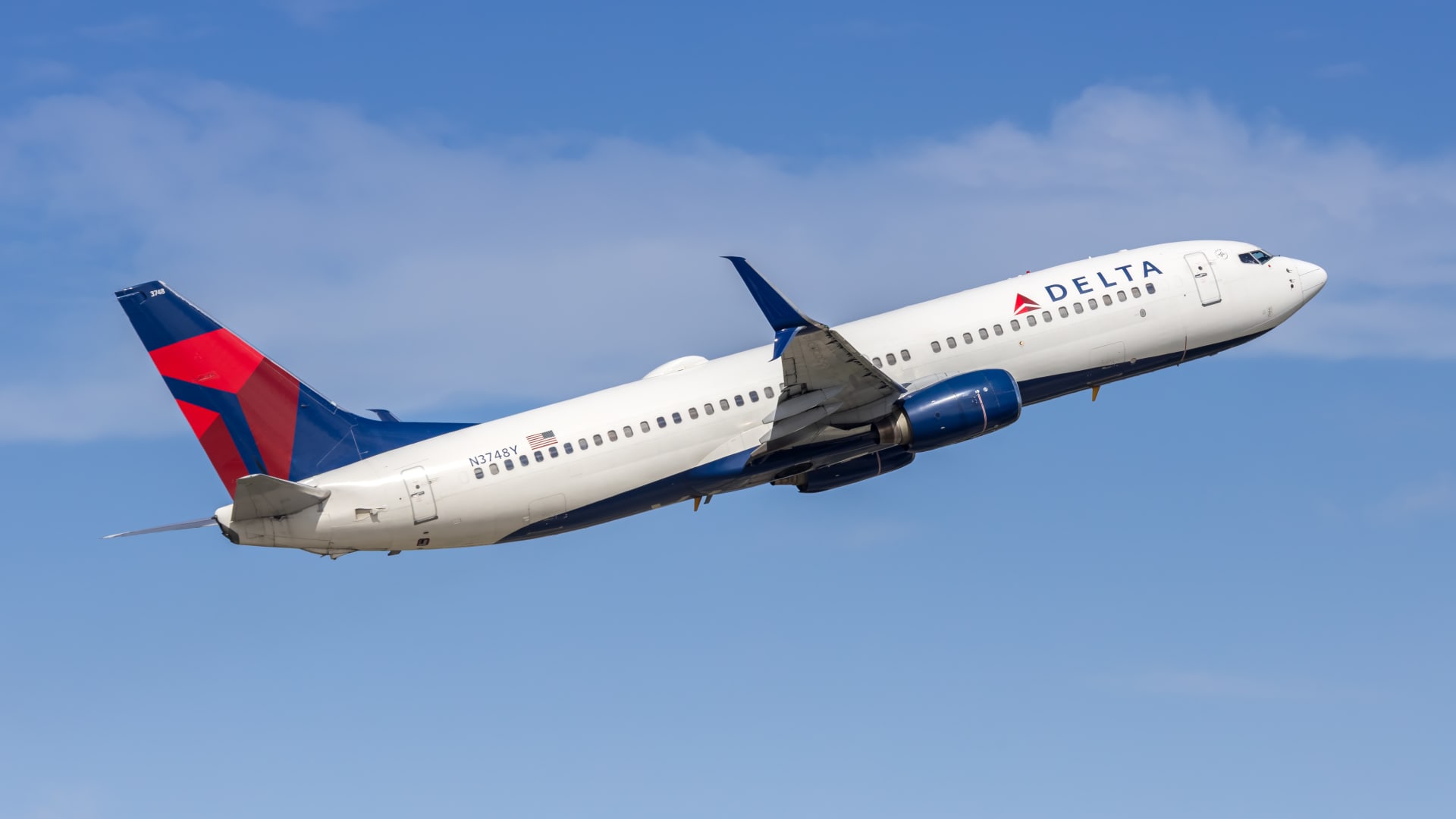
Delta Air Lines said it still expects to meet its full-year earnings target, helped by higher ticket prices and steady travel demand. CEO Ed Bastian told CNBC the carrier expects recent fare strength to last even after oil prices retreat from multi-year highs.
Delta, the first major U.S. airline to report second-quarter results, reaffirmed its January forecast for 2026 adjusted earnings of $6.50 to $7.50 a share. The outlook suggests the airline believes it can recover more of this year’s higher fuel costs through fares.
Bastian told CNBC he views the higher pricing as sustainable. He cited strong demand, a wider mix of seat products and tighter capacity decisions across the airline industry after past cycles of overexpansion.
Third-quarter outlook tops estimates
For the third quarter, Delta forecast earnings of $2.00 to $2.50 a share. Analysts surveyed by LSEG had expected $2.02 a share for the period, according to CNBC.
The airline also said it expects revenue for the July-to-September quarter to rise in the mid-teens from the same period in 2025. Delta’s outlook comes after carriers cut some growth plans and removed weaker routes in response to a record run-up in fuel costs earlier this year, CNBC reported.
Federal data cited by CNBC showed May airfares were nearly 27% higher than a year earlier. Bastian said Delta had passed about 60% of its higher fuel bill to customers so far and expects that figure to approach 100% this quarter.
Premium seats lead sales
Delta reported second-quarter adjusted earnings of $1.56 a share, topping the $1.48 expected by analysts surveyed by LSEG. Adjusted revenue was $17.67 billion, compared with expectations of $17.53 billion.
Bastian told CNBC demand was broad-based and said Delta benefits from serving more higher-income customers. The company’s premium cabin revenue exceeded its main cabin revenue in the quarter: premium products such as first class brought in $6.92 billion, while main cabin sales totaled $6.85 billion.
Delta said in its earnings release that corporate travel increased in the second quarter, with aerospace and defense, banking and automotive customers leading the growth. Bastian also told CNBC that demand tied to the World Cup was stronger than expected, including from travelers coming into the United States.
Costs still pressure profit
Delta’s net income fell 25% from a year earlier to $1.6 billion, or $2.44 a share. Operating revenue rose 19% from the 2025 quarter to $19.76 billion.
After adjustments, including for third-party refinery sales, Delta earned $1.03 billion, or $1.56 a share. CNBC reported that revenue per available seat mile rose 17% from a year earlier, while cost per available seat mile climbed 21%.
The company’s Trainer, Pennsylvania, refinery contributed to results, with revenue from the facility rising 83% to $2.09 billion. Delta also has revenue streams beyond passenger flights, including cargo, maintenance and refinery operations.
Delta shares were indicated higher after the results, according to CNBC market data. The report gives investors an early view of how major U.S. airlines are balancing strong demand, higher fares and elevated operating costs during the summer travel season.
This story draws on original reporting from CNBC.