
Waabi CEO says Gen Z’s AI habits can beat old tech experience
Raquel Urtasun told Fortune she prizes curiosity and adaptability as Waabi builds autonomous trucking technology.
By Hana Yoshida · Markets Reporter
3 min read
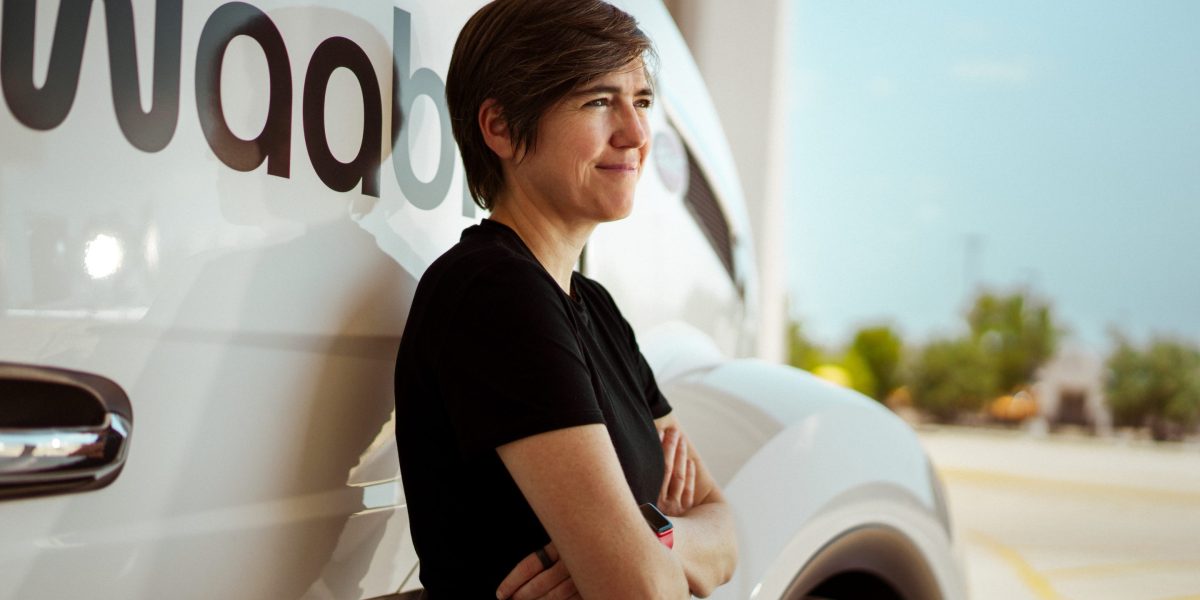
Waabi cofounder and CEO Raquel Urtasun says younger workers who are comfortable with AI can be stronger hires than candidates with long traditional software careers. In an interview with Fortune, she framed the spread of AI as a career opening for new graduates rather than only a threat to jobs.
Urtasun, 50, leads Waabi, an autonomous trucking startup Fortune described as a unicorn. Fortune reported that the company, founded in 2021, has raised more than $1 billion to develop self-driving truck technology, including a recent Series C round co-led by Khosla Ventures.
Waabi is working with Volvo, and Fortune reported that its autonomous trucks are already being tested in road operations. Urtasun told Fortune that the company’s hiring approach reflects the same AI-first thinking behind its technology.
Asked about anxiety among Gen Z workers over AI’s effect on work, Urtasun told Fortune that fear can stop people from accepting change. She said workers should treat the shift as an opportunity.
Curiosity over long résumés
Urtasun told Fortune she values adaptability, willingness to learn and the ability to question assumptions. She linked that view to her years in academia, where she said professors depend on young people with undeveloped talent.
At Waabi, she said the people helping drive change are “AI-first” workers rather than engineers who have spent 20 years building software in older ways. Fortune reported that she sees curiosity as one of the company’s central principles.
Urtasun’s background spans university research and corporate self-driving work, according to Fortune. A native of Spain, she earned a Ph.D. in computer science from EPFL in Switzerland in 2006, completed postdoctoral work at MIT and the University of California, Berkeley, and later became a professor at the University of Toronto.
Fortune reported that Urtasun worked alongside Geoffrey Hinton, often called the “Godfather of AI,” during her academic career. Wired described her as an “AI Superstar” in 2017, when Uber hired her to lead a new advanced technologies division, according to Fortune.
Urtasun told Fortune that academia taught her to learn across fields and pick up new skills as technology changed. She said today’s graduates have access to tools earlier generations did not, adding that she would be excited to be entering the workforce now.
Autonomous driving’s slow road
Fortune reported that Urtasun founded Waabi in 2021 after working on Uber’s self-driving technology. She told Fortune she believed autonomous driving needed to be rebuilt around AI and safety, even as others doubted the timing of her move into the sector.
The broader self-driving industry has had a slower rollout than early boosters predicted, according to Fortune. Fortune cited Waymo, an Alphabet subsidiary, as the largest operator of fully autonomous vehicles, with operations in 11 U.S. cities after roughly two decades.
Fortune also cited a McKinsey survey from earlier this year that found expected timelines for fully autonomous passenger vehicles and long-haul trucking have slipped closer to the end of the decade. Urtasun told Fortune that those challenges require “infinite grit” from entrepreneurs.
Urtasun said her time at Uber helped shape her as an executive, according to Fortune. She credited Uber CEO Dara Khosrowshahi with teaching her that employees watch how leaders respond during uncertainty, and she recalled his advice to lead with positivity because people notice every gesture.
This story draws on original reporting from Fortune.