
Vietnam and Philippines move into upper-middle-income ranks
The World Bank reclassified both economies after gains in income, exports and broad-based growth, but economists warn the next stage will be harder.
By Maya Lindqvist · Senior Technology Correspondent
3 min read
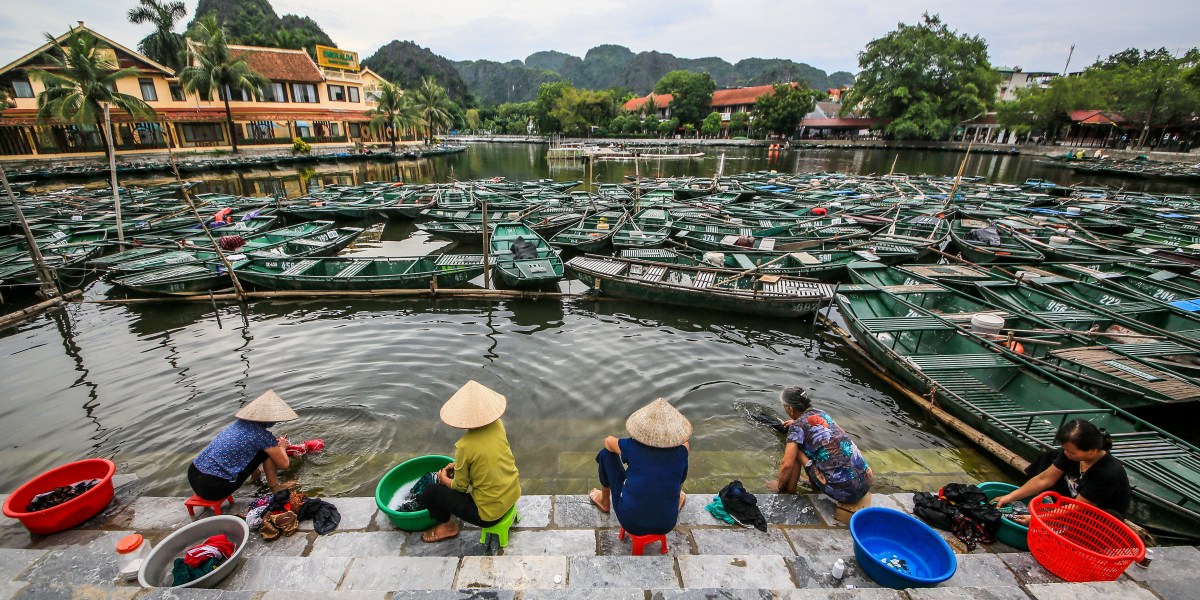
The World Bank has reclassified Vietnam and the Philippines as upper-middle-income economies, placing them in the same income group as Malaysia, Thailand and Indonesia. The shift marks a development milestone for two fast-growing Southeast Asian countries, while also raising the tougher question of how they sustain growth after losing some low-cost advantages.
The World Bank bases its income groupings on gross national income per person from the previous year. For the current classification, the bank said countries with 2025 GNI per capita between $4,636 and $14,375 fall into the upper-middle-income category.
Vietnam reported GNI per capita of $4,970 in 2025, while the Philippines reported $4,850, according to the World Bank figures cited in the reclassification. The bank pointed to Vietnam’s export surge and to growth across major industries in the Philippines as reasons for the upgrade.
Khuong Minh Vu, a professor at Singapore’s Lee Kuan Yew School of Public Policy, described the change as a strong sign of international recognition for both economies’ development. He also said the move begins a more difficult phase, because countries in the upper-middle-income bracket often find it harder to keep expanding quickly.
Vietnam’s export-led advance
Vietnam’s economy expanded 8% last year, the fastest rate among Southeast Asian countries, according to the reported figures. Foreign investment into Vietnam rose as trade shifted during the U.S.-China trade conflict, and the United States became Vietnam’s largest export market, according to the Associated Press.
Hanoi is aiming for average annual GDP growth of 10% through the end of the decade and wants Vietnam to reach high-income status by 2045. The government has approved economic changes and is spending heavily on infrastructure, including a $67 billion high-speed railway intended to connect Hanoi and Ho Chi Minh City in eight hours.
Vietnam reported 8.4% economic growth in the second quarter, including 10.5% growth in industry and construction, according to figures reported by Nikkei Asia on July 3. Even so, Vietnam would need faster expansion to meet its 10% full-year target.
Philippines faces a slower rebound
The Philippines grew 4.4% last year, a slower pace after super typhoon Ragasa and a strong El Niño season caused about $24 million in nationwide losses, according to the reported figures. Arsenio Balisacan, the country’s economic planning secretary, said in a July 2 statement that the government had pursued inclusive growth, strengthened economic fundamentals and stayed with its development agenda despite domestic and global shocks.
The ASEAN+3 Macroeconomic Research Office expects both economies to keep outpacing the region this year. AMRO projects 7.4% growth for Vietnam and 5.3% for the Philippines, compared with 4.6% for ASEAN overall, 3.4% for Singapore and 1.7% for Thailand.
The Philippines is expected to release second-quarter GDP figures in early August. Economists at the University of Asia and the Pacific forecast 2.6% growth for the quarter, according to the Manila Standard.
The middle-income challenge
Khuong said many economies risk falling into the “middle income trap,” in which growth slows after countries move beyond poverty. He said that can happen when countries lose the benefit of cheap labor before they build enough domestic innovation and higher-value industries to compete with richer economies.
The classification can also affect access to development lending. Ruben Carlo Asuncion, chief economist at Union Bank of the Philippines, told Bloomberg that moving up the World Bank’s income ladder signals greater national self-sufficiency, including on fiscal resources.
Malaysia has been in the upper-middle-income group for 37 years, Thailand for 15 years and Indonesia for six, according to the reported World Bank history. Since joining that category, all three have generally recorded long-term growth rates below 5%.
Khuong said Vietnam and the Philippines will need to shift from growth driven by inputs toward productivity, innovation and higher-value activity. For Vietnam, he said using artificial intelligence and making the most of institutional reforms will be central to reaching its 2045 goal.
This story draws on original reporting from Fortune.