
U.S. strikes Iran again as Trump seeks Hormuz transit fees
Washington said it hit Iranian military sites as Trump revived a blockade and proposed charging ships for passage through the Strait of Hormuz.
By Daniel Okafor · Business Editor
4 min read
The U.S. military opened a new round of attacks on Iran on Monday, escalating a fight over the Strait of Hormuz and the flow of global energy shipments. President Donald Trump said Washington would restore a blockade on Iran and seek payment from ships using the waterway, marking a shift from earlier U.S. opposition to transit fees.
U.S. Central Command said on social media that American forces had begun additional strikes meant to weaken Iran’s ability to threaten civilians and commercial vessels in the strait. Trump described the operation to reporters in the Oval Office as “another major attack” and said the U.S. was targeting Iran’s offensive capacity.
“We’re knocking out all of their offensive capability and we’re controlling the straits,” Trump said. “We’re putting the blockade back.”
The president also said the U.S. expected reimbursement for providing security in a wealthy part of the world. Earlier on social media, Trump said other countries would have “fair and open use” of the strait, while the U.S. would collect 20% of cargo value to cover protection costs.
A reversal on fees
The proposal breaks with the U.S. position that the Strait of Hormuz should be open without tolls. Secretary of State Marco Rubio said in Bahrain on June 25 that no country supported charging money to pass through the strait, which he called an international waterway.
The International Maritime Organization, the United Nations agency for global shipping, said it was seeking more information about Trump’s plan but remained against mandatory fees for passage through international straits. The agency said there was no legal basis for imposing such tolls.
Iran has argued that it has authority to manage traffic through the strait under an interim peace deal and could charge fees. The U.S. disputes that claim.
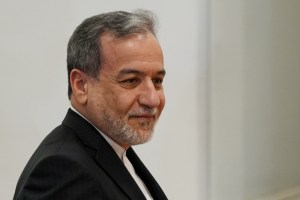
Iranian Foreign Minister Abbas Araghchi used Trump’s comments to defend Tehran’s position. In a post on X, he wrote that whoever ensures safe passage for commercial vessels should be compensated, adding that Iran had “always been the GUARDIAN of the Strait.” He mocked the U.S. figure, writing: “20% is of course too much. We will be fair.”
Oil route under pressure
The strait carried about one-fifth of the world’s oil and gas before Iran effectively closed it at the start of the war, according to the report. Traffic increased after last month’s interim agreement but remained below prewar levels.
Brent crude, the international benchmark, rose 7.8% on Monday to $81.92 a barrel. That remained far below the nearly $120 reached at the height of the conflict.
Trump told conservative radio host Hugh Hewitt that the agreement reached last month was intended to test Iran and that Tehran failed. Trump said last week that the ceasefire was “over.” The U.S. military said it would resume its blockade of Iranian ports Tuesday at 4 p.m. EDT.
Wider attacks reported
U.S. officials said American forces struck dozens of Iranian sites Monday, including air defenses, radar, missile and drone equipment, and small boats, after an Iranian attack on a container ship a day earlier. The U.S. military also said it used drone ships for the first time Sunday to strike an Iranian ship maintenance facility and submarine.
Bahrain, home to the U.S. Navy’s 5th Fleet, reported missile alert sirens three times Monday, with no immediate damage report. Kuwait’s Foreign Ministry said its consulate in Iraq had been attacked and also condemned Iran and allied factions for attacks on border points and a Kuwait Petroleum Corporation maritime oil platform.
Jordan’s military said it shot down four Iranian missiles and reported no casualties or damage. In Iran, state-run IRNA said attacks in Hormozgan, Khuzestan and Markazi provinces killed at least two people, while semiofficial media reported strikes in Sistan and Baluchestan province.
Iranian Foreign Ministry spokesperson Esmail Baghaei blamed Washington for the regional turmoil and said Tehran would not permit International Atomic Energy Agency visits to nuclear sites bombed by the U.S. in 2025. Mediators including Pakistan, Qatar and Egypt have continued efforts to secure a final deal during a 60-day negotiation period that is nearly halfway over.
This story draws on original reporting from Fortune.