
U.S. oil stocks climb as Iran war lifts crude prices
Fortune reports oil producers, refiners and LNG exporters have rallied as war-related supply worries push energy prices higher.
By Daniel Okafor · Business Editor
3 min read
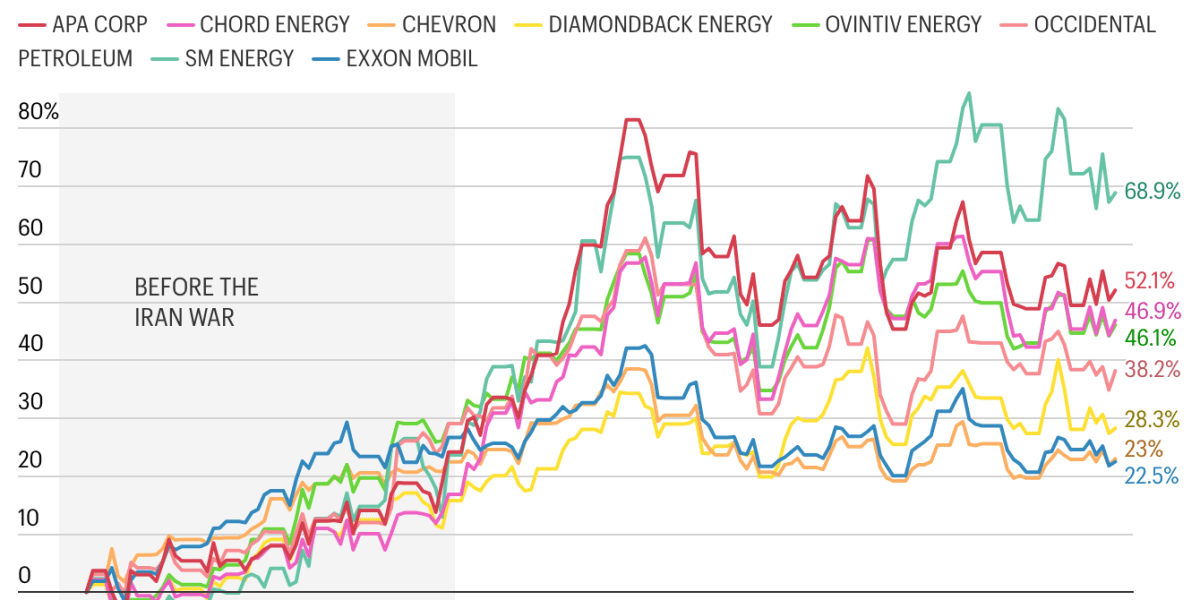
U.S. oil companies are among the clearest financial beneficiaries of the Iran war, Fortune reported, as higher crude prices have lifted profits and share prices while drivers face gasoline above $4 a gallon. The rally matters because analysts cited by Fortune said stronger demand for secure supplies and emergency stockpiles could keep energy prices elevated into 2027 or 2028.
Fortune reported that shares of major U.S. oil companies have risen 20% to 70% this year as crude prices and demand climbed. Many of those stocks are trading near record levels, according to Fortune.
Chevron Chairman and CEO Mike Wirth told a Bloomberg energy event in Houston on June 12 that the United States and the broader Americas are likely to play a larger role in global energy supply. Wirth said the region has strong resources and access to ocean ports, which helps it avoid chokepoints such as the Strait of Hormuz.
Oil producers and refiners lead the gains
Chevron and Exxon Mobil shares have each gained about 22% this year, Fortune reported. Fortune said both companies reached record stock market highs in late March before an initial ceasefire agreement with Iran removed some of the war-related premium from oil prices.
Fortune reported that Exxon’s market value is now above $600 billion, while Chevron’s is above $370 billion. The publication said the gains might have been larger if some of the companies’ Middle East production had not remained disrupted.
U.S. shale companies have posted bigger increases, according to Fortune. Shares of Ovintiv, Chord Energy and APA Corp. have risen close to 50% this year, while SM Energy has climbed nearly 70% after recently expanding through its acquisition of Civitas.
Refiners have also rallied as margins stayed high, Fortune reported. Marathon Petroleum and Valero Energy, which process crude into fuels including gasoline and jet fuel, are up about 60% this year.
Liquefied natural gas exporters have joined the advance, according to Fortune. Venture Global has risen more than 90% this year, and Cheniere Energy has gained about 25% while trading near record highs.
Emergency reserves shape the market
Rebecca Babin, senior equity trader at CIBC Private Wealth, told Fortune that crude prices have not reached the nearly $200-a-barrel level some feared during the supply shock. She said that outcome may still prove supportive for longer-term prices because markets have relied on emergency reserves and have become less reactive to turmoil while hoping for a lasting peace deal.
Babin said the use of those reserves could create a longer period of higher prices because they must later be refilled. She also told Fortune that U.S. barrels may draw more demand because buyers want secure supply with less risk premium.
Fortune reported that oil prices have stayed below feared levels because of increased U.S. crude exports from the Strategic Petroleum Reserve, lower Chinese imports, conservation efforts in other countries and additional volumes leaving the Middle East by pipeline and through the Gulf.
The U.S. Strategic Petroleum Reserve is set to fall to its lowest level since 1983, Fortune reported. The Department of Energy said the administration had released 66 million barrels from the reserve as of June 5 since the Iran war began, and President Donald Trump has authorized a total release of 172 million barrels over several months, according to Fortune.
James West, an energy analyst at Melius Research, told Fortune that oil companies are seeing a need to invest more in exploration after years of limited spending. West said large explorers including Chevron, Exxon and BP are looking for new major resources.
This story draws on original reporting from Fortune.