
U.S. nuclear buildout runs into a fuel supply bottleneck
New reactors for data centers and the grid are advancing faster than the domestic uranium supply chain needed to fuel them, Fortune reported.
By Hana Yoshida · Markets Reporter
4 min read
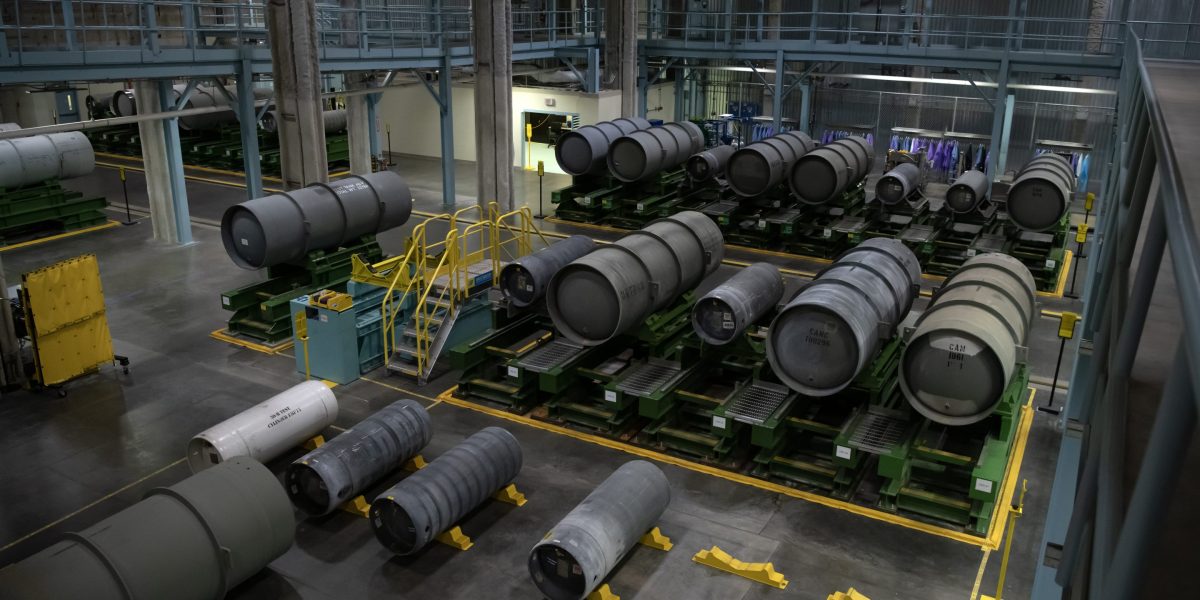
The U.S. push to build more nuclear reactors is colliding with a thin domestic fuel supply chain, Fortune reported. The gap matters because data-center operators and utilities are lining up new reactors while the country still depends heavily on imported uranium and enrichment services.
Antares, a nuclear startup, turned on its Mark-0 microreactor in June, becoming the first participant in a Trump administration pilot program to reach criticality ahead of a July 4 deadline, according to Fortune. Other projects are also moving: TerraPower, backed by Bill Gates, has broken ground in Wyoming, Kairos Power is building a demonstration plant in Tennessee, and closed plants in Michigan, Iowa and Pennsylvania are slated to restart, the report said.
Fortune reported that the pressure is coming from expected growth in electricity use, including demand from artificial intelligence infrastructure. U.S. power demand is projected to rise 50% to 80% from 2024 to 2050, depending on the forecast, while the White House wants nuclear capacity to grow from about 100 gigawatts now to 400 gigawatts by 2050.
Fuel supply trails reactor plans
New nuclear plants still need a long chain of materials and processing before they can run. Uranium must be mined, milled into yellowcake, converted into gas, enriched, converted back into solid form and fabricated into fuel pellets, Fortune reported.
That chain is weak in North America, according to executives cited by Fortune. About 98% of the uranium used by U.S. reactors is imported, and Congress has banned imports of enriched uranium from Russia starting in 2028, even though Russia remains a major supplier.
Christo Liebenberg, co-founder and president of enrichment startup LIS Technologies, told Fortune that reactor demand will not be enough unless fuel investment follows. He said companies buying nuclear power, including AI hyperscalers, need to help develop uranium mining and processing capacity because every reactor type requires fuel.
Cameco President Grant Isaac told Fortune that the uranium market is not yet attracting enough long-term buying to support faster mine development. Cameco, based in Canada, has mines in Saskatchewan, Wyoming, Nebraska and Kazakhstan, and about 30% of its mining capacity is shut in, mainly in the United States, Isaac said.
Isaac also told Fortune that new mines can take 15 to 20 years to bring online. If reactor construction and uranium supply do not line up, he warned, uranium prices and later electricity prices could rise.
Enrichment capacity is another constraint
Fortune reported that North America has one active uranium enricher: Urenco’s National Enrichment Facility in Eunice, New Mexico. The plant supplies about one-third of U.S. enrichment demand, and Urenco said in June that it plans to expand capacity by nearly 50% by 2036.
Urenco said the expansion will include high-assay low-enriched uranium, or HALEU, a stronger fuel needed by some advanced reactors. Urenco CEO Boris Schucht said in a statement cited by Fortune that the investment supports U.S. energy security and long-term customer needs.
LIS Technologies aims to bring its laser-enrichment site in Tennessee online by the end of 2032, Fortune reported. Orano is seeking a federal license for a $5 billion enrichment project near Oak Ridge, Tennessee, while Orano, Centrus Energy and General Matter each received $900 million Department of Energy awards this year for enrichment plants, according to the report.
Energy Secretary Chris Wright said the awards are part of President Donald Trump’s effort to rebuild the U.S. nuclear sector, Fortune reported. The administration is also looking at making surplus weapons-grade plutonium available for reactor fuel, a plan environmental and nuclear critics say carries environmental and security risks.
Russia deadline clouds investment
Companies are still receiving waivers to buy Russian uranium supplies before the 2028 ban takes full effect, Fortune reported. Isaac told Fortune that investors need certainty that Russian supply will remain out of Western markets after the deadline, because a return of Russian material could leave the market oversupplied.
The reactor side faces its own cost challenge. Fortune reported that the last U.S. reactors completed before TerraPower’s Wyoming project were two Vogtle units in Georgia, a project that began in 2009 and cost nearly $35 billion.
Isaac told Fortune that standardized reactor designs and fleet-style deployments could lower costs. The Trump administration is working on a deal for 10 Westinghouse AP1000 reactors, though the details are not final, the report said.
This story draws on original reporting from Fortune.