
U.S. infant mortality rate fell to a record low in 2025
Preliminary CDC data show infant deaths declined in 2025, though the U.S. rate remains higher than in peer countries.
By Daniel Okafor · Business Editor
3 min read
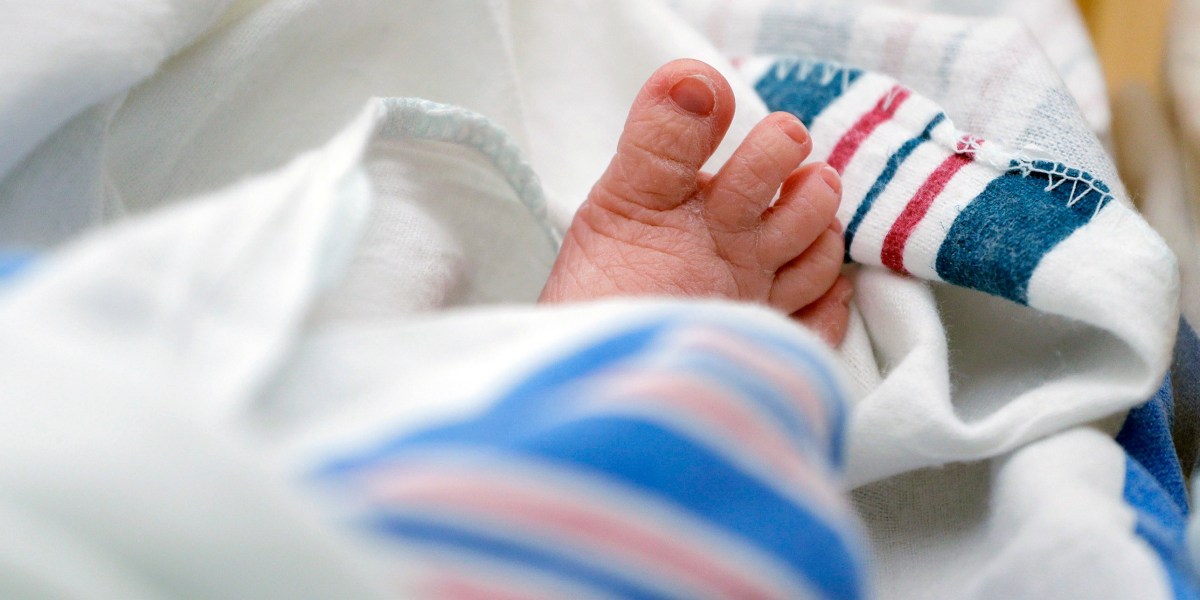
The U.S. infant mortality rate reached a record low in 2025, according to preliminary data from the Centers for Disease Control and Prevention. The decline means hundreds fewer babies died before their first birthday, even as the U.S. continues to trail other wealthy nations on infant survival.
The CDC reported slightly under 5.4 infant deaths for every 1,000 live births in 2025. That was down from about 5.5 in 2024 and 5.6 in each of the two prior years, a change researchers described as statistically meaningful.
Infant mortality measures deaths before age 1. Researchers use rates rather than raw counts because the number of births changes from year to year.
The number of infant deaths also fell, according to provisional CDC figures. The agency reported about 19,350 infant deaths in 2025, compared with about 20,050 in 2024 and about 20,160 in 2023. The 2025 figure could change slightly as the CDC completes its review, but the final count is still expected to remain below recent years.
Dr. Michael Warren, chief medical and health officer for the March of Dimes, said it is hard to identify one cause for the recent improvement. He called the new figure encouraging and said he hoped the trend would continue.
RSV prevention followed a recent rise
The CDC said the infant mortality rate has declined over decades, from 7.5 deaths per 1,000 live births three decades ago, with medical advances and public health work contributing to the change. But the rate rose in 2022, the first statistically significant increase in about 20 years, according to experts cited by the Associated Press.
Those experts linked the 2022 increase to a resurgence of respiratory syncytial virus, known as RSV, and flu infections. In 2023, U.S. health officials recommended two new RSV prevention steps: a lab-made antibody shot for infants and an RSV vaccine for pregnant women between 32 and 36 weeks of pregnancy.
A March of Dimes expert said last year that the RSV prevention effort likely helped improve the 2024 numbers. Warren also said a decline in sudden infant death syndrome could be tied to more education about safe infant sleep.
Gaps persisted by race and state
The CDC released a fuller analysis of 2024 infant mortality data Tuesday, with details that are not yet available for 2025. The agency said death rates declined in 2024 both for newborns under 28 days old and for older infants, and provisional data indicate those declines continued in 2025.
The 2024 analysis also showed wide disparities. According to the CDC, infants born to Black women died at more than twice the rate of infants born to Hispanic, white and Asian American women.
The CDC found that mortality declined among full-term infants born at 39 to 40 weeks. Rates did not change significantly for other gestational-age groups.
State figures also varied sharply in 2024. Mississippi had the highest infant mortality rate, at 9.65 deaths per 1,000 births, while New Hampshire had the lowest, at just under 3 per 1,000, according to the CDC.
Warren said those differences reflect factors including access to care, community conditions and policies that affect health outcomes.
The U.S. rate remains high compared with other wealthy countries. A study published last year found the U.S. infant mortality rate in 2022 was nearly twice that of several high-income democracies, including Italy, Japan, Spain and Sweden.
This story draws on original reporting from Fortune.