
UK defense chief quits in spending fight, deepening pressure on Starmer
John Healey resigned after saying the U.K. government’s military funding plans fall short as threats rise from Russia, Iran and other pressures.
By Daniel Okafor · Business Editor
4 min read
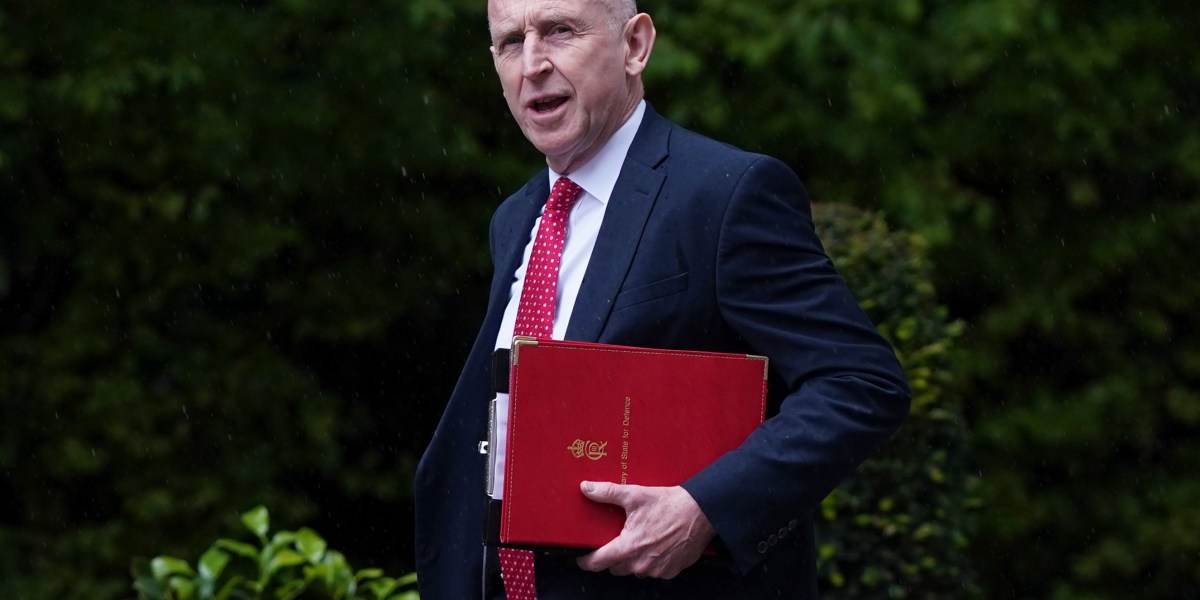
U.K. Defense Secretary John Healey resigned Thursday after accusing Prime Minister Keir Starmer’s government of failing to fund the armed forces adequately, according to The Associated Press. His departure matters beyond Westminster because Britain is under pressure from NATO allies and U.S. President Donald Trump to raise defense spending as conflicts strain European security.
In a resignation letter to Starmer, Healey said the government’s Defense Investment Plan was not enough for what he called a dangerous moment, the AP reported. The plan’s publication has been delayed amid reported disagreements between the Defense Ministry and the Treasury.
Healey wrote that Starmer had been unable, and the Treasury unwilling, to provide the money needed to defend the country amid rising threats, according to the AP. He said a Treasury proposal given to him Monday would lift defense spending to 2.6% of gross domestic product next year and 2.68% in 2030.
Starmer has pledged to raise defense spending to 2.5% of GDP by 2027 and 3% by 2035, the AP reported. Many figures in the military argue that schedule is too slow.
Starmer told Healey in a letter that he regretted the resignation but said the funding plan would give Britain the resources needed for national security, according to the AP. Starmer said the increases would be “sustainable and fair” and would require shifting money from other departments.
The government said in a statement that it was delivering the biggest sustained rise in defense spending since the Cold War, the AP reported. It also said Britain was safer because of Starmer’s decisions and that the government would keep acting in the national interest.
Defense tensions widen
Healey cited pressure from the Iran war, Russia’s full-scale invasion of Ukraine and threats from Moscow as reasons the U.K. needed to spend more, according to the AP. He has served as defense secretary since Labour took office in July 2024 and has been viewed as a serious and capable minister.
The AP reported that Healey played a central role in efforts to support Ukraine and in building a multinational group that could help guarantee security if a ceasefire is reached. He also helped lead work on a maritime security force aimed at keeping the Strait of Hormuz open to shipping if the Iran war ends.
Gen. Richard Barrons, who helped lead a defense review behind the investment plan, said the government was going backwards by declining to fund its own review, the AP reported. Barrons said the decision would weaken Britain’s standing in NATO, damage credibility with allies and increase vulnerability to modern conflict.
NATO Secretary-General Mark Rutte, told of Healey’s resignation by the AP during a Brussels news conference, said he respected Healey very much. Rutte said countries across the alliance are increasing defense investment, while acknowledging that governments must weigh military spending against other priorities.
Trump has repeatedly pressed the U.K. and other NATO members to spend more on defense, the AP reported. He has questioned the value of the alliance and complained that the United States carries too much of Europe’s security burden.
Political fallout for Starmer
Healey’s resignation adds to pressure on Starmer, who has faced calls from Labour colleagues to step down, according to the AP. The dispute also points to Starmer’s difficulty in closing the gap between Healey’s department and Treasury chief Rachel Reeves over military funding.
Olivia O’Sullivan of Chatham House told the AP the resignation significantly weakens Starmer, especially because defense and foreign affairs had been among his steadier areas. The AP reported that Greater Manchester Mayor Andy Burnham is widely expected to challenge Starmer for the Labour leadership if he returns to Parliament in a June 18 special election.
Justin Crump, a former British tank commander who leads the security consultancy Sibylline, told the AP that Healey’s resignation should not have happened in a well-run government. He said it showed a lack of control, clarity and follow-through.
This story draws on original reporting from Fortune.