
Trump’s loyalty demand clouds NATO summit in Turkey
After allies pledged higher defense spending, Trump is pressing NATO on political loyalty as leaders prepare to meet in Turkey.
By Maya Lindqvist · Senior Technology Correspondent
3 min read
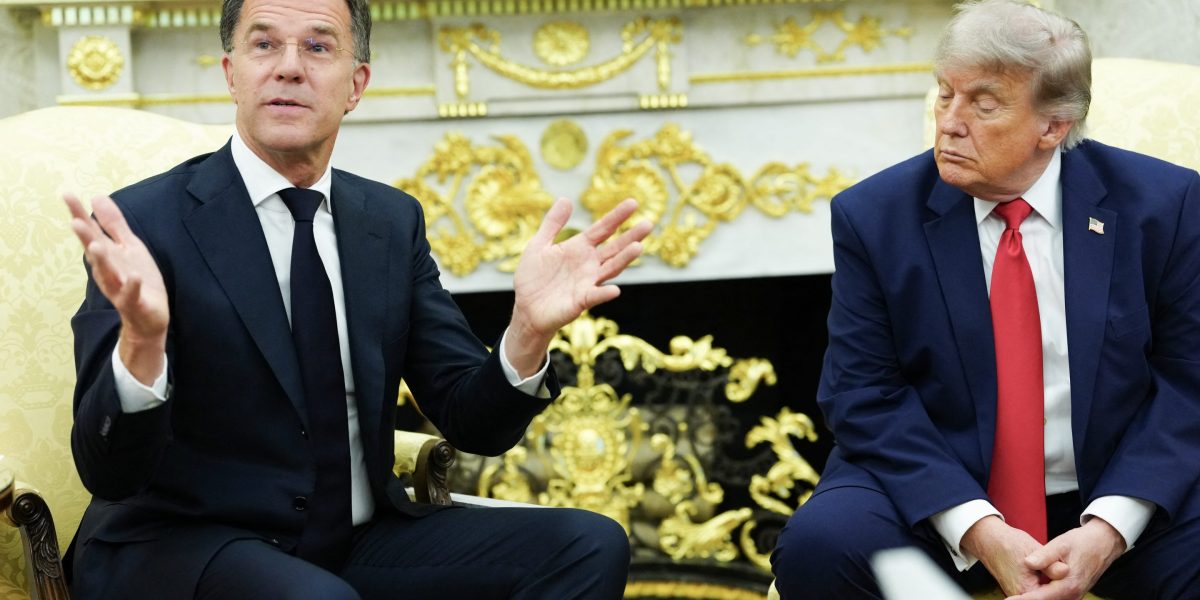
President Donald Trump is entering this week’s NATO summit in Turkey with a new complaint about the alliance after allies moved to meet his long-running demand for higher defense spending, according to the Associated Press. His latest test for partners is loyalty, a shift that raises the pressure on NATO Secretary-General Mark Rutte as he tries to keep Washington committed to the 32-member alliance.
Trump told reporters after a White House meeting with Rutte last month that he remained unhappy some NATO allies did not join the U.S. and Israel in the Iran war, which the AP reported he launched without consulting them. “We don’t need their money — we don’t need anything,” Trump said. “I just want loyalty.”
Trump had previously focused on burden-sharing, arguing that European allies and Canada were not spending enough on their own defense, the AP reported. At last year’s summit, NATO members agreed to raise defense investment to a level comparable with the United States when measured as a share of gross domestic product.
Rutte tried to reinforce that point in the Oval Office with a presentation labeled “The Trump Trillion,” according to the AP. The chart showed $1.2 trillion in spending by European allies and Canada since 2017, along with tens of thousands of U.S. jobs and a $300 billion backlog of European military equipment orders.
The pitch did not appear to settle Trump’s concerns. The AP reported that Trump suggested he might have skipped the Turkey summit if it were not being hosted by Turkish President Recep Tayyip Erdogan, a NATO leader with whom Trump has maintained close ties.
Rutte’s challenge
Rutte has spent much of his nearly two years as NATO’s top civilian official working to keep the United States tied to the alliance, the AP reported. His approach has relied heavily on praise for Trump, including at the White House meeting where he credited Trump’s leadership for pushing allies to spend more.
Rutte also answered Trump’s criticism over Iran by noting that as many as 5,000 U.S. planes used European bases before an April ceasefire, according to the AP. The exchange underscored how NATO’s spending debate has expanded into a broader argument over political support for U.S. military action.
NATO’s secretary-general is traditionally tasked with building consensus among member states, which make decisions unanimously, and speaking for the alliance as a whole. During Trump’s terms, Rutte and his predecessor Jens Stoltenberg have also had to manage Trump’s threats to leave NATO, reduce U.S. forces in Europe and question whether Washington would defend allies that spend too little, the AP reported.
Military worries in Europe
The dispute comes as European governments worry about Russia and NATO’s ability to respond to a possible attack, according to the AP. The news agency reported that the Pentagon last month surprised allies by saying it would reduce the troops, warships, aircraft and drones available if a NATO member came under attack.
Trump has also sent mixed signals on whether U.S. troop levels in Europe would rise or fall, the AP reported. Those messages have weighed on alliance unity while Russia has tested European defenses with drone flights near military sites in several countries, according to a study cited by the AP.
NATO summits are designed to display support for Article 5, the treaty’s collective-defense pledge. The AP noted that the clause has been used once, after the Sept. 11 attacks, when allies came to the aid of the United States.
Last year’s summit in The Hague ended on a more upbeat note for NATO, with Trump praising allies after they backed a major spending pledge, according to the AP. In Turkey, Rutte and Erdogan will try to keep Trump engaged, but the AP reported that the demand for “loyalty” has created a harder problem than defense budgets alone.
This story draws on original reporting from Fortune.