
Trump income disclosure fuels scrutiny of market power and crypto gains
White House filings put Trump's 2025 income at $2.2 billion, with economists and legal scholars questioning the market and ethics implications.
By Daniel Okafor · Business Editor
3 min read
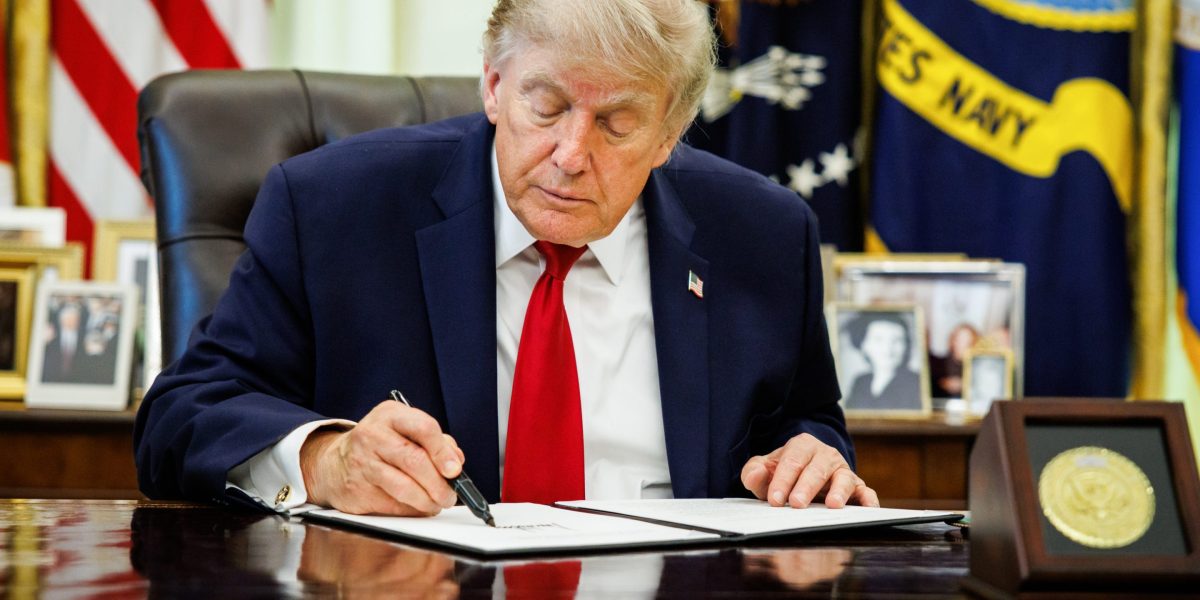
President Donald Trump reported $2.2 billion in personal income for 2025, according to White House disclosures, drawing scrutiny because about $1.4 billion came from crypto assets. Economists and legal scholars interviewed by Fortune said the filings raise new questions about how presidential power can affect markets tied to a president’s own finances.
Steve Hanke, a Johns Hopkins economist who has advised governments on monetary policy, told Fortune the disclosure made him think of “big player” economics. Hanke described a big player as someone with enough authority to move supply, demand and expectations without facing the same profit-and-loss discipline as ordinary market participants.
Roger Koppl, a Syracuse University professor credited by Fortune with developing the theory, said a big player also acts with discretion rather than under predictable rules. Koppl told Fortune that such figures inject personal judgment into markets and weaken investors’ ability to form expectations about the future.
Economists point to market signals
Hanke and Koppl told Fortune that Trump did not create the pattern, but they argued his second-term finances represent a new level of concern. Koppl traced the history to earlier U.S. government interventions, including Richard Nixon’s 1971 support for a Lockheed bailout and the same year’s end of the dollar’s final link to gold.
Fortune reported that Koppl also cited later examples, including the government response to Continental Illinois in the 1980s and the post-2008 debate over prosecuting major financial institutions. Koppl said Trump inherited decades of expanding executive discretion and pushed it to a higher level.
Hanke told Fortune that markets affected by big players can shift away from fundamentals and toward political signals. He linked the pattern to “noise trading,” a term used by economist Fischer Black for trading driven by rumor or sentiment rather than underlying value.
Koppl said Trump’s crypto gains fit that pattern because the value of assets tied to the president may depend on his actions and timing rather than demand for crypto services. Fortune also reported that trades made before some Trump Truth Social posts on Gulf oil policy have drawn scrutiny as possible insider-trading examples.
Legal limits are narrow
Eric Talley, a Columbia Law School professor, told Fortune that federal conflict-of-interest law bars many executive branch officials from acting in matters where they have financial interests, but expressly excludes the president and vice president. Talley said that exception leaves broad room for a president who has not committed to strict separation from his holdings.
Talley also cited the Constitution’s emoluments clause, which restricts officials from profiting from foreign governments, but told Fortune it has been hard to enforce. He pointed to a Qatar-gifted Air Force One and Saudi funds connected to Trump’s 2025 income statement as areas of concern, according to Fortune.
Eric Trump defended the arrangement in a post on X, saying his father’s investment holdings are kept in discretionary accounts run by independent financial institutions. He said the president, his family and The Trump Organization do not select, direct, approve, influence or solicit specific investments.
Jeffrey Sonnenfeld, a Yale management professor, told Fortune the conflicts shown in the filings were far beyond allegations made against Hunter Biden and said the response from institutions has been muted. Sonnenfeld said executives and politicians often criticize Trump privately but avoid public comment because they fear retaliation.
Bubble concerns
Hanke told Fortune he believes markets are in a bubble based on measures including price-to-sales ratios, price-to-earnings ratios and market capitalization compared with GDP. He said economists still have no reliable way to predict when bubbles burst, apart from watching for monetary tightening.
Koppl told Fortune that bubbles may last longer in a system where large failing firms expect state support. He said that dynamic can leave taxpayers bearing losses while private investors benefit when risky bets succeed.
This story draws on original reporting from Fortune.