
Toyota racing unit helps Apex build satellite parts
Apex is working with Toyota Racing Development to apply race-car manufacturing precision to standardized satellite production, Fortune reported.
By Hana Yoshida · Markets Reporter
3 min read
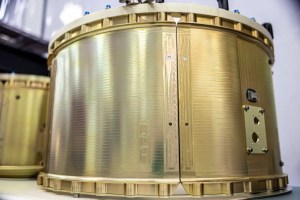
Apex has enlisted Toyota Racing Development to make structural components for its satellites, bringing race-car manufacturing methods into spacecraft production. The deal matters because Apex is trying to build satellites with more standardization and higher volume than traditional aerospace manufacturing, according to Fortune.
Toyota Racing Development, or TRD, has worked with the Los Angeles-based satellite startup since 2025, Fortune reported. The Toyota unit is producing parts including top decks, base decks, bulkheads, pass-through cylinders and smaller components that require tight tolerances, TRD USA general manager Jack Irving told Fortune.
Apex CEO and cofounder Ian Cinnamon pitched the idea in 2024 to Jim Adler, founder and general partner at Toyota Ventures, Toyota’s corporate venture arm, according to Fortune. Adler, who led Toyota Ventures’ 2023 investment in Apex, then introduced Cinnamon to Irving.
Cinnamon told Fortune that Apex was built around applying automotive know-how to satellite production. He said race cars offer a useful model because they combine demanding quality requirements with more repeatable manufacturing than the aerospace sector typically uses.
Irving told Fortune the comparison made sense to TRD because racing and space both punish small failures. A race engine problem can carry major consequences, he said, while a satellite fault in orbit can be difficult or impossible to fix.
Why racing methods appeal to a satellite startup
Apex, founded in 2022, has argued that satellite makers need to move away from bespoke, low-volume production, Fortune reported. Cinnamon said the industry needs spacecraft that are standardized, reliable and produced at a scale closer to automotive manufacturing.
He described TRD to Fortune as a middle ground between ordinary vehicle production and aerospace. Race cars require a higher quality bar than standard cars, he said, while still being built in greater volume than many aerospace systems.
Irving said top-level racing depends on precision because competitors are often separated by tiny time differences. He told Fortune that teams sometimes refine parts down to extremely small details, and said that kind of precision carries over to other demanding engineering fields.
The partnership is Toyota’s first space mobility arrangement of its kind, according to Fortune. Adler told Fortune that he sees space as a possible growth area for Toyota, citing demand for 100,000 satellites over the next five years.
Manufacturing beyond aerospace
The work also fits into a broader debate about U.S. manufacturing capacity, Fortune reported. Government officials, investors and entrepreneurs have been examining how to strengthen domestic industrial production after years of concern about decline in the manufacturing base.
Toyota is based in Japan but has a substantial manufacturing presence in North America, Fortune noted. Cinnamon told Fortune that manufacturers need to weigh quality, speed and cost together rather than optimizing for only one of those goals.
For Apex, the TRD relationship is a test of whether an automotive-adjacent production culture can help meet the satellite industry’s expected demand. For Toyota, Adler told Fortune, the question is also what the automotive industry can contribute to space.
This story draws on original reporting from Fortune.