
Steve Eisman says AI investors should favor suppliers over platforms
The investor known from The Big Short told Fortune that SpaceX and AI platform companies face valuation and spending risks.
By Daniel Okafor · Business Editor
3 min read
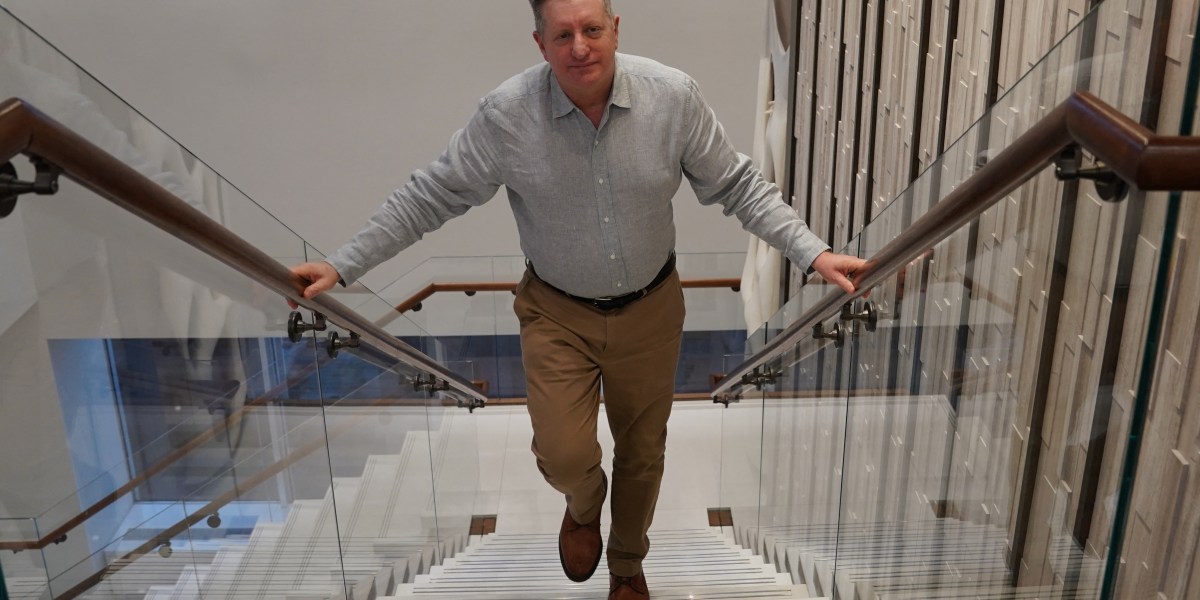
Steve Eisman, the investor known for betting against the subprime mortgage market before the financial crisis, told Fortune that investors are putting too much faith in SpaceX and major AI platform companies. He argued that the better trade is in companies selling chips and networking equipment to the AI buildout.
Eisman told Fortune that SpaceX’s valuation looks stretched compared with its revenue. Fortune reported that SpaceX has about $19 billion in revenue, close to Ferrero Group’s $21 billion in 2025 revenue after its purchase of Kellogg’s cereal business, while Eisman said SpaceX stock is being valued at more than 100 times revenue.
For comparison, Eisman told Fortune that Palantir trades at about 50 times revenue. He said no company of similar size has carried the kind of revenue multiple he sees in SpaceX.
SpaceX plans draw scrutiny
Eisman, whose housing-market bet was chronicled by Michael Lewis in The Big Short, told Fortune that he sees parts of SpaceX’s plans as closer to science fiction than finance. Fortune reported that SpaceX’s S-1 includes a plan to pursue asteroid mining to extract metals and other resources from near-Earth and main-belt asteroids for space-based industries.
He also questioned why Elon Musk would build SpaceX across several business lines at a time when investors often prefer more focused companies. Eisman told Fortune that SpaceX spans rockets, Starlink and AI, and he criticized the prospect that SpaceX could buy Tesla.
Eisman told Fortune he views Tesla’s recent record negatively, citing falling earnings and Musk’s repeated promises on self-driving cars and robotaxis. Fortune reported that Eisman described investor faith in Musk as unusually persistent despite those concerns.
AI platform stocks face pressure, Eisman says
Eisman also told Fortune that the market is misreading the AI trade among large cloud and platform companies. He said the first problem is the rising cost of competing in AI, with Alphabet as his example.
According to Eisman’s comments to Fortune, Alphabet spent $80 billion on AI last year and funded it from cash flow. He said the company is set to spend $180 billion to $190 billion this year and raised $85 billion through stock, reflecting what he sees as a broader need for AI companies to tap capital markets.
Fortune reported that Eisman believes SpaceX would face the same pressure after an IPO because its recurring cash flow would not cover the AI-related capital spending he expects. He also pointed to SpaceX’s S-1, which Fortune said lists a $28.5 trillion total addressable market, with more than 90% tied to AI and Grok.
Eisman told Fortune that Grok is a weaker product than leading AI rivals, and said he had heard reports that some engineers in Musk’s space division do not use it. Fortune identified Grok as a central AI product in SpaceX’s filing.
His broader argument, Fortune reported, is that AI services lack durable customer lock-in because users can switch among ChatGPT, Gemini and Claude. Eisman said that makes the platform side of AI more competitive and could force providers to cut prices.
Instead, Eisman told Fortune he prefers suppliers that benefit from AI spending, including Nvidia, Arista and Cisco. He contrasted those companies with Meta, Oracle, Microsoft and Alphabet, which he said are competing in AI products that customers can more easily swap.
Eisman told Fortune he is not recommending that investors short SpaceX. He said he has no prediction for the stock’s near-term direction, even though he views its fundamentals as disconnected from its valuation.
This story draws on original reporting from Fortune.