
SpaceX president floats eventual Tesla tie-up after IPO debut
Gwynne Shotwell told CNBC a SpaceX-Tesla merger could ease Elon Musk’s workload, while analysts debate the scale and obstacles of a deal.
By Daniel Okafor · Business Editor
3 min read
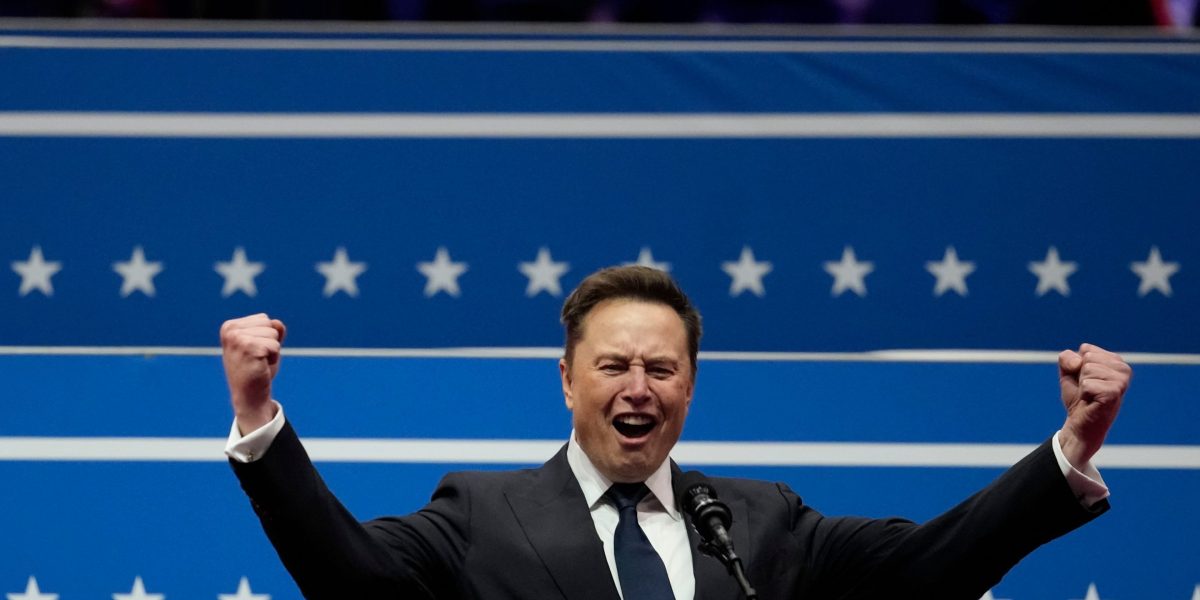
SpaceX President Gwynne Shotwell raised the possibility of an eventual combination with Tesla as SpaceX began public trading, putting fresh attention on how Elon Musk’s companies could be pulled closer together. The idea matters because a merger would join two of the world’s most valuable public companies and deepen Musk’s control over space, electric vehicles, energy and AI-linked infrastructure.
In an interview with CNBC, Shotwell said a large merger “might make Elon’s life a little easier, actually.” She also told CNBC that Tesla and SpaceX have clear overlap ahead, saying there was “no question” the companies have future synergies and that their long-term goals are converging.
Shotwell did not give CNBC a timetable or identify specific terms for any transaction. She also cautioned that her immediate focus was on running SpaceX, telling CNBC: “Right now I’m focused on keeping the lights on here.”
Existing links between the companies
Fortune reported that Tesla and SpaceX already work together in several areas. The companies are jointly involved in Musk’s planned “Terafab” chip facility, which Fortune said is expected to support robotics and space travel.
Fortune also reported that SpaceX has bought Tesla products, including $506 million of Tesla Megapack power cells and $103 million of Cybertrucks for SpaceX sites. Those commercial ties have helped fuel speculation that the companies could eventually be combined.
Musk has merged or consolidated businesses before, according to Fortune. Tesla acquired SolarCity in 2016 in an all-stock deal worth $2.6 billion; SolarCity was run by Musk’s cousins Lyndon and Peter Rive, and Musk held a 22% stake and served as chairman. Fortune also reported that after Musk bought X, formerly Twitter, he combined it with xAI in a deal valued at $50 billion, and that SpaceX later acquired xAI and X in February.
Analysts see a possible Musk megacompany
Wedbush analyst Dan Ives wrote in a note cited by Fortune that a Tesla-SpaceX merger would be a “holy grail” transaction for Musk because it could give him greater command of the AI ecosystem. Ives put the chance of a merger at more than 80%, according to Fortune.
Fortune reported that Tesla invested $2 billion in xAI in January. After SpaceX acquired xAI in an all-stock deal valued at $250 billion, Ives noted that Tesla’s investment became nearly 19 million SpaceX shares, according to Fortune.
SpaceX opened at $152 and climbed to $173 after pricing its IPO at $135, Fortune reported. At that level, Fortune said Tesla’s SpaceX position was worth about $3.29 billion, a paper gain of roughly 64%. Oppenheimer’s Timothy Horan set a $190 price target for SpaceX, according to Fortune.
Fortune reported that SpaceX’s valuation topped $2.3 trillion, placing it seventh among global companies by market capitalization and among a small group valued above $1 trillion. Tesla’s market value was about $1.5 trillion, Fortune reported, putting it close to Meta for the 10th spot globally.
On Fortune’s calculation, a combined Tesla-SpaceX company could be worth more than $3 trillion and could rank ahead of Amazon and Microsoft as the fourth-largest company in the world.
Deal questions remain
Experts told CNBC that a merger may face limited regulatory resistance because Tesla and SpaceX operate in different industries. They said the harder problems could involve governance, including which company would be the parent, how shares would be valued and how a stock swap would be designed.
Fortune reported that Musk controls 85% of SpaceX voting power, limiting the risk of opposition from that company’s board. At Tesla, Musk owns 13%, though Fortune said a shareholder-approved pay package could raise his stake to about 25% if he meets ambitious financial and operating targets over the next decade.
Shotwell has also addressed SpaceX’s reliance on Musk. In comments cited by Fortune, she said Musk is the only person who can run SpaceX, while adding that the company would not collapse without him, even if it would be a different company.
This story draws on original reporting from Fortune.