
SpaceX’s first employee sees IPO as a bet on space-based computing
Tom Mueller told Fortune that SpaceX’s planned listing could speed the rise of a broader space economy beyond rockets and Starlink.
By Sofia Marchetti · World Affairs Correspondent
3 min read
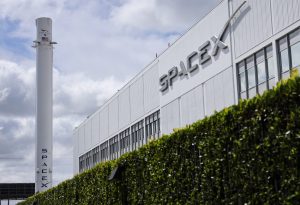
SpaceX’s planned initial public offering has won a public vote of confidence from Tom Mueller, the company’s first employee and a key figure in its early rocket program. The deal could raise $75 billion and value Elon Musk’s space company at about $1.75 trillion, making it one of the most closely watched listings in market history.
Mueller, who helped build the engines used on SpaceX’s Falcon 9 rocket, told Fortune that his reaction to the IPO filing was relief after years of waiting. He now leads Impulse Space, a company Fortune said is valued at $4.26 billion and builds vehicles that move satellites between orbits.
According to Reuters, SpaceX is seeking to sell 555.6 million shares at $135 each, for a total raise of $75 billion. The BBC reported that pricing would put the company’s valuation near $1.75 trillion.
Fortune reported that Musk had long resisted taking SpaceX public, in part because of his experience running Tesla as a listed company. The publication said the scale of SpaceX’s plans has since pushed the company toward public markets.
The offering arrives as SpaceX is spending heavily. Yahoo Finance reported that SpaceX generated $18.67 billion in revenue in 2025, while Morningstar reported a $4.9 billion net loss. Fortune said capital expenditures nearly doubled to $20.7 billion, with much of that spending tied to AI development.
Mueller told Fortune that investors should read the valuation as more than a bet on rocket launches. In his view, the market is pricing in the possibility that computing infrastructure and data centers could move into orbit, with SpaceX positioned to supply launches, satellites and related systems.
Starlink is central to that argument. Yahoo Finance reported that SpaceX’s satellite internet unit produced $11.39 billion in 2025 revenue, and Mueller told Fortune that Starlink has shown SpaceX can operate substantial computing capacity in space.
Mueller also pointed to Musk’s broader set of companies and products, according to Fortune. He cited xAI’s Grok, Tesla’s robotics work and X as sources of data that could support AI model training, while SpaceX supplies low-cost access to orbit.
Fortune reported that Mueller framed skepticism toward SpaceX around the company’s history of overcoming doubts. He cited Falcon 1, Falcon 9, crewed missions to the International Space Station and Starlink as examples of programs that faced doubters before becoming operational.
Mueller also warned that the stock may have a rough path after listing, Fortune reported. He compared the possible trajectory with Tesla’s public-market history: a strong start, pressure when delays become visible to investors, and a possible later recovery.
For Mueller, the IPO has meaning beyond SpaceX’s balance sheet. Fortune reported that he sees a public SpaceX as a force that could speed work toward a wider space economy, including infrastructure built from lunar and asteroid resources.
Impulse Space is part of that plan. Fortune reported that the company is preparing to launch its Helios spacecraft, with a target date in 2027.
This story draws on original reporting from Fortune.