
SpaceX IPO caps a rise from failed launches to $2.1 trillion valuation
Fortune reported SpaceX’s market debut made it one of the world’s most valuable companies after years of early rocket failures and cash strain.
By Hana Yoshida · Markets Reporter
4 min read
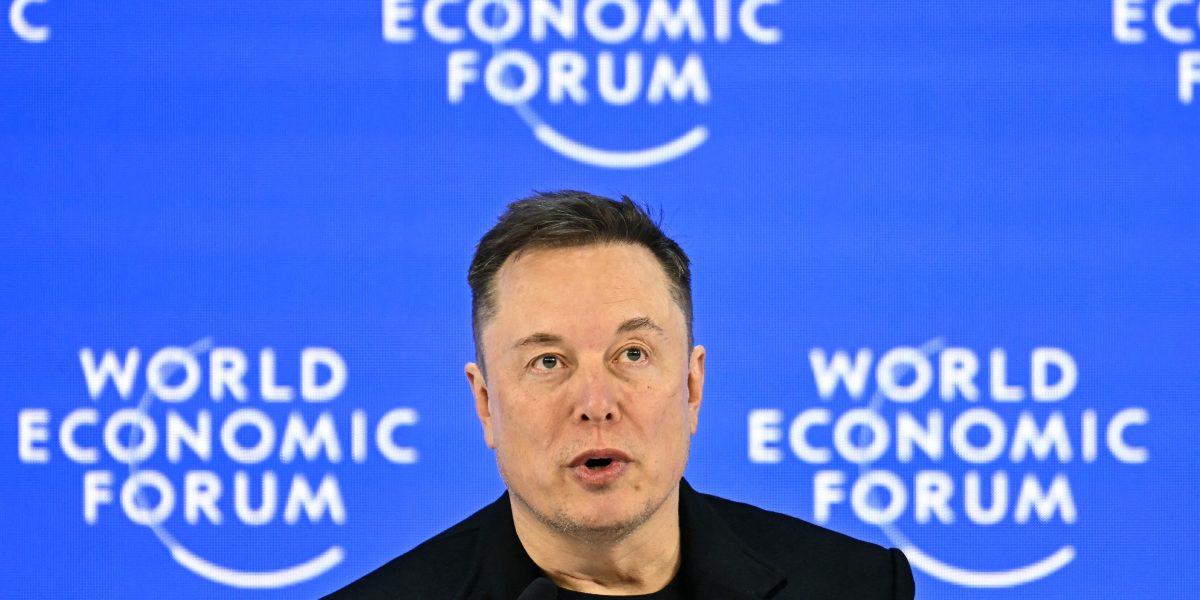
SpaceX began trading Friday at a valuation above $2.1 trillion, making it the seventh most valuable company in the world by market capitalization, Fortune reported. The debut marked a sharp turn for a company that Elon Musk once said he gave less than a 10% chance of surviving.
Fortune said the IPO ranked as the largest in history and lifted SpaceX past Walmart, Samsung and Meta by market value. Speaking to employees in Texas before ringing the opening bell, Musk said he had expected the rocket company to fail, according to Fortune.
From a Mars idea to a rocket company
The company’s roots trace to the period after Musk left PayPal, according to Walter Isaacson’s biography of Musk cited by Fortune. Isaacson wrote that Musk, after eBay bought PayPal and he had just under $200 million, became focused on whether humans could reach Mars without relying on a government program.
Isaacson reported that Musk discussed the idea with Adeo Ressi, his former University of Pennsylvania roommate, and later searched NASA’s website for Mars plans. Finding no active plan there, Musk began reading rocket engineering material, speaking with experts and attending Mars Society events, according to Isaacson.
Musk first considered a publicity effort: sending a small greenhouse to Mars to show that life could grow there, Isaacson wrote. To do that, he needed a rocket, which led to trips to Russia with rocket engineer Jim Cantrell and future NASA administrator Mike Griffin to try to buy old launch vehicles.
Those talks failed, according to Isaacson. On the flight back from Russia, Musk began calculating the cost of building a rocket and told Cantrell and Griffin that they could make one themselves, Fortune reported from the biography.
Falcon 1 nearly ended the company
SpaceX’s early technical direction changed after Musk met Tom Mueller, then a propulsion engineer at TRW, according to Fortune. Mueller became SpaceX’s first employee after Musk agreed to place two years of salary in escrow in case the venture collapsed, Isaacson wrote.
Musk put $100 million into SpaceX and based the company in Hawthorne, California, Fortune reported. The company built much of the Falcon 1 itself to control costs, including about 70% of its components at one point, according to Isaacson.
The first three Falcon 1 launches failed. Fortune reported that the 2006 attempt exploded shortly after liftoff, the 2007 launch did not reach orbit, and a 2008 mission failed when the rocket’s stages collided during separation.
Musk had budgeted for three launches, and SpaceX was nearly out of money after the third failure, Fortune reported. A cash infusion from PayPal alumni helped keep the company alive, according to Fortune.
In September 2008, Falcon 1 reached orbit, becoming the first privately developed liquid-fueled rocket to do so, Fortune reported. Months later, NASA awarded SpaceX a $1.6 billion contract to resupply the International Space Station.
Reusable rockets drove its expansion
SpaceX followed Falcon 1 with Falcon 9, a 157-foot rocket that first flew successfully in 2010, Fortune reported. The rocket became central to missions serving the International Space Station and launching Starlink satellites.
In 2015, SpaceX landed a Falcon 9 first stage for reuse, a milestone Fortune described as central to the company’s later lead. Fortune reported that SpaceX has since landed and reflown Falcon 9 boosters hundreds of times while many rivals remained tied to expendable rocket designs.
SpaceX also carried NASA astronauts to the International Space Station in May 2020 aboard Dragon, the first crewed launch from U.S. soil in nearly a decade, Fortune reported. The company is now working on Starship V3, a 408-foot launch vehicle designed to carry a 100-metric-ton payload, compared with 35 metric tons for the prior model, according to Fortune.
Fortune reported that SpaceX handled just over half of global rocket launches in 2025 and accounted for 83% of the mass sent from Earth to orbit. The company’s Starlink network has more than 10,000 satellites in low Earth orbit and serves customers including airlines, the U.S. military and emergency first responders, according to Fortune.
This story draws on original reporting from Fortune.