
SpaceX’s IPO sharpens comparisons with Amazon as markets price in growth
Fortune reported that investors are weighing SpaceX’s $2 trillion valuation against Amazon’s larger revenue base and overlapping bets in satellites, cloud and AI.
By Hana Yoshida · Markets Reporter
3 min read
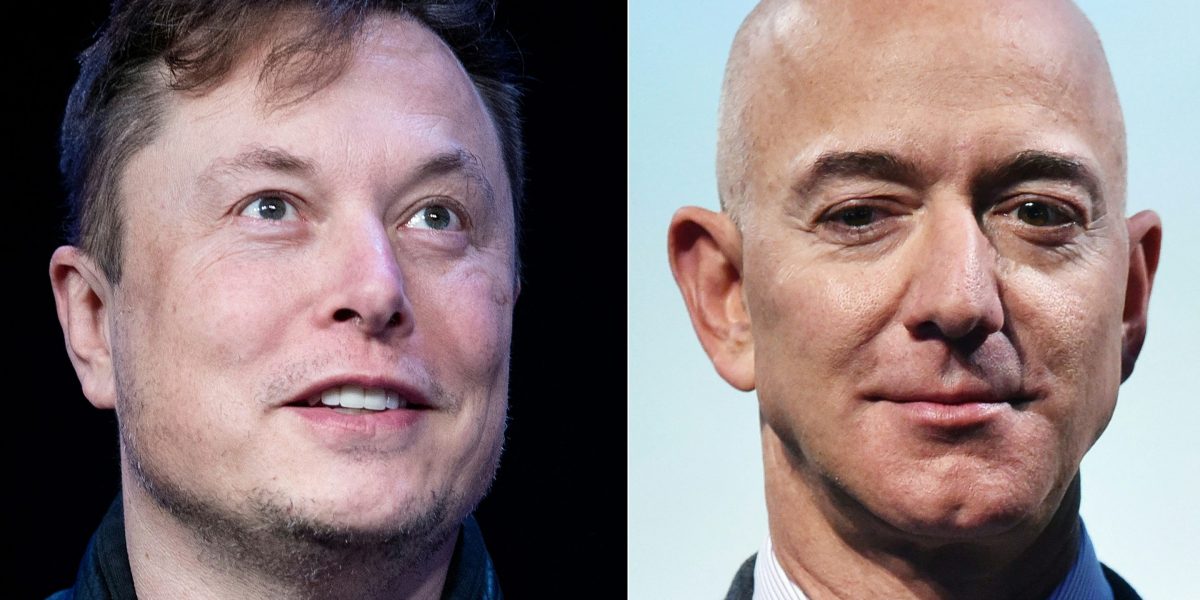
SpaceX’s move onto the public market has intensified comparisons with Amazon, Fortune reported, because investors are now valuing Elon Musk’s company alongside one of tech’s largest conglomerates. The comparison matters because SpaceX’s valuation reflects expectations for rapid growth in businesses where Amazon already has scale.
According to Fortune, SpaceX went public in June at $135 a share, and its valuation quickly climbed to about $2 trillion after the offering. Amazon, by contrast, went public in 1997 at $18 a share and a $438 million valuation, then lost 90% of its stock value after the dot-com bubble burst before growing into a company worth about $2.6 trillion.
Fortune reported that the two companies still differ sharply in size. Amazon generated $716.9 billion in revenue in 2025 and $80 billion in operating income, while SpaceX posted $18.7 billion in revenue and a $2.6 billion operating loss.
Investors cited by Fortune said that gap is central to the debate. Jim Lebenthal, chief markets strategist at Cerity Partners, said SpaceX is being priced much like Amazon despite having a fraction of Amazon’s revenue, and he described the company as impressive but overvalued.
Satellites and AI are becoming shared battlegrounds
Fortune reported that SpaceX’s Starlink satellite internet unit is its strongest current business. Starlink produced $11.4 billion in revenue last year, grew 50% from the prior year and generated $4.4 billion in operating income at a 39% margin, according to Fortune.
Stifel valued Starlink at $1.25 trillion in a sum-of-the-parts analysis cited by Fortune. Lebenthal also pointed to FactSet projections that SpaceX may need to raise about $250 billion in debt over four years to support its growth plans.
Amazon is behind SpaceX in deployed satellites, according to Stifel figures cited by Fortune. Starlink had 9,600 satellites in orbit, while Amazon’s Leo network had about 330. Fortune reported that Amazon agreed in April to buy Globalstar for $11.6 billion to expand Leo, and that it has announced aircraft Wi-Fi deals with Delta Air Lines and JetBlue for 2028.
In cloud computing, Fortune reported that Amazon remains far larger. Amazon Web Services had $128.7 billion in 2025 revenue and $45.6 billion in operating income, and AWS revenue rose 28% in the first quarter to $37.6 billion.
SpaceX is expanding its compute business through Colossus I and II data centers and lease deals with Anthropic and Google, Fortune reported. Its AI segment produced $3.2 billion in 2025 revenue while losing $6.4 billion, and lost $2.5 billion on $818 million in revenue in the first quarter of 2026.
Investors weigh execution risk
Dan Niles, founder of Niles Investment Management, told Fortune he does not view Amazon and SpaceX as comparable companies, saying SpaceX’s compute business is closer today to CoreWeave or Nebius than to AWS.
Justin Menne, a portfolio manager at Harbor Capital, told Fortune that Amazon has clearer business visibility, including a $364 billion contracted backlog and competitive inference chips. He said SpaceX’s valuation depends heavily on confidence in its management and engineering teams to deliver plans that are still developing.
Fortune reported that Musk has projected SpaceX could reach $1 trillion in revenue by 2030, while Lebenthal said estimated 2026 revenue is about $40 billion. Menne told Fortune that the premium investors attach to Musk is substantial, though he said he had not modeled a specific figure.
SpaceX’s prospectus cited a $28.5 trillion total addressable market, including $22.7 trillion tied to a third-party estimate of the global digital economy, according to Fortune. Lebenthal told Fortune that earnings, rather than addressable-market figures, are what matter for valuation.
This story draws on original reporting from Fortune.