
Muangthai Capital CEO defends Thai microfinance amid debt concerns
Parithad Petampai says Muangthai Capital fills a financing gap for poorer Thais, while critics warn high-rate loans can deepen debt.
By Maya Lindqvist · Senior Technology Correspondent
3 min read
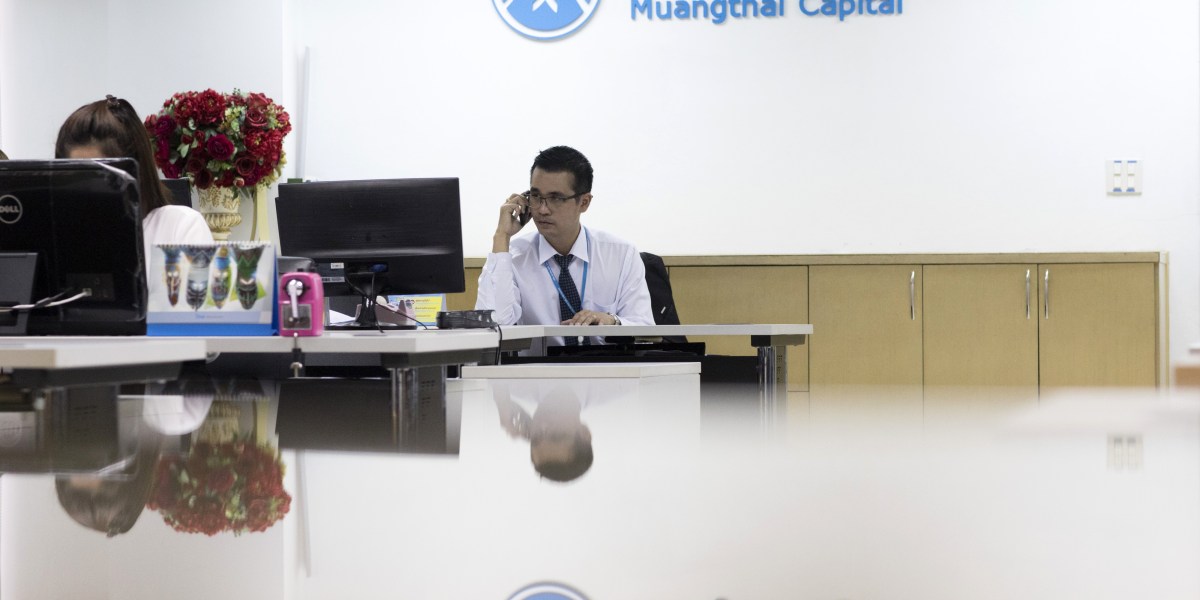
Parithad Petampai, the new chief executive of Muangthai Capital, is defending Thailand’s largest microlender as scrutiny grows over high-cost credit for low-income borrowers. In an interview with Fortune, he said the company provides money to people who often lack access to banks, including farmers, parents and accident victims.
Petampai took over the CEO role in August 2025 after a court found his father, co-founder Chuchat Patcharachai, legally incapacitated, Fortune reported. Chuchat died in April, while Petampai’s mother, Daonapa Petampai, remains managing director and his brother Suksit serves on the board.
Petampai told Fortune he had spent nearly 12 years learning beside his father before taking charge. He also described friction over modernization, saying it took two years to persuade his mother to let staff enter information digitally rather than first recording it on paper.
From motorcycle finance to national lender
Chuchat Patcharachai and Daonapa Petampai started the company in 1992 as Muangthai Leasing, a motorcycle financing business, according to Fortune. Petampai said his grandparents were Chinese immigrants to Thailand and that the family had modest roots.
The company listed on the Stock Exchange of Thailand in 2014, raising 3 billion baht, or about $89.9 million, during its initial public offering, according to Forbes data cited by Fortune. Petampai said the company had focused on central and northern Thailand before expanding east as it grew.
Petampai joined the family business in 2015 after short periods as an analyst at Goldman Sachs in London and Kasikornbank in Thailand, Fortune reported. The company changed its name to Muangthai Capital in 2018 and now runs more than 9,000 branches across Thailand.
Fortune ranks Muangthai Capital at No. 295 on its Southeast Asia 500 list. The company posted 30.74 billion baht, or about $936 million, in 2025 revenue, according to Fortune.
Growth and criticism in microlending
Petampai told Fortune that Muangthai serves Thailand’s bottom 10% and said borrowers use its loans for fertilizer, school fees and medical expenses. He said profitability is needed to create broad social impact, while arguing that returns should be kept at a moderate level.
Thailand’s microfinance market is projected to reach 273 billion baht, or $8.2 billion, by 2027, the Asian Development Bank said in 2023. Fortune identified Srisawad Corporation and Thai Credit Bank as other major players in the country’s microlending sector.
The industry has drawn criticism because loans often carry annual interest rates averaging 28% to 33%, according to Fortune. Critics cited by Fortune say vulnerable borrowers can become trapped in debt and face predatory lending, asset seizures and forced labor.
Concerns are acute in neighboring Cambodia. The Wall Street Journal reported that Cambodian microfinance borrowers owe more than $3,900 on average, more than three times the median income, and that one in 10 loans is more than 30 days overdue. A World Bank watchdog said in a late-June report that parts of Cambodia’s microfinance industry used pressure tactics and paid too little attention to borrowers’ ability to repay, according to the Journal.
Foreign funding and Thailand’s outlook
Petampai told Fortune that Thai official and domestic financial support for microlenders has been limited. He cited backing from international organizations including the Asian Development Bank, International Finance Corporation, German Investment Corporation and Japan International Cooperation Agency.
Muangthai issued a $335 million social bond on the Singapore Exchange in September 2024, with JPMorgan as sole global coordinator, according to company information cited by Fortune. Petampai said the company also received loans from Japanese, Taiwanese and Chinese banks, while Thai entities viewed Muangthai as a threat.
Petampai also expressed optimism about Thailand’s economy under Prime Minister Anutin Charnvirakul, citing market confidence and Moody’s move to raise Thailand’s credit outlook from negative to stable. He told Fortune that Thailand could benefit as U.S.-China tensions redirect trade and technology investment into Southeast Asia.
This story draws on original reporting from Fortune.